
Image source: Pinterest
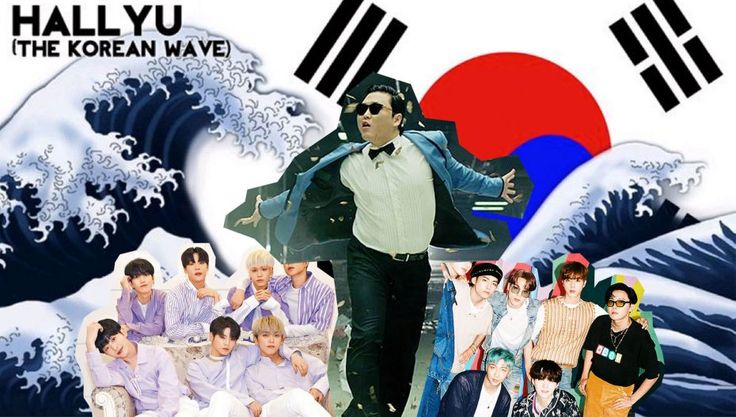
Globalization has transformed the way states build relationships with other countries. International relations are no longer determined solely by military power, economic strength, or political capability, but also by a state’s ability to attract attention and gain the trust of the international community. One phenomenon that exemplifies this shift is the Korean Wave, or Hallyu, which is the dissemination of South Korean popular culture to various countries through music, drama, film, culinary arts, and other cultural products. This phenomenon demonstrates that culture can become a vital source of influence in the world of international relations.
South Korea is one of the countries that has successfully introduced its popular culture to the global community. K-pop and Korean dramas, commonly known as K-dramas, have become cultural products in high demand among the Indonesian public, especially the younger generation. The development of digital media has also accelerated the spread of this culture, as people can easily access music, films, and various contents from South Korea via the internet. Pramadya and Oktaviani (2021) explain that the Korean Wave influences the interest of young Indonesians in learning various aspects of South Korean culture. Their research also positions media and public diplomacy as crucial elements in understanding the spread of Hallyu in Indonesia.
This issue is compelling to study within International Relations because popular culture is not merely an entertainment product; it can also shape public perception toward a country. When people develop an interest in South Korean culture, this interest has the potential to evolve into a desire to learn the language, understand the society, visit the country, or forge relationships with parties from South Korea. Consequently, culture can serve as a medium to build cross-border interpersonal closeness.
The Korean Wave is the phenomenon of the spread of South Korean popular culture, which grows through various entertainment and cultural products. K-pop, Korean dramas, films, and digital content are parts of this phenomenon. The expansion of Hallyu shows that culture can transcend national borders and be consumed by people with diverse social and cultural backgrounds.
The development of the Korean Wave in Indonesia cannot be separated from the role of media. The internet and digital platforms allow the Indonesian public to access music, dramas, and information regarding South Korea more easily. Social media also provides a space for fans to form communities, share content, and discuss South Korean culture. In a study on the consumption of Korean popular culture in Indonesia, Jeong et al. (2017) demonstrate that Hallyu has become part of the daily experience of some Indonesian fans. Their research highlights how fans interpret and utilize Korean popular culture in their lives, rather than merely acting as passive viewers.
This phenomenon also highlights the relationship between culture and globalization. Cultural products that were previously known only within a national scope can become international consumer goods through the development of communication technology. In the context of South Korea, the spread of popular culture opens up opportunities to introduce its identity and societal life to the world. However, the popular culture received by the international community does not always depict the full social reality within South Korea.
The concept of soft power developed by Joseph S. Nye explains a state’s ability to obtain preferred outcomes through attraction rather than mere coercion or payment. Nye (2004) positions culture, political values, and foreign policy as important sources of soft power. In this concept, a state’s influence depends on its ability to make others interested and voluntarily accept the attraction being offered.
Based on this concept, the Korean Wave can be understood as a source of South Korea’s soft power. K-pop and Korean dramas create an interest in South Korean culture and societal life. This interest has the potential to shape the perceptions of the international community, including the Indonesian public, toward that country. In other words, popular culture can serve as an entry point for people to get to know South Korea through enjoyable experiences closely tied to everyday life.
One observable impact of the Korean Wave is the increasing interest of the Indonesian public in South Korea. This interest manifests through music, dramas, and digital content that introduce the language, food, fashion, and social life of South Korean society. When individuals enjoy a cultural product, they may be driven to seek further information about the country of origin.
The impact of Hallyu on Indonesian public perception can be understood through three processes. First, popular culture creates an initial interest in South Korea. Second, this interest encourages some members of the public to seek information and study broader aspects of the culture. Third, sustained interaction can shape a specific image of South Korea in the public mind. This process can produce a positive image, but it can also form perceptions that do not entirely align with reality.
For example, Korean dramas frequently portray urban life, family relationships, friendships, education, and the workplace. Indonesian viewers gain insights into South Korean society through these stories. However, dramas are fictional products created for entertainment purposes. Therefore, the depictions shown cannot be regarded as complete representations of life in South Korean society. Viewers must distinguish between cultural representations in entertainment products and actual social conditions.
Ultimately, the Hallyu phenomenon demonstrates that international relations are also built through societal interaction and cultural exchange. South Korea can leverage the appeal of its popular culture to expand its influence, while the Indonesian public plays a role in determining how that culture is received and interpreted. A healthy cultural relationship should foster cross-cultural understanding and appreciation for diversity, rather than replacing one society’s cultural identity with another’s.
Writer: Dimas Nugraha Andriyanto – 202310360311078
Referensi
Jeong, J.-S., Lee, S.-H., & Lee, S.-G. (2017). Korean Wave | When Indonesians routinely consume Korean pop culture: Revisiting Jakartan fans of Korean drama Dae Jang Geum. International Journal of Communication, 11, 2288–2307. https://ijoc.org/index.php/ijoc/article/view/6302
Nye, J. S., Jr. (2004). Soft power: The means to success in world politics. PublicAffairs.
Pangaribuan, J. K., Resen, P. T. K., & Dewi, P. R. K. (2024). Peran media dalam diplomasi publik Korea Selatan sebagai upaya penyebarluasan soft power di Indonesia tahun 2012–2022. DIKSHI (Diskusi Ilmiah Komunitas Hubungan Internasional), 4(1), 232–248. [suspicious link removed]
Pramadya, T. P., & Oktaviani, J. (2021). Korean Wave (Hallyu) dan persepsi kaum muda di Indonesia: Peran media dan diplomasi publik Korea Selatan. Insignia: Journal of International Relations, 8(1), 87–100. https://doi.org/10.20884/1.ins.2021.8.1.3857