
Image source: Pinterest
The current technological advancement and the global dominance of Korean cultural waves (hallyu) accessible to people everywhere conceal a socio ideological history that remains deeply embedded within the South Korean populace. The term Danil Minjok (the “single blooded nation”) is often portrayed as an ancient, natural construct; however, it is the history of Japanese colonial rule in Korea that truly defines how Danil Minjokmbecame an ideology embraced by every South Korean citizen.
Danil Minjok did not emerge from an ancient construct, but rather from the dire state of the Korean people in the aftermath of Japanese colonial rule. During the occupation, Japan sought to assimilate Korean culture into its own by emphasizing shared traits between the two. The objective of this cultural assimilation was to suppress the rise of a Korean nationalist spirit that could have posed a threat to the Japanese regime.
Emerging in the 20th century, this concept of a “single blooded nation” served as a form of solidarity and resistance against external pressures and colonialism (Shin, 2006). This defense against colonialism was further bolstered by the myth of King Dangun said to be a descendant of a heavenly ruler—which helped forge a collective solidarity, framing all Koreans as sharing a single, common ancestry. Danil Minjok was adopted following the end of Japanese colonial rule to foster a sense of nationalism in the wake of an era that had left behind extreme poverty, widespread unemployment, social trauma, an identity crisis, the collapse of production chains, and rampant hyperinflation.
The South Korean government adapted the Danil Minjok (single ethnic nation) rhetoric to address the crises facing the country. Given South Korea’s lack of financial capital and natural resources, its only viable asset was its human capital. This form of nationalism instilled a doctrine among the populace that working hard was a duty toward one’s own “blood-related” kin. Through the “Improve Our Village” movement known as Saemaul Undong citizens began constructing roads, bridges, and national infrastructure for relatively low wages (Center, History of Saemaul Undong).
Under the administration of President Park Chung Hee, the Danil Minjok concept was integrated into the third national curriculum as a means to support economic modernization and national political stability (Susi Eka Ningsih, 2025). Within this curriculum, educators were required to instill the dogma that ethnic homogeneity was the primary asset enabling South Korea to rise from the adversity left in the wake of Japanese colonial rule (Chang). This doctrine was passed down, fostering an increasingly strong sense of unity among students; the success of incorporating Danil Minjok into the curriculum was evidenced by the gradual healing of the psychological trauma experienced by the students.
South Korea’s economy began to improve, driven by national solidarity and large-scale collective labor efforts most notably the Saemaul Undong (New Village Movement)mwhich are credited with sparking the nation’s resurgence in terms of infrastructure and economic development. At one point, South Korean citizens even donated their own gold to help the country pay off its debt to the IMF. A sense of nationalism, rooted in the concept of Danil Minjok (the “single blooded nation”), permeated South Korean households, fostering the belief that the nation’s fate was inextricably linked to the future of one’s own family.
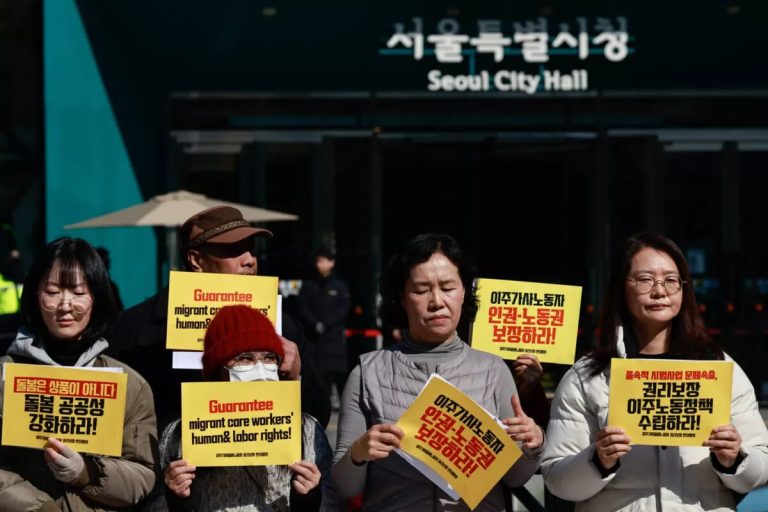
By the early 2000s, the country faced a demographic crisis, as the government began to recognize a decline in marriage and birth rates, alongside an aging population. To address labor shortages, South Korea opened its doors to migrant workers. Transnational marriages became increasingly common, particularly in rural areas, leading to the emergence of children from multicultural families. As bullying against these children became a widespread issue, the government began to realize that the doctrine of a “single-blooded nation” had created a social time bomb within society.
In 2006, the United Nations expressed concern that the Danil Minjok (a single ethnic nation) ideology instilled within formal educational institutions could foster racism, xenophobia, and other barriers for foreign nationals. The UN urged South Korea to acknowledge the reality that it was transitioning into a multicultural society. In May 2006, the government officially revised the national curriculum, removing mandatory instruction on Danil Minjok from history and civics textbooks. This was replaced by a multicultural curriculum, introduced in formal schools to counter racism and xenophobia, thereby shifting the societal paradigm from Danil Minjok toward multiculturalism.
The government faced the complex task of addressing the historical narrative surrounding the nation’s rise, which had been fueled by the spirit of Danil Minjok nationalism. Moving away from the Danil Minjok concept required redefining the national identity without erasing the history that underpinned the country’s development. This challenge was also felt by teachers many of whom were products of the K-12 curriculum themselves having grown up with Danil Minjok as an ideology instilled in them from a young age. Initially, educators struggled to reconcile their ethnic nationalism with the demands of global pluralism.
When the new curriculum was first implemented, rather than fostering an understanding of migrant cultures, educators pressured children from multicultural families to assimilate completely into Korean society (Lee Young-keun). This approach stemmed, in part, from the government’s lack of preparedness for the challenges brought about by these changes; the initiative was arguably rolled out too hastily. It was executed directly through government ministries and implemented in the field, involving the sudden revision of hundreds of textbooks a process that led to numerous challenges from the very start.
By the middle of the decade, the program began to show signs of success. According to a report from the South Korean Ministry of Education, 200,000 children from multicultural families were enrolled in primary and secondary schools, though the system was still undergoing a process of social adjustment. The government has worked to ensure that children from multicultural backgrounds receive their full rights by providing after-school tutoring and online learning platforms accessible to them. To this day, the program continues to improve, and it is considered effective in helping multicultural families achieve economic independence.
Writer: Whinta Aril Thania – 202510360110014
References:
Caprio, M. E. (2009). Japanese assimilation policies in colonial Korea, 1910–1945. University of Washington Press.
Chang, Y. M. (2015). Teachers’ perspectives: Making sense of ethnic nationalism, ethnic identity and multicultural education in South Korea. International Journal of Education, 7(2), 17–37. https://doi.org/10.5296/ije.v7i2.7018
Identity Hunters. (2023, March 20). Minjok (민족). https://identityhunters.org/2023/03/20/%EB%AF%BC%EC%A1%B1minjok/
Kim, M. S.-H. (2011). Review of Japanese assimilation policies in colonial Korea, 1910–1945 by Mark E. Caprio. The Journal of Japanese Studies, 37(2), 434–439. https://doi.org/10.1353/jjs.2011.0062
Korea JoongAng Daily. (2026, January 18). Immigrant teenagers, Korean teachers face challenges as classrooms grow more diverse. Korea JoongAng Daily. https://www.koreajoongangdaily.com/korea/immigrant-teenagers-korean-teachers-face-challenges-as-classrooms-grow-more-diverse/12036649
Korea Saemaul Undong Center. (n.d.). History of Saemaul Undong. Retrieved November 7, 2026, from https://www-en.saemaul.or.kr/sub/aboutSMU/history.php
Ningsih, S. E., Mislaini, M., & Anisa, K. (2025). Sistem pendidikan di Jepang dan Korea Selatan. Harmoni Pendidikan: Jurnal Ilmu Pendidikan, 2(1), 280–295. https://doi.org/10.62383/hardik.v2i1.1073
Shin, G.-W. (2006). Ethnic nationalism in Korea: Genealogy, politics, and legacy. Stanford University Press.
Wikipedia. (n.d.). Nasionalisme etnik Korea. Wikipedia. Retrieved November 7, 2026, from https://id.wikipedia.org/wiki/Nasionalisme_etnik_Korea