
Image souce: Wikipedia
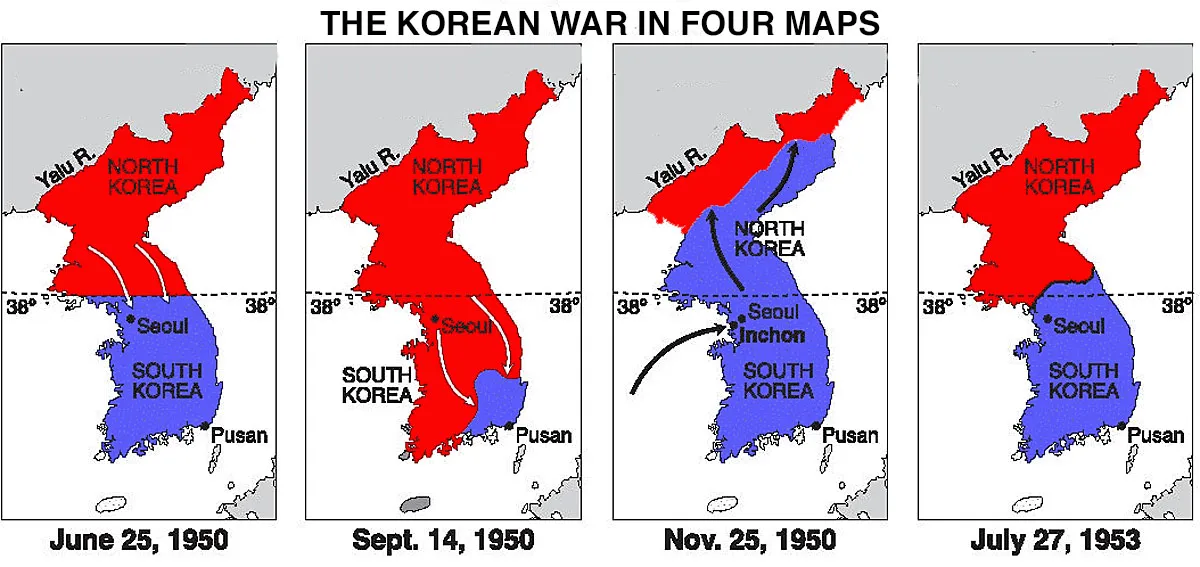
War is a powerful form of violence in international relations which affects both the relation between two or more societies and the internal structure within a society. It destroys everything not only resources and social systems but also living creatures. One of the most enduring cases of such conflict is found on the Korea Peninsula, where the tension has persisted since the outbreak of the Korean War on 25 June 1950.
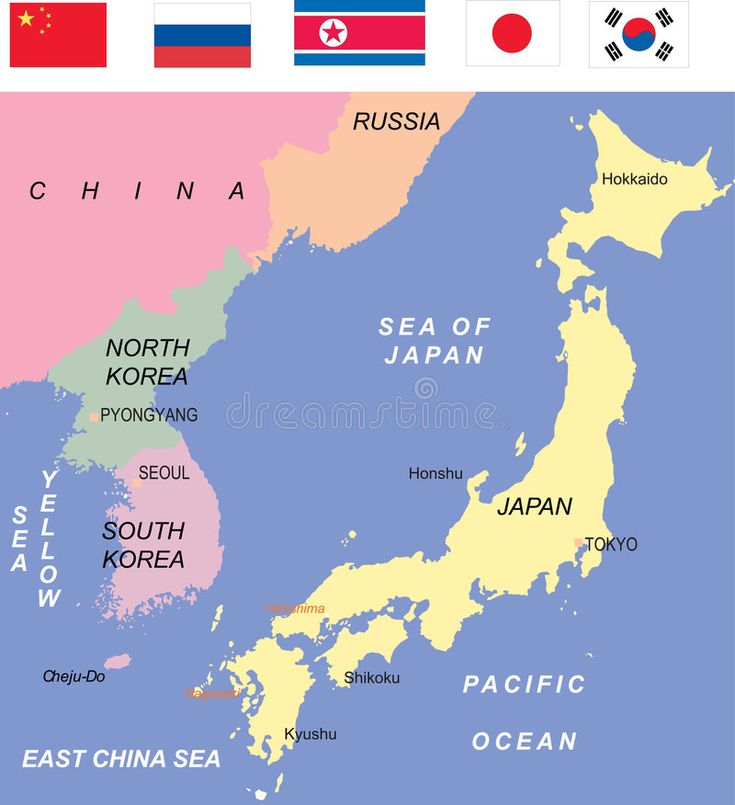
The Korean Peninsula is one of the most prominent cases of the national division in Korea. According to Wertz (2023), Korea was historically defined as a culturally and politically unified civilization for centuries. However, Korea was split into two different and separate states such as North Korea and South Korea due to the end of Japanese colonial rule in 1945, leading to the emergence of Cold War rivalries. Initially, the separation tended to be temporary, but it became permanent because of geopolitical and ideological conflict. Based on this case, the two Koreas have utilized not only different political and economic systems but also different national identities and lifestyles. As a result, the division of Korea is not only because of a consequence of war and politics but also because of a deeper case rooted in identity and discontinuity.
According to Giddens (1991), ontological security refers to a sense of feeling secure in who they are as identities or selves. It focuses on the experience of feeling oneself as a whole and continuous person in time instead of constantly changing. Later, Mitzen (2006) applied this concept according to the perspective of International Relations by arguing that the state seeks not only physical security but also ontological security by maintaining a stable situation of identity through relationships and narratives. Based on this theory, states tend to continue certain behaviors and even conflictual ones because they support a feeling of familiarity and identity stability. It means that states do not always act rationally in order to maximize physical security. Instead, they prioritize preserving their identity. For further explaining this process, Von Essen and Danielson (2023) proposed the concepts of shame and discontinuity. They claimed that shame appears when there is a sudden gap between the ideal identity of a state and its real situation while the concept of discontinuity refers to threats to identity stability. This theory is practically useful in deeply understanding about why the conflicts between North and South Korea persist over time.
The tension between North Korea and South Korea originated from the Korea Peninsula which has a long history of political and cultural unity. The historical development of Korea started before the division. During the early period of the Three Kingdoms era, the peninsula was separated among Goguryeo, Baekje, and Silla. These three Kingdoms competed for dominance. Later, dynasties called Goryeo and Joseon strengthened a shared Korean identity according to the common language, governance systems, and culture. Unfortunately, this continuity did not last long, and it was disrupted in the 20th century because Korea was colonized by Japan from 1910 to 1945. This condition significantly changed all the political and social structures of Korea. As soon as Japan defeated in World War II, the Soviet Union and United States agreed to the decision of the division of the Korea Peninsula along 38th parallel until the provisional government could be established. This division led to the two separate states in 1948 and gradually turned into the Korean War which began from 1950 to 1953 and resulted in enormous destruction and long-term separation between the two states. Ghimire (2018) states that the UN Security Council passed a resolution to support South Korea through the United Nation military command for Korea. After the resolution in 1953, no formal peace treaty was signed and left the Korean Peninsula separated into the two states to this day.
According to the division, North Korea and South Korea developed different political and national identities separately. Warner (2008) claimed that North Korea adopted a centralized socialist system based on Juche ideology developed by President Kim II Sung and it means that self-reliance, and military strength are core components of its national identity. However, South Korea gradually changed into a democratic and economically advanced state, which can integrate into global markets and institute. Moreover, some scholars suggest that North Korea has established a monopolized and strict form of nationalism to maintain its regime stability, while South Korea’s national identity has remained more flexible and open to democratic.
Eun (2025) suggests that North Korea maintain a strong and independent identity whereas South Korea’s identity persist as a democratic and peaceful state. Therefore, both states tend to maintain the separated status as it provides ontological security. Nowadays, Korea’s international relations remain unstable. Chen and Lee (2023) argue that this instability exists in both political issues and identity-based insecurities. Cases such as nuclear weapons, military tensions and geopolitical competition continue to shape inter-Korean relations. However, future reconciliation will need more than political agreements because long-term peace depends on transforming identity narratives and reducing ontological insecurity.
In my opinion, achieving peace will require for not only political solutions but also a transformation of identity narratives and ontological insecurity although North and South Korea have developed distinct identities that shape their behavior and reinforce division.
Writer: Win Myat Thu (EMPM Student in Universitas Muhammadiyah Malang)
References:
Chen, X., & Lee, C.-H. (2023). The unification of the Korean Peninsula and China’s role. In Korean Dream & a Vision for a Unified Korea and International Cooperation.
https://www.researchgate.net/publication/381306546_The_Unification_of_the_Korean_Peninsula_and_China’s_Role
Eun, Y.-S. (2025). Ontological security and the dynamics of anxiety: Toward a typological theory of change. Cambridge Review of International Affairs. https://www.researchgate.net/publication/393613372_Ontological_security_and_the_dynamics_of_anxiety_Toward_a_typological_theory_of_change
Giddens, A. (1991). Modernity and self-identity: Self and society in the late modern age. Polity Press. https://archive.org/details/modernityselfide0000unse/page/36/mode/2up?ref=ol&q=ontological
Ghimire, R. (2018). Causes of war: A case of Korean Peninsula.
https://www.researchgate.net/publication/382620545_Causes_of_War_A_case_of_Korean_Peninsula
Mitzen, J. (2006). Ontological security in world politics: State identity and the security dilemma. European Journal of International Relations, 12(3), 341–370.
https://doi.org/10.1177/1354066106067346
von Essen, H., & Danielson, A. (2023). A typology of ontological insecurity mechanisms: Russia’s military engagement in Syria. International Studies Review, 25(2), viad016.
https://doi.org/10.1093/isr/viad016
Wertz, D. (2023). Inter-Korean relations. National Committee on North Korea.
https://ncnk.org/resources/briefing-papers/all-briefing-papers/inter-korean-relations
Warner, G. (2008). North Korea’s political system and ideology. https://digitalcommons.liberty.edu/cgi/viewcontent.cgi?article=1020&context=masters