
Image source: Pinterest
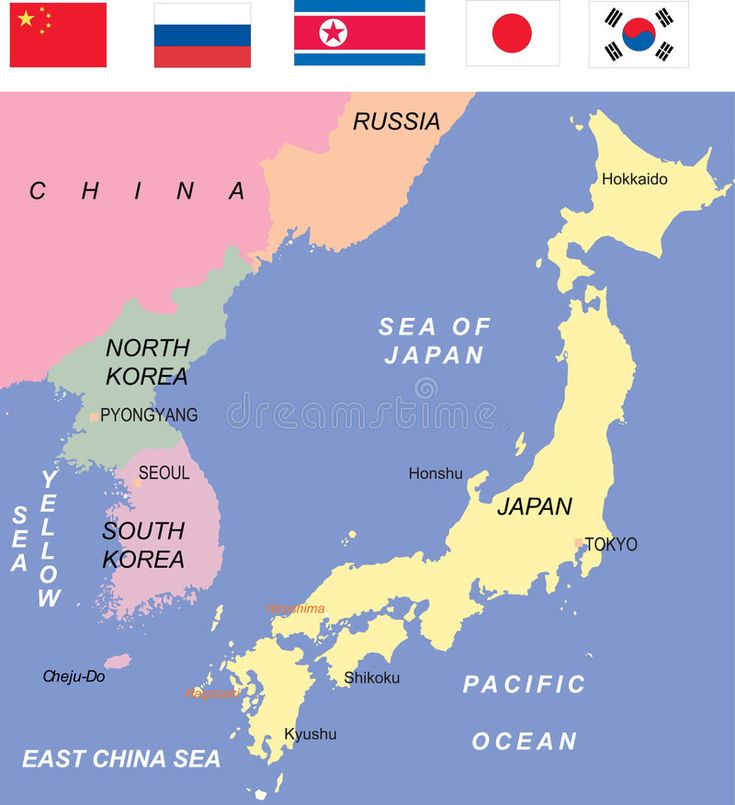
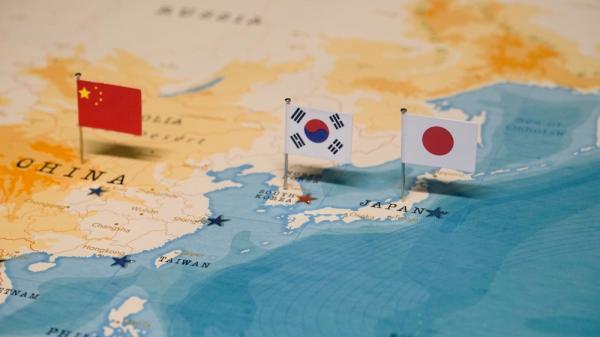
In East Asia, a phenomenon commonly referred to as the “Asian Paradox” has been observed on several occasions, wherein the highly advanced economic integration and interdependence among South Korea, Japan, and China are at odds with the stability of diplomatic relations among these three nations. For South Korea, this dynamic is not merely a matter of realpolitik, but the result of a deep rooted narrative dispute. Viewed through a constructivist lens, a nation’s identity is shaped by shared or collective memory and its perception of “the other.” For Seoul, the historical memory of Japanese colonialism and concerns regarding China’s extensive cultural hegemony are not merely a record of the past, rather they shape its national interests today. This essay will analyze how this narrative dispute can influence South Korea’s foreign policy and its role in East Asia.
Beyond bilateral relations, these disputes also affect regional security, economic cooperation, and the future of multilateral diplomacy in East Asia. Therefore, understanding the role of historical narratives is essential for explaining South Korea’s contemporary foreign policy. Constructivism argues that state behavior cannot be understood solely through material capabilities or security interests. Instead, national identity, historical experiences, norms, and shared social meanings shape how states perceive threats and define their interests. According to Wendt (1992), “anarchy is what states make of it,” implying that interstate relations depend on socially constructed perceptions rather than objective conditions alone. Similarly, Katzenstein (1996) argues that national security policies are influenced by identity and cultural norms rather than merely military considerations. In the context of South Korea, collective memories of Japanese colonialism and historical disputes with China continue to influence how political elites and society interpret the intentions of both countries. Consequently, Seoul’s foreign policy is driven not only by strategic calculations but also by historical narratives embedded in its national identity.
The diplomatic impasse that persists to this day can be traced to two main pillars of contention from South Koreans’ collective memory of Japan and China, and their defense of national identity. Regarding Japan, this dispute stems from the trauma of 35 years of colonial rule (1910–1945), the effects of which are still felt today. Seoul demands compensation from Japan regarding several critical issues such as the ‘Comfort Women’ or ‘Jugun lanfu’ and forced labor, however, this is not merely a matter of financial compensation but a struggle for the recognition of a nation’s dignity that has been lost (Chariska, 2025). On the other hand, tensions with China are fueled by a “war of narratives” that seeks to erase the cultural and historical boundaries of their ancestors. One such issue is China’s claim that the ancient Goguryeo Kingdom is part of Chinese history, which has sparked public outrage in South Korea, as Seoul believes that the Kingdom is a historical legacy of the Korean Peninsula. Furthermore, other claims, such as those regarding the origins of kimchi and the hanbok, have further fueled anti-China sentiment among South Koreans. Thus, these narrative disputes with these two neighboring nations demonstrate that history serves as a battlefield for sovereignty, determining how a nation positions itself in the face of the giants of East Asia.
These cultural disputes also extend into the realm of soft power competition. As South Korea has successfully promoted the Korean Wave (Hallyu) through K-pop, films, television dramas, and cuisine, cultural identity has become an important element of its international image. Therefore, claims regarding Korean cultural heritage are often perceived by the South Korean public as attempts to undermine the country’s cultural influence. Nye (2004) argues that soft power is derived from a country’s culture, political values, and foreign policies when they are perceived as legitimate and attractive by others. From this perspective, disputes over the origins of kimchi, hanbok, and the Goguryeo Kingdom are no longer merely cultural disagreements but also represent competition over symbolic influence and international legitimacy. Consequently, South Korea has become increasingly assertive in protecting its cultural identity as an integral component of its diplomatic strategy (KBS World, 2022).
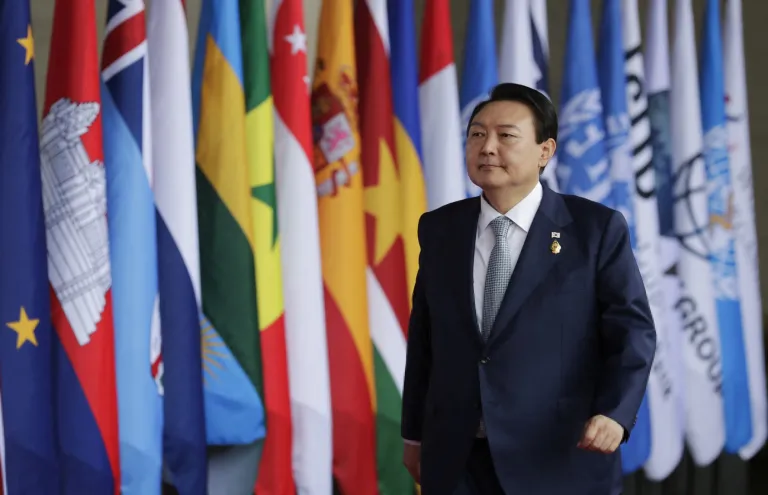
This narrative conflict has systematically constrained South Korea’s foreign policy maneuvering room, significantly impacting its efforts to balance interests between the two major powers. On the other hand, the historical dispute with Japan creates various challenge to establishing trilateral security cooperation among Seoul, Tokyo, and Washington. According to an analysis by the East Asia Forum, traumatic collective memory often triggers strong domestic pressure that forcing the Seoul government to remain skeptical of Japan even after their agreeing to cooperate. This was evident when Seoul nearly severed military cooperation with Japan during the 2019 GSOMIA crisis. On the other hand, historical and cultural disputes with China have made Seoul’s hedging strategy increasingly fragile. This occurs because every time South Korea want to maintain economic cooperation with China, it often clashes with domestic nationalism fueled by claims from Beijing, which ultimately encourage Seoul to rely on its security alliance with the United States, where Seoul has strengthened its nuclear security alliance through the Washington Declaration in 2023. These two factors resulting South Korea trapped in a crisis of trust rooted in the past, which prevent its flexibility in the East Asian region.
Furthermore, domestic politics reinforces the persistence of these narrative disputes. South Korean political leaders often face strong public pressure whenever historical issues involving Japan or China emerge. Public opinion, civil society organizations, and victims’ associations actively demand that the government prioritize historical justice over pragmatic diplomacy. As a result, even administrations seeking closer cooperation with neighboring countries frequently encounter domestic resistance. This illustrates that foreign policy in democratic states is not exclusively determined by external strategic interests but is also constrained by domestic political legitimacy. According to Snyder and Kim (2025), historical memory continues to shape South Korea’s progressive foreign policy and influences public expectations regarding diplomatic relations with neighboring countries. Consequently, South Korea’s regional diplomacy becomes increasingly difficult whenever historical controversies reappear (Choe, 2024).
In conclusion, South Korea’s narrative disputes with Japan and China demonstrate that historical memory continues to shape contemporary international politics. Through a constructivist perspective, these conflicts reveal that identity and collective memory remain fundamental determinants of national interests alongside material considerations (Wendt, 1999). Although economic interdependence encourages regional cooperation, unresolved historical grievances repeatedly undermine trust and diplomatic flexibility. Looking ahead, South Korea must balance historical justice with pragmatic diplomacy if it wishes to strengthen its regional leadership while maintaining constructive relations with both neighboring powers. Only by addressing these competing demands can Seoul play a more effective role in promoting long-term stability in East Asia (Snyder & Kim, 2025).
Writer: Maulana Fareid – 202410360110146
Referances
Chariska, A. E. (2025). Dampak penyelesaian isu comfort women terhadap diplomasi Jepang dan Korea Selatan. Global Insight Journal, 2(1), 1-16. https://doi.org/10.36859/gij.v2i1.2718
Choe, H. (2024, 12 September). Historical memories haunt South Korea–Japan relations. East Asia Forum. https://eastasiaforum.org/2024/09/12/historical-memories-haunt-south-korea-japan-relations/
Deutsche Welle. (2023, 14 Maret). Korea Selatan dan Jepang ingin kesampingkan beban sejarah. DW. https://www.dw.com/id/korea-selatan-dan-jepang-ingin-kesampingkan-beban-sejarah/a-64978185
Hasanah, A. A. (2023). Judul Skripsi Lengkap Anda [Skripsi, Universitas Islam Negeri Syarif Hidayatullah]. Repository UIN Jakarta. https://repository.uinjkt.ac.id/dspace/bitstream/123456789/79206/1/ARINI%20ALFA%20HASANAH.FISIP.pdf
Hays, J. (2008). Goguryeo (Koguryo): History, culture and the China-Korea dispute. Facts and Details. Diakses pada 17 Maret 2026, dari https://factsanddetails.com/korea/Korea/Ancient_History/entry-7140.html
KBS World. (2022, 11 Februari). Isu Hanbok di Olimpiade Beijing picu sentimen anti-Tiongkok di Korea Selatan. https://world.kbs.co.kr/service/contents_view.htm?lang=i&board_seq=418313
Katzenstein, P. J. (Ed.). (1996). The culture of national security: Norms and identity in world politics. Columbia University Press.
Nye, J. S., Jr. (2004). Soft power: The means to success in world politics. PublicAffairs.
Park, H. (2023, 10 Mei). Government marks 1st anniversary with focus on national interest, future. Korea.net. https://indonesian.korea.net/NewsFocus/policies/view?articleId=231976
Snyder, S. A., & Kim, J. (2025, 20 Mei). The transformation of South Korean progressive foreign policy. Carnegie Endowment for International Peace. https://carnegieendowment.org/research/2025/05/the-transformation-of-south-korean-progressive-foreign-policy
Wendt, A. (1992). Social theory of international politics. Cambridge University Press.