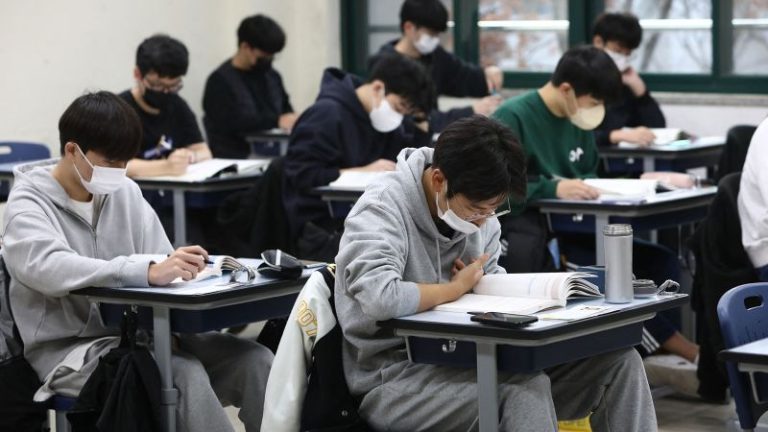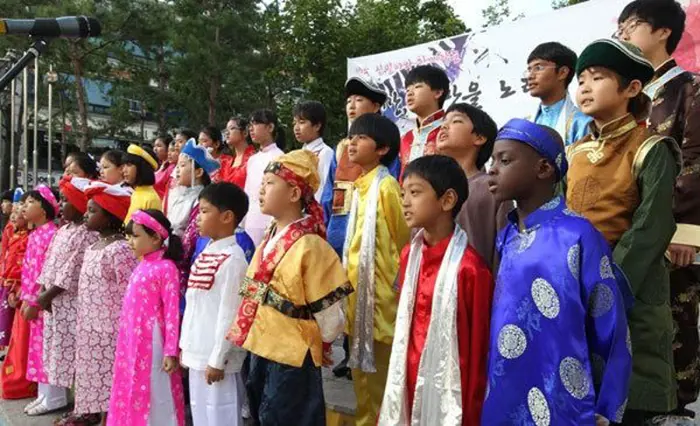
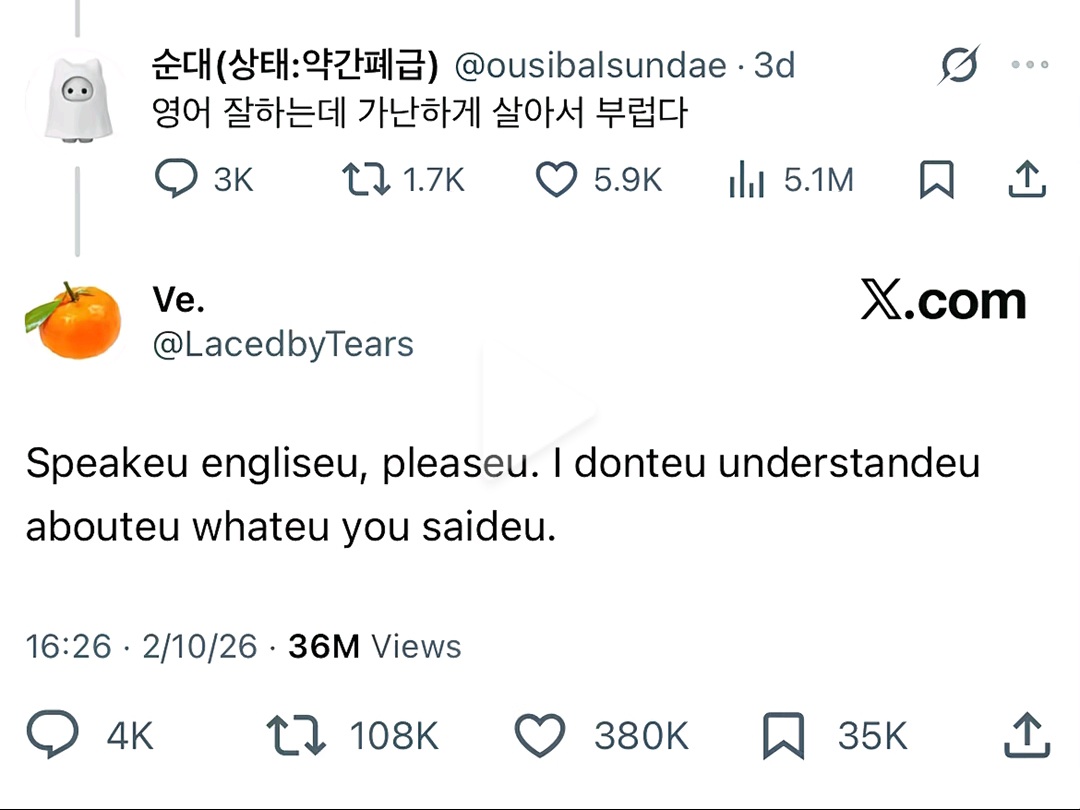

Image source: x.com
The success of the Korean Wave is inseparable from South Korea’s strategy of systematically integrating the cultural industry into its public diplomacy. The South Korean government, in collaboration with the private sector, promotes the export of popular culture through policy support, investment, and the utilization of global digital platforms. The Korean Wave serves as a prime example of success in the field of International Relations regarding the application of soft power diplomacy. South Korea has massively promoted popular culture such as K-Pop, K-Dramas, and films as tools to build a positive global image. In fact, recent studies show that the meaning of Hallyu continues to be negotiated by global audiences and is heavily influenced by the dynamics of interaction on digital media (Yoon, 2023). This success aligns with Joseph Nye’s (2018) view that soft power is a nation’s ability to influence others through cultural appeal, values, or policies, rather than through coercion.
Southeast Asia has become one of the primary targets for Hallyu’s expansion due to its large and active fan base. Studies indicate that the success of Hallyu in this region is also supported by the active participation of audiences in distributing and reproducing Korean cultural content in digital spaces (Jin, 2024). Thus, ASEAN netizens serve not only as consumers but also as key agents in expanding the reach of South Korea’s soft power. However, behind this cultural dominance, a phenomenon of conflict has emerged in the digital space between Korean netizens (K-Netz) and Southeast Asian netizens (SEAblings), marked by issues of racism, stereotypes, and clashes of identity (Kompas.com, 2026). This phenomenon demonstrates that global cultural expansion does not always yield linear effects; rather, it is often accompanied by tensions that risk undermining the very foundations of soft power itself.

Image source: x.com
The conflict between K-Netz and Southeast Asian netizens is not merely abstract; it has manifested in various concrete incidents in the digital sphere. One case that went viral occurred when comments from Korean netizens were perceived as demeaning to Southeast Asian countries, which subsequently triggered a collective backlash from ASEAN netizens across various social media platforms (Kompas.com, 2026). This response even evolved into a form of digital regional solidarity, where netizens from Indonesia, Malaysia, Thailand, and the Philippines simultaneously criticized attitudes deemed racist and exclusionary. Additionally, a report from The Korea Herald indicates that the escalation of this conflict is inseparable from cross-cultural misunderstandings as well as differing sensitivities regarding issues of race and identity (The Korea Herald, 2026). Another case reinforcing this dynamic is an incident at a K-pop concert in Malaysia that led to a heated debate between K-Netz and ASEAN netizens regarding audience behavior and ethical standards, which subsequently escalated into an identity conflict on social media (MetroTVNews, 2026; Tempo, 2026). This series of events demonstrates that the digital space has become a primary arena for both generating and amplifying cross-cultural conflicts.
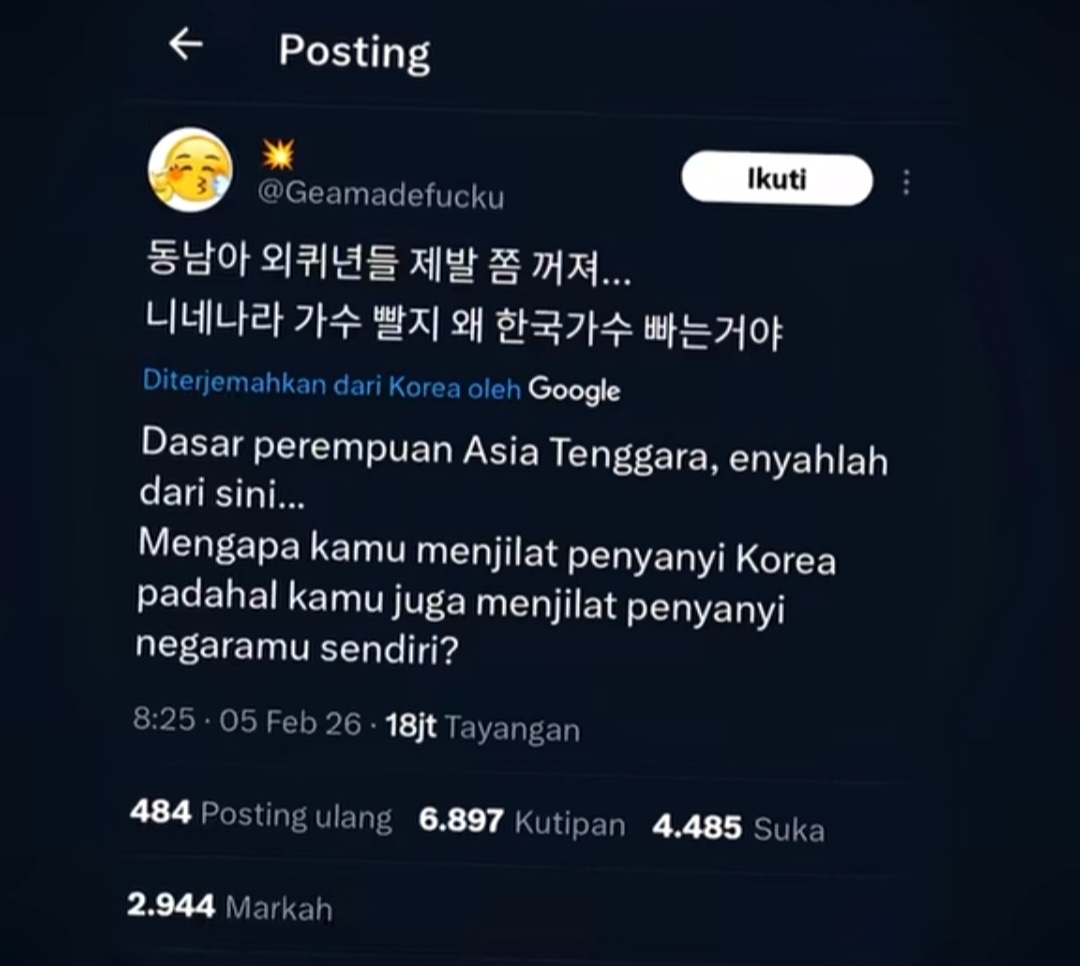
Image source: x.com
From an academic perspective, this phenomenon can be understood as a form of transnational digital identity conflict, as explained by Dr. Verdy Firmantoro of Brawijaya University. He emphasizes that the algorithms of digital platforms such as X (Twitter) play a role in accelerating polarization by increasing exposure to provocative and emotionally charged content (Firmantoro, 2026). This is reinforced by an analysis from BINUS University, which views the K-Netz vs. SEAblings conflict as a manifestation of social identity theory, wherein individuals tend to group themselves based on collective identities and defend them aggressively in the digital space (BINUS University, 2026). Thus, the interactions that occur are no longer merely discussions between individuals, but rather a contestation between identity groups that carry their respective regional and cultural sentiments.
Furthermore, a study by BRIN highlights this phenomenon as a form of cultural communication crisis in the digital age. Fitria Ayuningtyas explains that a lack of cultural sensitivity in global interactions can easily trigger widespread conflict, especially when amplified by the logic of social media virality (Ayuningtyas, 2026). In this context, the conflict between K-Netz and ASEAN netizens reflects the fragility of the foundation of global interaction in the digital age, where cultural differences that are not managed properly actually turn into a source of friction. This reaffirms that the success of the Korean Wave as an instrument of Soft Power depends not only on the distribution of culture, but also on how interactions among global audiences are managed in an inclusive and sensitive manner.
Writer: Maulana Fareid – 202410360110146
Reference:
Ayuningtyas, F. (2026). SEAblings vs KNetz: Studi kasus krisis komunikasi budaya di era viralnya identitas digital. BRIN.
BINUS University. (2026). Lebih dari sekadar fandom: Mengapa fenomena SEAblings vs Knetz jadi perbincangan global. https://binus.ac.id/bekasi/2026/03/lebih-dari-sekadar-fenomena-seablings-vs-knetz-jadi-perbincangan-global/
Firmantoro, V. (2026). UB experts respond to the Knetz vs SEAbling phenomenon. Universitas Brawijaya. https://prasetya.ub.ac.id/en/pakar-ub-tanggapi-fenomena-knetz-vs-seabling/
Jin, D. Y. (2024). The rise of digital platforms as a soft power apparatus in the New Korean Wave era.
Kompas.com. (2026, February 13). Warganet Asia Tenggara bersatu serbu netizen Korsel imbas komentar. https://internasional.kompas.com/read/2026/02/13/084655870/warganet-asia-tenggara-bersatu-serbu-netizen-korsel-imbas-komentar
MetroTVNews. (2026). Konser K-pop di Malaysia berujung drama panas warganet Korsel vs SEAblings. https://www.metrotvnews.com/read/b3JC5oB1-konser-k-pop-di-malaysia-berujung-drama-panas-warganet-korsel-vs-seablings
Nye, J. (2004). Soft Power: The Means to Success in World Politics.
Tempo. (2026). What triggered the viral SEAblings vs Knetz online battle. https://en.tempo.co/read/2087199/what-triggered-the-viral-seablings-vs-knetz-online-battle
The Korea Herald. (2026). Article 10681344. https://www.koreaherald.com/article/10681344
Yoon, K. (2023). De/Constructing the soft power discourse in Hallyu