
Image source: Asian-Pasific Journal
Introduction
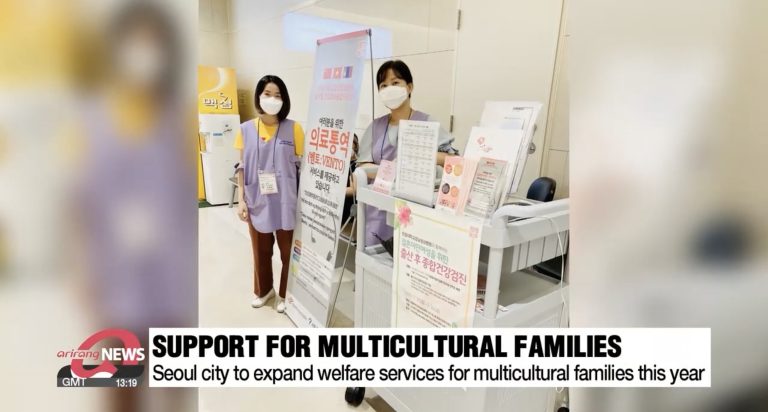
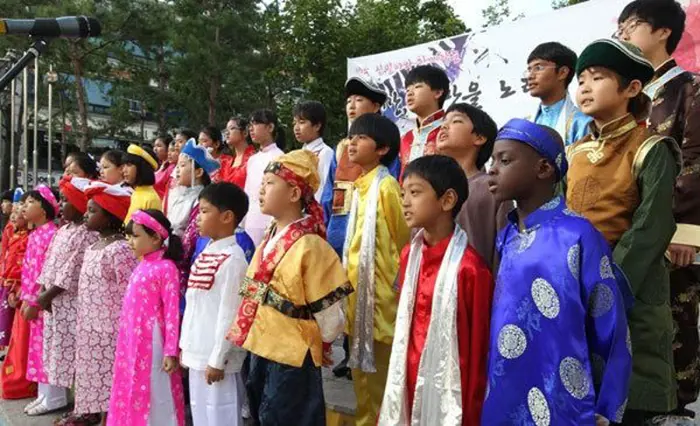
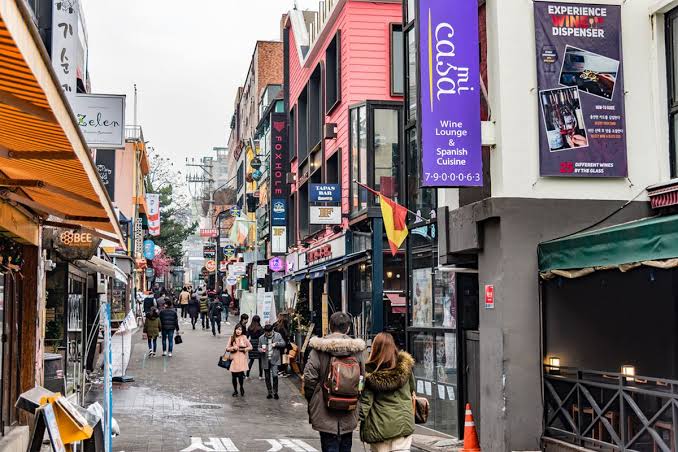
South Korea has traditionally been recognized as a country with a strong national identity based on ethnic and cultural homogeneity. For generations, Korean identity has been closely associated with shared ancestry, language, and cultural traditions. However, globalization, economic development, and demographic changes have gradually transformed South Korea into a more diverse society. The increasing presence of migrant workers, marriage migrants, and multicultural families has challenged the traditional understanding of Korean national identity (H. Lee et al., 2024). This transformation raises an important question about whether South Korea is prepared to accept cultural diversity as part of its national society. Multiculturalism is important because it does not simply involve the coexistence of different ethnic groups, but also requires equal rights, social recognition, and protection against discrimination. Although the South Korean government has introduced several policies to promote multiculturalism, the implementation of these policies continues to face social and institutional challenges. This essay argues that South Korea has made progress in accommodating cultural diversity, but genuine multiculturalism remains difficult to achieve because of ethnic nationalism, discrimination, and unequal social integration.
Background: South Korea’s Transformation into a Multicultural Society
South Korea’s transformation into a multicultural society is closely connected to its economic development and changing demographic conditions. The country has increasingly relied on foreign workers to address labor shortages, while international marriages have contributed to the growth of multicultural families. Nguyen et al. (2023), through their study of Vietnamese migration families, explain how economic pressures, migration networks, employment conditions, and institutional policies influence migrants’ experiences in South Korea. Their research also highlights problems such as low wages, long working hours, and the risk of becoming undocumented workers. Similarly, Lee et al. (2024), in their systematic review of racism and health in South Korea, explain that the foreign population has increased alongside the development of migrant labor and marriage migration. These changes demonstrate that migration has become an important part of South Korea’s social and economic development. In response, the government has introduced multicultural policies and support programs. However, the increasing number of migrants does not automatically create an inclusive society because cultural acceptance and equal participation remain important challenges.
Main Challenges of Multiculturalism in South Korea
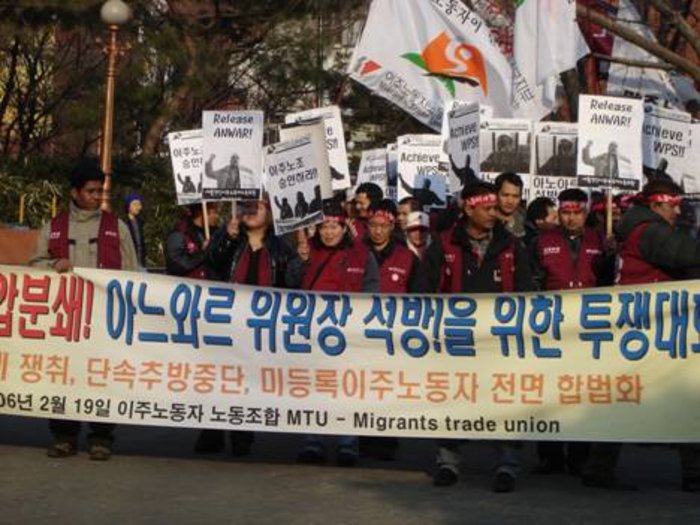
One of the most significant challenges is racial and ethnic discrimination. Lee et al. (2024) reviewed 43 studies and found significant associations between discrimination and health outcomes among racially and ethnically marginalized populations in South Korea. Their findings show that discrimination can affect migrants’ psychological well-being and contribute to broader health inequalities. This problem is also visible among undocumented migrant workers. Lee, Kim, and Heo (2024) found that undocumented migrants experienced disadvantages in several aspects of well-being, including happiness, mental health, social support, and community participation. These conditions demonstrate how insecure legal status can increase migrants’ vulnerability.
Another challenge concerns the experiences of migrant women. Sottini (2024) examines migrant women’s urban citizenship in South Korea during the COVID-19 pandemic and explains how legal status, gender, and social position influence their access to urban spaces. The study shows that urban environments can become spaces of fear, exclusion, and discrimination for migrant communities. Furthermore, public attitudes toward migrants also influence the success of multiculturalism. Koo et al. (2024) examine perceptions of discrimination and social conflict related to migrant inflows, highlighting the importance of how local communities perceive the presence of migrants. Therefore, multiculturalism is not only a matter of government policy but also depends on social attitudes and everyday interactions between different groups.
Analysis and Personal Opinion
These challenges can be understood through Bhikhu Parekh’s concept of multiculturalism, which emphasizes the recognition and equal value of different cultural identities. From this perspective, cultural diversity should not be treated as a problem that minority groups must solve by abandoning their traditions. However, South Korea’s multicultural policies still appear to place considerable expectations on migrants to adapt to the dominant culture. Lee (2025), in a study of multicultural family services, demonstrates how female marriage migrants can experience paternalistic treatment through programs that define their roles as mothers and caregivers according to particular social expectations. This suggests that policies intended to support multicultural families may also reproduce gender, ethnic, and class inequalities. The situation can also be analyzed through Social Identity Theory developed by Tajfel and Turner, which explains how people distinguish between their own social groups and others. In South Korea, a strong sense of ethnic identity may create boundaries between those considered traditionally Korean and people perceived as outsiders. Yoo and Jang (2024) further demonstrate that perceived unfairness among immigrants is connected to their remittance behavior, showing that migrants’ experiences in South Korea can influence their economic relationships with their countries of origin. In my opinion, South Korea’s biggest problem is not the arrival of migrants, but the difficulty of changing its understanding of national identity to accommodate people from different cultural backgrounds. The government cannot claim to have achieved multiculturalism simply by introducing support programs or welcoming foreign workers to meet economic needs. Migrants should be treated as equal members of society rather than merely as labor resources or individuals who must adapt to Korean cultural standards. I believe that genuine multiculturalism requires a change in both government policy and public attitudes. The government should strengthen legal protection, provide equal access to public services, and create more opportunities for migrants to participate in social decision-making. At the same time, public education about cultural diversity should be improved to reduce stereotypes and discrimination. Without these changes, multicultural policies risk becoming symbolic programs that respond to demographic and economic pressures without addressing the deeper inequalities experienced by migrant communities.
Conclusion
South Korea’s transition toward multiculturalism reflects significant changes in its demographic, economic, and social conditions. The seven studies discussed in this essay demonstrate that migrant workers, undocumented migrants, migrant women, and multicultural families continue to experience different forms of discrimination and social inequality. Although government initiatives have contributed to the recognition of cultural diversity, their effectiveness remains limited when migrants do not receive equal treatment and social acceptance. Ultimately, multiculturalism should not be measured only by the existence of government programs or the number of foreign residents. It should be evaluated through the ability of society to recognize cultural differences, protect minority rights, and provide equal opportunities for everyone. South Korea’s future as a multicultural society therefore depends on its willingness to move beyond ethnic homogeneity and build a more inclusive understanding of national identity.
Writer: Laega Pasanrang Muhamad Ridha – 202310360311040
References
Koo, J.-Y., Park, S.-G., & Lim, Y.-S. (2024). A study on the perception of discrimination and social conflict on the inflow of migrants. Korean Journal of Police Administration, 21(3), 23–42. https://doi.org/10.25023/kapsa.21.3.202408.23
Lee, E. (2025). Migrants’ (m)othering under a neoliberal gaze: An ethnographic inquiry on multicultural family services in South Korea. Affilia, 40(4). https://doi.org/10.1177/08861099251340628
Lee, H., Paeng, E.-J., Devakumar, D., Huq, M., Lee, G., & Kim, S.-S. (2024). Racism and health in South Korea: History, concept, and systematic review. The Lancet Regional Health – Western Pacific, 52, 101228. https://doi.org/10.1016/j.lanwpc.2024.101228
Lee, S. Y., Kim, W.-H., & Heo, J. (2024). Migrant well-being and undocumented status in South Korea: A cross-sectional assessment of physical, psychological, social well-being, and health behaviors. International Journal for Equity in Health, 23, Article 38. https://doi.org/10.1186/s12939-024-02126-2
Nguyen, T. T. L., Nguyen, V. C., Thibault, N., & Shin, J. J. (2023). From legal immigrants to undocumented workers: A case study of Vietnamese migration families in South Korea. OMNES: Journal of Multicultural Society, 13(2), 1–41. https://doi.org/10.14431/omnes.2023.07.13.2.01
Sottini, M. V. (2024). Spaces of intersectional struggle: Migrant women’s urban citizenship amidst COVID-19 in South Korea. Cities, 147, 104826. https://doi.org/10.1016/j.cities.2024.104826
Yoo, N., & Jang, S. H. (2024). Remittance as reactive transnationalism: The role of perceived unfairness among immigrants in South Korea. International Migration, 62(6), 18–44. https://doi.org/10.1111/imig.13302