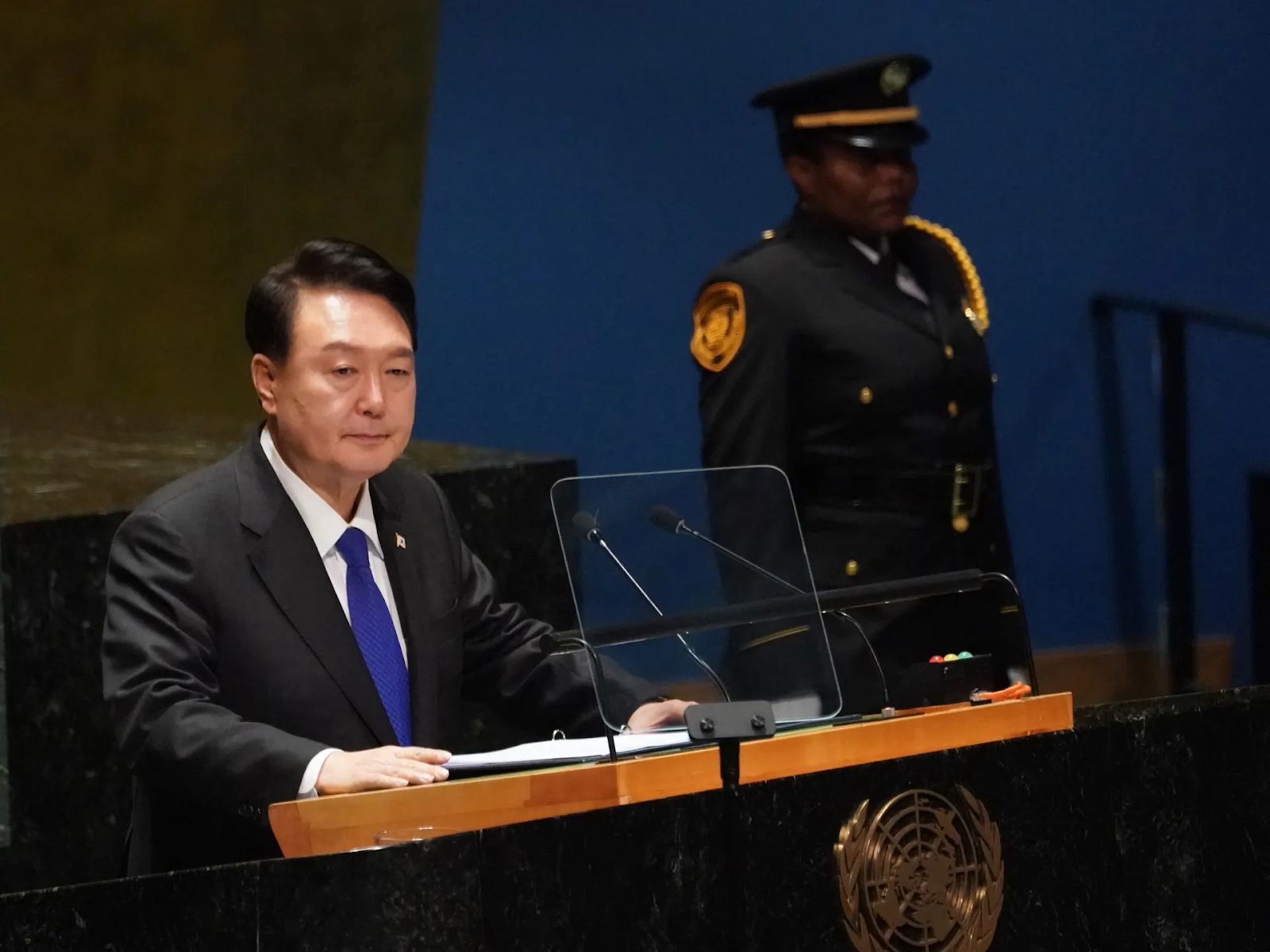

Image source: Google
South Korea has transformed from a war-torn nation into a global economic power, using multilateral institutions to amplify its voice as a middle power. This essay examines South Korea’s role in global organizations, highlighting achievements while critically analyzing the limitations of its diplomacy.
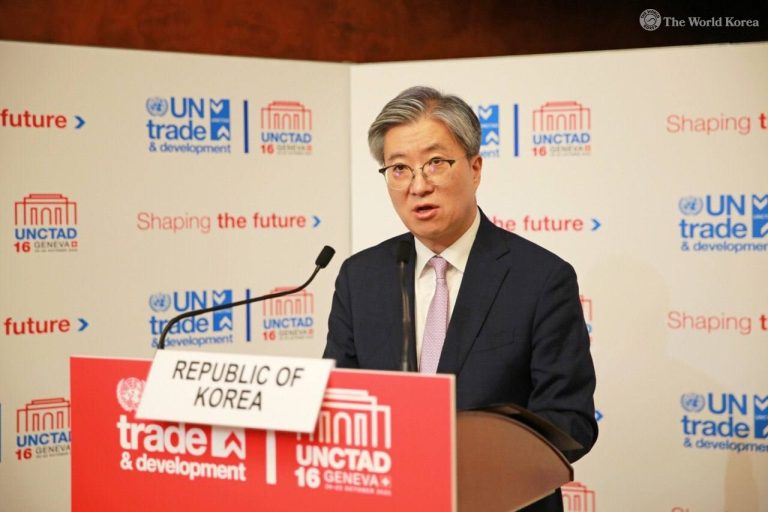
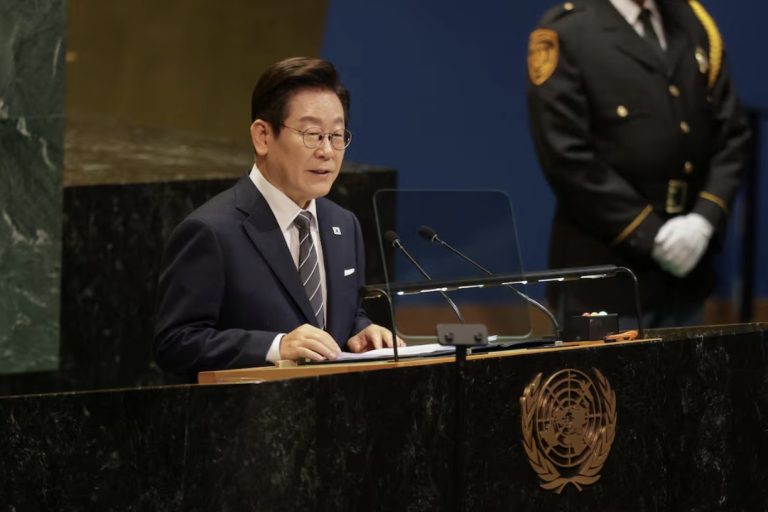
Since joining the UN in 1991, South Korea has become increasingly prominent within the UN system. Ban Ki-moon’s tenure as UN Secretary-General (2007–2016) enhanced Korea’s soft power and symbolized its transition from aid recipient to major donor nation (Lee, 2018). At the 2010 G20 Seoul Summit, Korea positioned itself as a bridge between developed and emerging economies, championing development issues and financial safety nets for developing countries (Choi, 2019).
However, this middle-power diplomacy faces significant challenges. Academic assessments suggest the international perception of Korea’s role at the G20 Seoul Summit was rather negative, contradicting official claims of diplomatic success. One study found that international media and policy circles did not readily accept Korea’s self-proclaimed image as an “honest broker” or global bridge-builder (Niederhafner, 2014). This reveals a troubling gap between Korea’s projected image and actual international reception.
Furthermore, intensifying US-China strategic competition complicates Korea’s position as a middle power. As the global order fragments, Seoul faces the dilemma of maintaining alliance solidarity while pursuing strategic autonomy. Some scholars argue that middle powers often play procedural rather than structural roles in global governance. As one analyst notes, “middle powers lend breadth, diversity, and the appearance of wider consent to institutions overwhelmingly shaped by great-power interests” (Robertson, 2025). This suggests Korea’s influence may be more limited than its diplomatic rhetoric suggests.
Despite these constraints, Korea effectively advances national interests through global institutions. In November 2024, Korea and the Netherlands co-led the first UN resolution specifically focused on artificial intelligence in the military domain at the UN General Assembly’s First Committee. The resolution, titled “Artificial Intelligence in the Military Domain and its Implications for International Peace and Security,” was adopted with overwhelming support and emphasizes applying international law to AI in military contexts (Ministry of Foreign Affairs, 2024). This achievement built upon Korea hosting the second Responsible AI in the Military Domain (REAIM) Summit in Seoul in 2024, which adopted a “Blueprint for Action” endorsed by 61 countries (The Korea Herald, 2024).
A further illustration of Korea’s effective use of global institutions came in September 2025, when Korea won a tariff dispute against India at the World Customs Organization (WCO). The case involved radio units exported by Samsung Electronics, with the WCO ruling they should be classified as duty-free “parts” rather than “telecommunication equipment” subject to 20 percent tariffs. The dispute involved approximately 800 billion won (about $573 million) in potential tariffs (Yonhap News Agency, 2025). Although WCO decisions are not legally binding, this ruling carries significant international authority and strengthens Korea’s position in bilateral negotiations.
On climate change, Korea faces complex domestic tensions. In 2025, as the government prepared to announce its 2035 Nationally Determined Contribution (NDC), the National Human Rights Commission of Korea recommended setting targets aligned with IPCC science. The Commission emphasized that limiting global temperature rise to 1.5°C requires a 60 percent reduction in global emissions from 2019 levels by 2035, urging a front-loaded approach that minimizes burdens on future generations (NHRCK, 2025). However, industry representatives and some commentators argue such ambitious targets fail to consider technological limitations and industrial competitiveness (The Chosun Ilbo, 2025). This debate highlights tensions between economic interests, scientific guidance, and intergenerational equity.
Analyzing this engagement through liberal institutionalism, as articulated by Keohane (1984), international organizations provide frameworks that reduce uncertainty and facilitate cooperation among states. For a middle power like South Korea, these institutions offer platforms to influence rule-making and advance interests without relying on military might. Korea’s active participation also reflects its strategic need for a stable international environment given geopolitical vulnerabilities, including the North Korean threat.
In conclusion, South Korea’s involvement in global organizations illustrates its evolution into a responsible middle power that uses multilateral platforms to build influence and promote global public goods. However, the effectiveness of its middle-power diplomacy depends on its ability to bridge the gap between diplomatic aspirations and international perceptions, maintain strategic autonomy amid great-power competition, and balance economic interests with global climate responsibilities. These challenges will shape Korea’s future role in global governance. Going forward, South Korea is likely to remain an adaptive middle power, but its position could shift depending on the dynamics of the U.S.-China competition and its success in leading niche issues such as AI governance and the green transition. If it is able to take advantage of this momentum consistently, Korea has the potential to transform from a mere “bridge” to a “norm-setter” in the region and globally.
Writer: I Gede Budi Artawan – 202410360110117
References
Choi, J. (2019). Middle power diplomacy and South Korea’s role in the G20. Seoul National University Press.
Keohane, R. O. (1984). After hegemony: Cooperation and discord in the world political economy. Princeton University Press.
Lee, M. (2018). Ban Ki-moon’s legacy and South Korea’s soft power. Global Governance, 24(2), pp. 189-206.
Ministry of Foreign Affairs, Republic of Korea. (2024, November 7). ROK-led resolution on artificial intelligence in the military domain adopted at the United Nations. https://www.mofa.go.kr/eng/brd/m_5676/view.do?seq=322711
National Human Rights Commission of Korea. (2025, July 18). NHRCK recommends setting 2035 NDC aligned with international standards. https://humanrights.go.kr/eng/board/read?boardManagementNo=7003&boardNo=7611361
Niederhafner, S. (2014). Honest broker Korea? The G20 meeting in Seoul and the international perception of South Korea as a global actor. Asian International Studies Review, 15(2), pp. 49-70. https://www.kci.go.kr/kciportal/landing/article.kci?arti_id=ART001937951
Robertson, J. (2025, November 23). Middle power moves: South Korea and the future of global governance. Pearls and Irritations. https://publish.pearlsandirritations.com/seouls-quiet-brics-debate/
The Chosun Ilbo. (2025, September 8). Environment ministry proposes 60% emissions cut by 2035. https://www.chosun.com/english/national-en/2025/09/08/VOOQEMOP5JD7BPI73BT5VJ76SE/
The Korea Herald. (2024, September 10). Seoul summit charts framework on responsible AI military use. https://www.koreaherald.com/article/3471146
Yonhap News Agency. (2025, September 19). Int’l customs body sides with S. Korea in dispute with India over Samsung equipment. https://en.yna.co.kr/view/AEN20250919006300320