
Image source: Pinterest
South Korea is widely recognized for its rapid economic development, advanced industries and global cultural influence. However, behind this success is a less visible group of people: migrant workers who help keep its factories, farms and other industries running. As South Korea faces an aging population and labor shortages, foreign workers have become increasingly important to its economy. Yet their contribution raises an important question: Can a country truly be considered developed if it depends on migrant workers but does not provide them with adequate protection? In my opinion, South Korea’s challenge is not simply to attract more foreign workers but to ensure that economic development does not come at the expense of their rights and dignity.
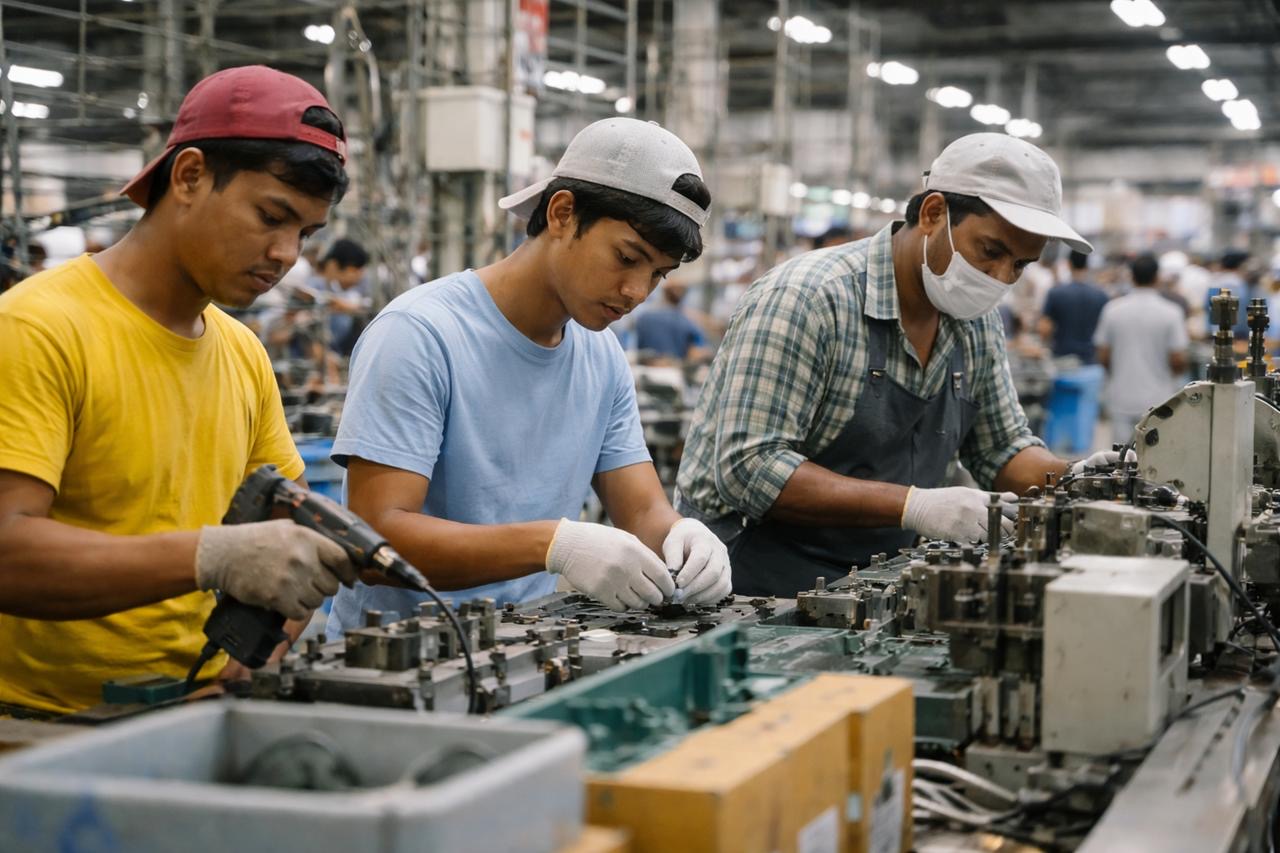
One important reason South Korea needs migrant workers is its changing demographic situation. An aging population and a low birth rate have created pressure on the domestic workforce while many small and medium-sized businesses struggle to recruit enough local employees. To address this problem, the government introduced the Employment Permit System (EPS) in 2004, allowing foreign workers to enter South Korea for temporary employment. The system helps businesses fill labor shortages particularly in sectors where working conditions can be difficult. According to Lee et al. (2026), 337,279 workers held E-9 visas under the EPS in 2024, representing 59.5% of temporary employment visa holders. This shows that migrant labor is not a minor part of South Korea’s economy, it is an important part of how the country responds to its workforce needs.
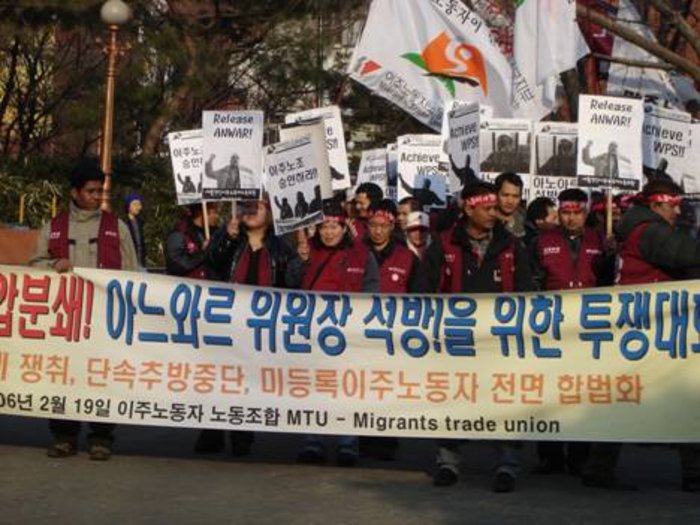
However, the main issue is how these workers are treated after arriving. In an article published by Hanchingu (2026), migrant workers are described as people whom South Korea needs economically but may continue to treat as temporary labor resources rather than full members of society. I find this argument important because it reveals a contradiction in the country’s approach. Migrant workers are welcomed when their labor is needed but their ability to remain in the country and make decisions about their employment is limited by their temporary status. Although a temporary work visa does not automatically mean that workers are mistreated, the system can create a situation in which workers have fewer practical choices when facing unfair treatment.
Research by Kim and Jung (2018) helps explain why this problem cannot be understood only as the result of individual employers behaving badly. Their study argues that the EPS allows the South Korean state to manage migrant workers through quotas and strict classifications. While this system helps organize labor migration and meet business needs, its strong control can also produce exploitative outcomes. In other words, the problem is partly connected to the way the system itself is designed. If workers have limited freedom to change employers, their dependence on a particular workplace can make it harder to challenge poor conditions. Therefore, blaming only irresponsible employers would overlook the wider institutional problem.
The consequences become clearer when looking at workplace safety and access to protection. Lee et al. (2026) interviewed 11 migrant workers who had experienced occupational injuries or illnesses under the EPS. The researchers identified problems including inadequate safety training, limited access to workplace information, superficial safety inspections, difficulties accessing medical services and barriers to workers’ compensation. They also found that restrictions on changing workplaces could prevent workers from responding effectively to harmful conditions. Because the study involved a small group of workers who had experienced injuries or illnesses, its findings should not be treated as representing every migrant worker in South Korea. Nevertheless, it provides concrete examples of how employment rules and workplace conditions can combine to leave vulnerable workers with limited options.
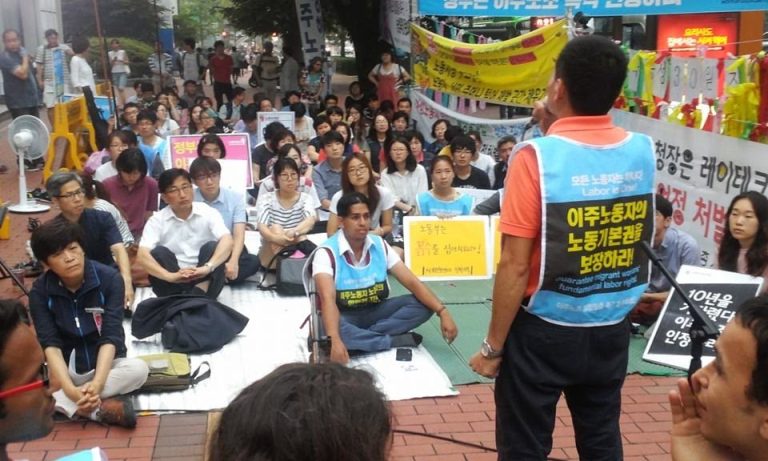
In my view, the most concerning issue is not simply that workplace accidents happen. Accidents can occur in any country including those with strong labor protections. The deeper problem is whether workers can report unsafe conditions, seek medical treatment, receive compensation and leave an unsuitable workplace without putting their employment situation at serious risk. A right that exists on paper is not enough if a worker is afraid or unable to use it in practice. When a worker’s legal status and livelihood are closely connected to employment, the freedom to speak up becomes especially important. This is why labor protection should be considered part of migration policy, rather than a separate issue addressed only after an accident occurs.
This situation also reflects a wider tension between national interests and human rights. From the government’s perspective, controlling labor migration can help respond to shortages, manage the economy, and ensure that businesses have access to workers. These are legitimate policy concerns. However, national economic interests should not automatically take priority over workers’ safety and dignity. If South Korea benefits from migrant labor while placing too much responsibility on workers to manage unsafe conditions or workplace disputes, the benefits and risks of development are not being shared fairly. A country may become economically stronger while some of the people supporting that growth remain in insecure positions.
At the same time, I do not believe the solution is to stop recruiting migrant workers or to ignore the difficulties faced by Korean businesses. South Korea needs a practical system that supports both employers and workers. The government should make workplace transfers more accessible when workers experience abuse or unsafe conditions, strengthen independent workplace inspections and ensure that safety information and training are available in languages workers understand. Access to healthcare and workers’ compensation should also be made easier, particularly for people who may be afraid to report an injury. These reforms would not remove every problem, but they would reduce the risk that workers become trapped in harmful situations. Employers should also be held accountable when they violate labor standards.
More importantly, South Korea should reconsider the idea that migrant workers are only temporary solutions to economic problems. The country does not need to abandon its national identity to protect foreign workers. Instead, it needs to recognize that respecting workers’ rights is compatible with protecting national interests. Fair treatment can support a more stable workforce, improve workplace safety and strengthen the country’s international reputation. Genuine development should not be measured only by productivity, technology or economic growth but also by whether the people contributing to that growth can live and work with dignity.
In conclusion, South Korea’s migrant labor system reveals a gap between economic dependence and workers’ protection. The EPS helps address labor shortages but research shows that its restrictions and workplace conditions can create serious difficulties for some migrant workers. I believe South Korea’s real challenge is not simply attracting foreign labor but building a system in which workers are protected as human beings rather than treated mainly as economic resources. A developed country should not only ask what migrant workers can contribute to its economy, it should also ask whether the system gives them a fair chance to work safely, exercise their rights and be treated with respect. That is the standard by which South Korea’s development should also be judged.
Writer: Aung Seng Bu – 202510360110072
References
Hanchingu. (2026, January 24). Tenaga kerja ‘sekali pakai’ di Korea Selatan: Antara ketergantungan ekonomi, eksploitasi sosial, dan reformasi multikultural. https://hanchingu.com/tenaga-kerja-sekali-pakai-di-korea-selatan-antara-ketergantungan-ekonomi-eksploitasi-sosial-dan-reformasi-multikultural/
Kim, Y.-H., & Jung, H. (2018). Promoting and controlling labor migration: South Korean state’s intervention for control in the temporary migrant worker program and its (un)intended outcomes. Journal of the Korean Geographical Society, 53(2), 229–246. https://doi.org/10.22776/kgs.2018.53.2.229
Lee, H., Kang, M.-J., & Kim, S.-S. (2026). Occupational injuries and illnesses under the Employment Permit System: Exploring perceptions and responses of migrant workers in South Korea. Journal of Immigrant and Minority Health. https://doi.org/10.1007/s10903-026-01997-7