
Image source: Julian Song, John V. Esparza, Netflix/Illustration by Jackie Lay
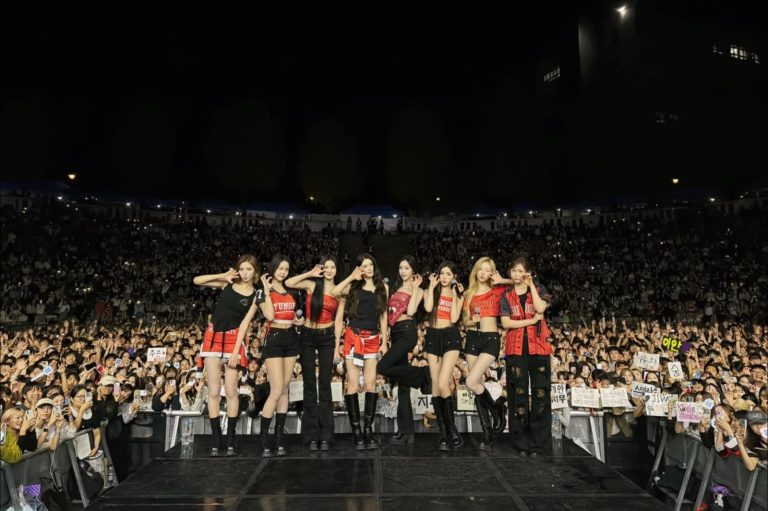
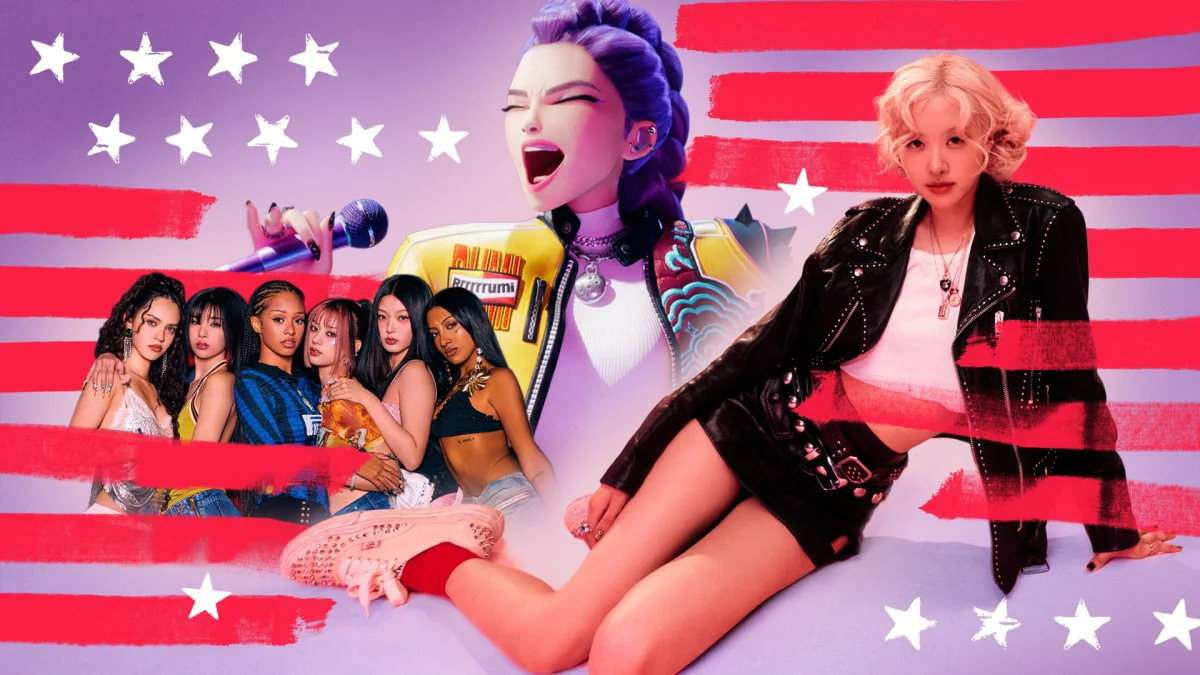
The K-Pop music genre is very popular and has many fandoms all over the world. But did you know that behind the popularity of K-Pop music, there is cultural appropriation carried out in a number of K-Pop music videos to attract viewers? Cultural appropriation is the adoption of an element or elements of a culture or identity by members of another culture or identity in a way that is considered inappropriate or disowned(Wikipedia, 2023). South Korea is trying to boost the K-Pop industry for their economic growth. South Korea is trying to maintain the stability of multiculturalism, one way is by increasing the K-Pop industry, which is very popular among teenagers (Korea.net, 2020).
However, global expansion of KPop which is growing rapidly because it is trending is often seen as a debate regarding cultural appropriation. There are several cases like what happened in music videos, kpop idol fashion style there are sacred cultural elements from other cultures that give rise to controversy there is a concept like commercialization of culture such as wearing “ethnic” clothing to be commercialized for the massive K-Pop industry then there is also the concept of religious symbols from other cultures and it is very offensive and is seen as an exotic and aesthetically pleasing culture (Lee, 2020). On the other hand, many people who have this culture and are proud of their identity are marginalized. It is true that K-Pop bridges cultural exchange, but it is not free from criticism. According to some people this is very disrespectful to the culture.
The K-Pop industry is often seen using foreign culture without taking deep meaning, just as an exotic object (Sanjay, 2020). It is considered to take aesthetics from Latin American and South Asian and several other cultures but originally it was not intended to appreciate or respect that culture but only for commercial needs to attract audiences. Taking elements that are highly respected for their sacredness but taken for the needs of the massive K-pop industry such as taking clothing motifs or taking Hinduism concepts and could take the concept of the highly respected Islamic religion as in the case of the boyband NCT U just to impress their fandom (South China Morning Post, 2020). But this is considered to be melting the spiritual and sacred symbols and as a form of disrespect which resulted in a wave of protests from internet users
Furthermore, This is not just a few forms, there are some that are included in cultural appropriation in the K-Pop industry. Like hip hop culture which started to become popular in the 90s who started wearing streetwear and using braids which is an African American culture that was absorbed from African culture And looks like he’s wearing a chain necklace to look cool and trendy (Lee, 2020). However, this culture is also not free from the commercialization of the K-Pop industry to increase interest but it is considered very reckless where distinctive cultural expressions are treated as disposable costumes rather than meaningful identities.
There needs to be an emphasis on cultural appreciation which must be emphasized in KPop agencies to realize that every culture must be respected (Lee, 2020). So that we don’t become careless and have fatal consequences for the agency’s income, not only that, but this is related to morals that must be upheld in order to know the importance of respecting symbols or cultural customs have to do research whether this is appropriate or not to be implemented for kpop music and try to be objective and avoid bigotry and continue to be defended because it aims to avoid cultural fetishes and considering culture as merely “trendy” or” exotic”. The perspective regarding foreign culture must be with respect by providing credit so that true multiculturalism can be realized.
To achieve a form of multiculturalism kpop agency company must be aware that globalization is not a justification for commercializing culture just for entertainment There must be something creative from the K-Pop industry to symbolize the industry to be more interesting than just doing cultural appropriation. There must be sensitivity to cultures outside South Korea so that they are not misused (Sanjay, 2020). Therefore, it is highly recommended that mandatory cultural sensitivity training for producers, stylists, choreographers, and idols be established as an industry standard to avoid appearing “tone-deaf.” By providing such education to their internal staff, South Korean labels can prevent the recurrence of controversies—incidents that frequently damage their reputations and corporate value, often with fatal consequences.
In addition, the role of global fandom is also must play a better role in receiving entertainment, Even though K-Pop fans are a fanatical fandom, they must be able to speak up and be sensitive to the issue of cultural appropriation. Fandom must be wise in responding to this kind of thing to be more objective regarding the issue of cultural appropriation by admonishing his idol to be more caring and aware and immediately apologize for the incident so that it doesn’t happen again because working together is the key to preventing cultural appropriation problems (South China Morning Post, 2020).
From an international perspective, South Korea utilizes the K-pop music genre as an effective bridge to disseminate its culture and cultivate a positive image worldwide. However, if this industry continues to borrow cultural elements without showing due respect, it could backfire and trigger negative perceptions among a diverse international public. Within South Korea itself, historical factors—such as a highly homogeneous society characterized by a dominant, singular identity—have resulted in a limited understanding of issues concerning race and foreign cultures in everyday life (Korea.net, 2020). This lack of cross-cultural experience is often reflected in entertainment media, where foreign cultural practices are viewed merely as visual trends rather than as living traditions with their own inherent meanings. Consequently, there is a need for greater awareness to truly understand the profound complexity of every culture.
Writer: Naja Amalia – 202510360110009
Reference
Satviki Sanjay. (2020, July 9). Is K-Pop Guilty of Appropriating South Asian Culture?. VICE. https://www.vice.com/en/article/k-pop-south-asia-cultural-appropriation/
South China Morning Post (2020, October 27). NCT U under fire again for use of Islamic imagery in new song. South China Morning Post. https://www.scmp.com/lifestyle/entertainment/article/3107183/fans-nct-u-criticise-k-pop-group-again-using-islamic
Korea Akan Masuk Era Negara Multikultural Melalui Peningkatan Penduduk Asing : Korea.net : Laman resmi pemerintah Republik Korea. (n.d.). https://indonesian.korea.net/NewsFocus/Society/view?articleId=245563
Lee (2020, September 15) The line between cultural appropriation and appreciation in K-pop. https://medium.com/@lizzi.lee123/the-line-between-cultural-appropriation-and-appreciation-in-k-pop-4763150c2b70
Wikipedia. (2023). Cultural appropriation. Wikipedia, The Free Encyclopedia. https://en.wikipedia.org/wiki/Cultural_appropriation