
Image source: koreajoongangdaily.joins.com
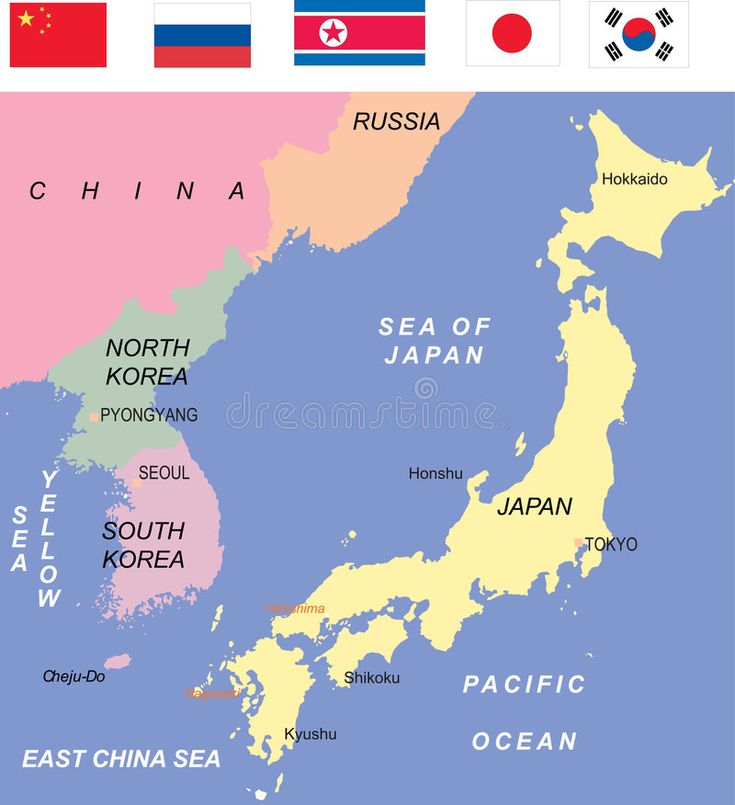
In contemporary East Asian geopolitics, few states face a more precarious balancing act than South Korea. The recent escalation of Sino-Japanese tensions triggered by security disputes over Taiwan and retaliatory economic coercion has profoundly destabilized the region. Caught between its foundational security alignments with Washington and Tokyo, and its critical economic reliance on Beijing, South Korea has radically recalibrated its foreign policy. By abandoning rigid bloc-politics in favour of “strategic ambiguity” and accelerated shuttle diplomacy, Seoul is actively seeking to insulate its vulnerable economy. This essay examines how this pragmatic shift successfully elevates South Korea from a passive alliance partner to an indispensable regional mediator.
The Geopolitical Dilemma and the Limits of Rigid Alignment
The structural issue driving South Korea’s recent foreign policy shift is the escalating geopolitical friction between Japan and China, which places Seoul in a perilous strategic dilemma. Following the rapid deterioration of Sino-Japanese relations in late 2025 sparked by Japanese Prime Minister Sanae Takaichi’s assertive security posture regarding a Taiwan contingency and Beijing’s subsequent retaliatory export controls East Asia has moved perilously close to fracturing into rigid, hostile blocs. For South Korea, this friction represents an existential economic and security crisis. Geographically and economically, the state is caught in the middle: it relies heavily on the United States and Japan for its foundational security architecture, yet its export-driven economy, particularly the vital semiconductor and high-tech manufacturing sectors, remains deeply dependent on trade with China and access to Chinese supply chains.
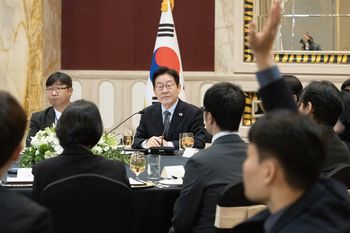
Under the previous administration of Yoon Suk-yeol, South Korea pursued a highly definitive “Indo-Pacific Strategy” that closely aligned with Washington and Tokyo in an effort to contain Chinese regional influence. However, as the Sino-Japanese dispute intensified, the limitations and dangers of this rigid alignment became glaringly apparent. By locking arms completely with Japan’s hard-line stance, South Korea risked severe economic coercion from Beijing a vulnerability historically demonstrated during the 2017 THAAD missile defence crisis, which cost the South Korean economy billions. The core issue facing President Lee Jae-myung’s administration was thus a matter of state survival: how to navigate a brewing superpower conflict without sacrificing the nation’s economic engine or its security guarantees. Recognizing that ideological purity could lead to economic ruin, the administration was forced to abandon the rigid bloc-politics of the previous era and resurrect a doctrine of “Strategic Ambiguity.” This pragmatic, highly calculated balancing act was designed to insulate the nation from the diplomatic fallout of its neighbours while prioritizing its own national interests above allied expectations (Pham, T. T. T. 2023).
The Transformative Impact of Pragmatic Balancing
The transition back to strategic ambiguity and pragmatic diplomacy has yielded profound positive impacts for South Korea, effectively safeguarding its economy while elevating its geopolitical stature in East Asia. The most immediate and tangible benefit of this policy shift has been economic preservation. By deliberately maintaining a posture of non-involvement regarding the Taiwan dispute and refusing to echo Tokyo’s provocative rhetoric, the Lee administration successfully shielded South Korea’s tech industries from the severe rare-earth and dual-use export controls that China imposed on Japan. This calculated restraint allowed Seoul to secure its supply chains, maintain crucial trade flows with its largest economic partner, and prevent a domestic economic crisis, proving that pragmatic balancing can effectively neutralize external economic coercion (Yeo, A., & Lin, P. 2025).
Beyond immediate economic survival, this strategic ambiguity has positively redefined South Korea’s structural role within the international system. Instead of being relegated to the status of a passive junior partner in a U.S.-Japan-led coalition, South Korea has successfully asserted its autonomy as an independent middle power. By refusing to let East Asia completely divide into a binary Cold War-style standoff, Seoul acts as a vital geopolitical buffer. This independence has granted South Korea immense diplomatic leverage. Because it is the only major democratic power in the region actively maintaining open, high-level diplomatic channels with both Beijing and Tokyo, Seoul has transformed itself into an indispensable regional mediator.
This mediator role inherently reduces the risk of regional miscalculation. When communication breaks down between rival hegemons, a strategically ambiguous South Korea serves as the diplomatic bridge, capable of de-escalating tensions and facilitating dialogue. Ultimately, the return to pragmatic balancing has proven that for a middle power surrounded by giants, flexibility is not a sign of weakness, but a sophisticated survival mechanism. It has allowed South Korea to protect its national prosperity, enhance its diplomatic sovereignty, and serve as an anchoring force for stability in an increasingly volatile (East Asia Kim, L. 2025).
Conclusion and Opinion
South Korea’s recalibrated foreign policy exemplifies neorealist hedging within an increasingly volatile East Asian subsystem. By reverting to strategic ambiguity amid the Sino-Japanese crisis, Seoul prioritizes state survival and core economic security over rigid, ideological alliances. From an international relations perspective, this is not diplomatic indecision, but a highly rational, calculated manoeuvre to avoid being caught in the crossfire of great power competition. Furthermore, through active shuttle diplomacy, South Korea reinforces its constructivist identity as an indispensable middle power and regional mediator. Ultimately, this pragmatic balancing remains Seoul’s most effective strategy for preserving national autonomy.
Writer: Fachri Faruq Firdian – 202410360110108
Reference:
Indian Council of World Affairs. (2024). Restarting South Korea-Japan-China trilateral leaders’ summit 2024. ICWA Issue Briefs. https://www.icwa.in/show_content.php?lang=1&level=3&ls_id=10948&lid=6958
Kim, L. (2025). Beyond ambiguity: Operationalizing South Korea’s Indo-Pacific strategy. Daniel K. Inouye Asia-Pacific Center for Security Studies. https://dkiapcss.edu/wp-content/uploads/2025/01/CH13_SouthKorea_ELNW1795.pdf
Pham, T. T. T. (2023). South Korea and the Indo-Pacific strategy: From strategic ambiguity to strategic autonomy. Journal of Liberty and International Affairs, 9(3).
https://www.ssoar.info/ssoar/bitstream/handle/document/92031/ssoar-jlibertyintaff-2023-3-pham_thi-South_Korea_and_the_Indo-Pacific.pdf?sequence=1&isAllowed=y
The Korean Journal of International Studies. (2024). Alliance under pressure: Japan, South Korea, and strategic divergence in a Taiwan contingency. The Korean Journal of International Studies. https://www.kjis.org/journal/view.html?doi=10.14731/kjis.2025.08.23.2.123
Yeo, A., & Lin, P. (2025). Is South Korea ready to define its role in a Taiwan Strait contingency? Brookings Institution. https://www.brookings.edu/articles/is-south-korea-ready-to-define-its-role-in-a-taiwan-strait-contingency/