

Image source: Faye Chong – WordPress
The Hallyu phenomenon, or Korean Wave, is not simply a transnational entertainment trend, but rather the most successful manifestation of soft power in the modern international political landscape. This issue is crucial because South Korea has radically transformed its image from a nation devastated by civil war in the 1950s to a highly competitive global cultural hub in the 21st century. The importance of this cultural diplomacy lies in its ability to create attraction without military coercion or aggressive economic pressure (Nye, 2004). This success has ultimately facilitated the advancement of South Korea’s various national interests on the world stage, from increasing manufactured exports, strengthening the tourism sector, to gaining solid diplomatic support in global forums.
Analyzed using the concept of Soft Power, coined by Joseph Nye, South Korea has comprehensively fulfilled its three main pillars: political values, foreign policy, and culture. Through K-pop and K-dramas, South Korea not only sells aesthetically pleasing content, but also disseminates a lifestyle, hard work ethic, and modern values that align with the aspirations of global society. From the perspective of Constructivism in International Relations theory, South Korea’s cultural diplomacy plays a vital role in reshaping the identity and perceptions of other countries (Lee, 2009). South Korea has successfully reconstructed its image; they are no longer seen solely through the lens of a tense nuclear conflict with North Korea, but rather as a “cool” nation that is innovative, fashionable, and welcoming to modern progress.
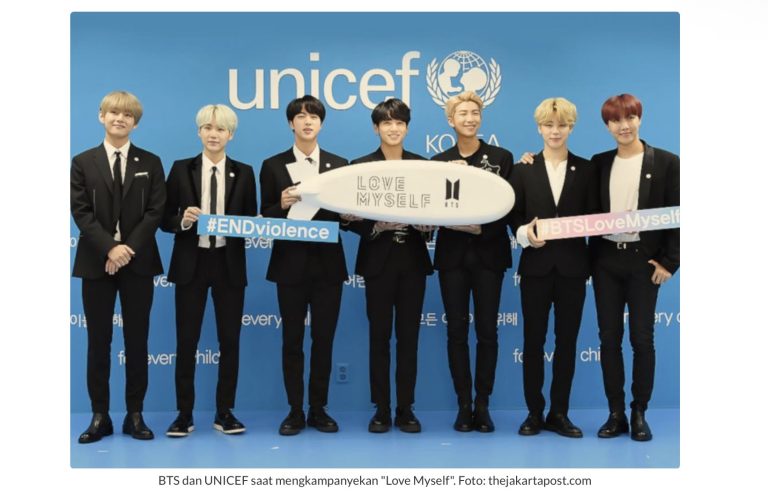
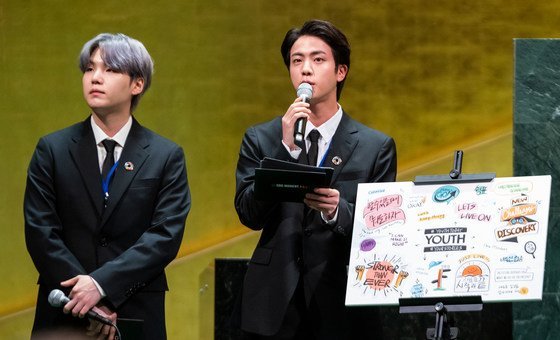
One of the most striking case studies in this phenomenon is the role of the music group BTS in the country’s economy and diplomacy. BTS is not just an idol group, but a diplomatic asset, contributing billions of dollars to South Korea’s Gross Domestic Product (GDP) annually. Their presence at the UN General Assembly as special presidential envoys demonstrates how popular culture can be used to communicate serious issues like climate change and vaccination to young people around the world. Furthermore, the international success of drama series like Squid Game and the film Parasite has opened up discussions about class inequality. This demonstrates that Korean cultural products are not merely superficial entertainment but possess narrative depth that resonates with universal human concerns, thus strengthening South Korea’s position as a thought leader in the realm of pop culture.
The country uses institutions like the Korean Cultural Center (KCC), located around the world, as instruments of public diplomacy to deepen cross-cultural understanding. My analysis suggests that this success is not a historical fluke, but rather the result of a meticulous orchestration between the private sector and the support of statist government policies. Since the 1997 Asian economic crisis, the South Korean government has consciously treated culture as a strategic commodity with a powerful domino effect. When someone falls in love with an idol group or drama series, they automatically develop a positive preference for technology products like Samsung and Hyundai vehicles, as well as Korean beauty products and cuisine. This is a concrete form of smart power that integrates cultural appeal with a subtle yet deadly penetration of economic power.
In my opinion, the strength of South Korea’s cultural diplomacy lies in its unique ability to “hybridize” cultures. They are adept at blending disciplined local Confucian values with dynamic Western popular trends, resulting in a unique product that still feels familiar to a global audience from diverse backgrounds. Despite this, significant challenges remain, such as the risk of excessive cultural commercialization or potential nationalist friction with neighboring East Asian countries. However, the impact thus far has been substantial and positive for the country’s existence. South Korea has successfully diversified its economy, with the creative economy sector now serving as a new backbone, far more resilient to fluctuations in traditional commodity markets than in previous decades.
Reflectively, South Korea’s role has shifted significantly to become a highly influential “middle power” in the Asian region and globally. The impact is felt not only quantitatively through foreign exchange generated from tourism, but also qualitatively through a drastic improvement in nation branding. South Korea has proven to the world that in the digital 21st century, a nation’s influence is no longer measured solely by the number of nuclear warheads or geographical area, but by how much its cultural narrative can inspire, mobilize, and be loved by the world’s population. This soft power gives South Korea significantly more diplomatic breathing room, allowing it to have a more audible voice in international negotiations and peace issues on the Korean Peninsula. This strategy serves as a valuable lesson for many other countries: creativity is the most powerful diplomatic weapon.
Writer: Muhamad Alfarizi – 202410320110032
References
The New York Times. (2021, November 3). From K-Pop to ‘Squid Game,’ South Korea Is the World’s Newest Cultural Power. https://www.nytimes.com/2021/11/03/world/asia/korea-squid-game-culture.html
Lee, G. (2009). A Soft Power Strategy in South Korea’s Foreign Policy. Korea Journal, 49(2), 115-144.
Herman, T. (2018, December 17). BTS Is Worth Roughly $3.6 Billion To The South Korean Economy. Forbes. https://www.forbes.com/sites/tamarherman/2018/12/17/bts-is-worth-roughly-3-6-billion-to-the-south-korean-economy/
Nye, J. S. (2004). Soft Power: The Means to Success in World Politics. New York: PublicAffairs.