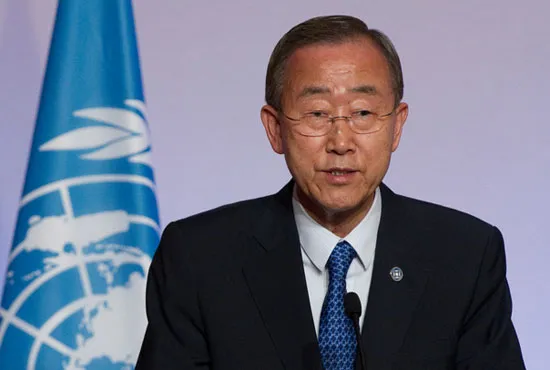

Image source: Britanica
When South Korea joined the United Nations in 1991, it was still widely viewed as a developing country and a beneficiary of international aid and UN assistance programs. Three decades later, that image has largely been reversed. South Korea now leads major UN agencies, chairs G20 summits, and sits among donor nations at the Organisation for Economic Co-operation and Development (OECD). This transformation reflects not only economic growth but also a deliberate diplomatic strategy to translate material success into institutional influence. This essay examines South Korea’s evolving role in global organizations through three cases: Ban Ki-moon’s tenure as UN Secretary-General, the country’s transition to OECD donor status, and its leadership in global health governance during the COVID-19 pandemic.
The most visible milestone in South Korea’s organizational diplomacy came in 2006, when Ban Ki-moon was elected as the eighth Secretary-General of the United Nations. Ban, a career diplomat who had served as South Korea’s foreign minister, held the position for two terms until 2016. His election marked the first time a Korean had led the world’s most prominent international organization. During his tenure, Ban prioritized climate change, supported the Responsibility to Protect doctrine, and guided the United Nations through major crises such as the Ebola outbreak and the Haiti earthquake. His leadership demonstrated that South Korea could contribute not only financially but also intellectually and diplomatically to global governance.
Beyond Ban Ki-moon’s leadership, South Korea’s most significant institutional transformation occurred through its engagement with the OECD. In 2010, South Korea became the first former aid recipient to join the OECD’s Development Assistance Committee (DAC), the group composed of major donor countries that coordinate international development aid. This transition signified that South Korea had moved from being an aid recipient to becoming a provider of development assistance. Through the Korea International Cooperation Agency (KOICA), the government now operates development programs in many countries, offering financial support and technical cooperation. South Korea frequently emphasizes its own experience of rapid economic development as a model for other developing nations. This “recipient-to-donor” narrative provides the country with unique credibility in international development discussions.
South Korea’s role in global health governance, particularly during the COVID-19 pandemic, represents another dimension of its growing international influence. Korean biotechnology companies exported diagnostic test kits to more than one hundred countries during the early stages of the pandemic. In addition, the government contributed financial support to COVAX, the global initiative designed to distribute vaccines more equitably. South Korea’s testing and contact tracing system attracted international attention and was examined by global health experts. Korean officials also participated in briefings and technical cooperation with the World Health Organization, contributing to international discussions on pandemic management. Through forums such as the G20 and ASEAN Plus Three, South Korea further advocated stronger global preparedness for future health emergencies.
These examples illustrate a broader diplomatic strategy. South Korea has consistently used international organizations as platforms to expand its global role beyond what its military size or geographic position might suggest. By placing Korean leaders in influential positions, contributing resources to global initiatives, and sharing its development experience, the country has cultivated an image as a responsible and constructive member of the international community. This reputation strengthens South Korea’s diplomatic influence and allows it to participate more actively in shaping international policies.
Despite these achievements, structural limitations remain. South Korea does not hold a permanent seat or veto power in the United Nations Security Council, and its influence in institutions such as the International Monetary Fund remains relatively limited compared with larger powers. Nevertheless, South Korea has managed to build meaningful influence through sustained participation and cooperative engagement in multilateral institutions.
In conclusion, South Korea’s role in global organizations has evolved significantly from passive recipient to active contributor and leader. Through Ban Ki-moon’s leadership at the United Nations, membership in the OECD Development Assistance Committee, and contributions to global health governance during the COVID-19 pandemic, South Korea has established itself as an influential middle power in the international system. Its experience demonstrates that consistent engagement, technical expertise, and strategic diplomacy can enable middle powers to shape global governance in meaningful ways.
Writer: Isti Mahardhika Ardhani – 202410360110160
References
Ban, K. (2021). Resolved: Uniting nations in a divided world. Columbia University Press.
Korea International Cooperation Agency. (2023). KOICA annual report 2022. https://www.koica.go.kr/koica_en/result/publication/
Ministry of Foreign Affairs, Republic of Korea. (2024). ROK’s contribution to international peace and development. https://www.mofa.go.kr/eng/wpge/m_5449/contents.do
OECD. (2023). Development co-operation profiles: Korea. https://www.oecd-ilibrary.org/development/development-co-operation-profiles_kor
United Nations. (2024). Former Secretary-General Ban Ki-moon. https://www.un.org/sg/en/content/former-secretary-general-ban-ki-moon
World Health Organization. (2022). Republic of Korea: COVID-19 response and WHO cooperation. https://www.who.int/westernpacific/countries/republic-of-korea