
Image source: Getty Image
Introduction
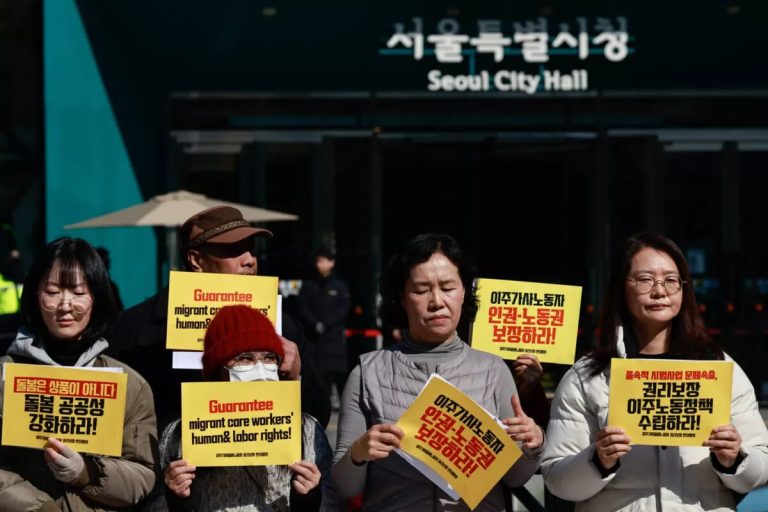
In 2006, South Korea’s Ministry of Education announced that school textbooks would no longer present Korea as a nation united by a single bloodline. Instead, they would describe the country as a multiethnic and multicultural society (Lim, 2009). Unlike Western multiculturalism, which developed through civil rights movements, was primarily initiated by the government rather than driven by broad public demand. This essay argues that South Korea’s shift towards multiculturalism was mainly driven by demographic needs. However, its state-led and assimilationist approach also reflects the government’s desire to be recognised as a modern nation that respects rights, which is what Lan (2023) describes as geopolitical multiculturalism. In other words, demographic pressure explains why the government took action, while concerns about its international reputation help explain how it shaped its policies.
Demographic Need
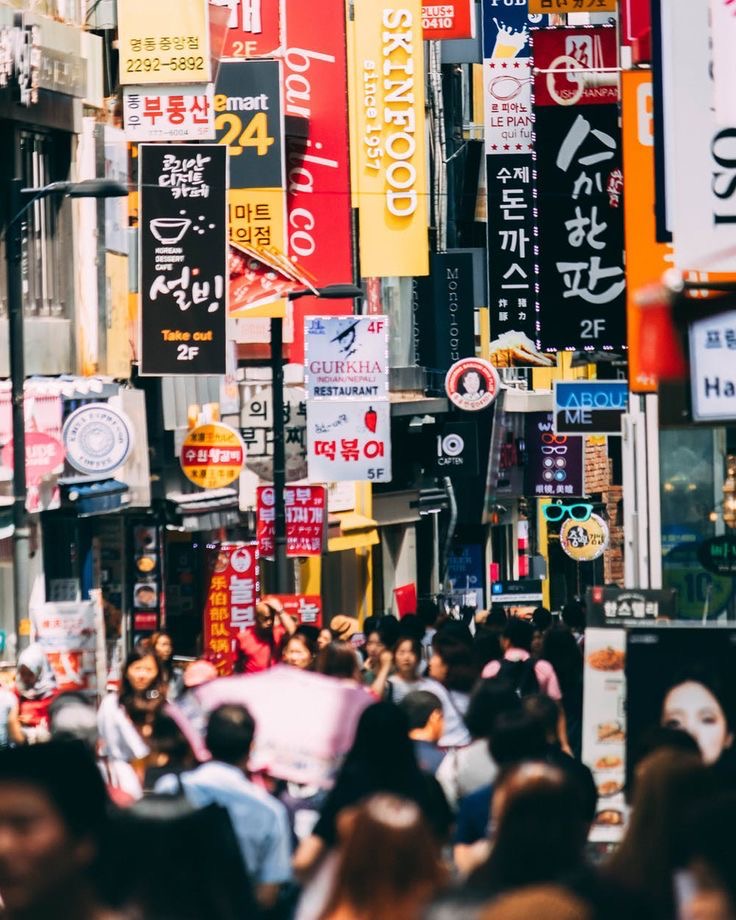
South Korea faced serious demographic challenges. The number of foreign residents increased from fewer than 50,000 in 1990 to more than one million by 2007, making up around 2 percent of the population (Lim, 2009). A significant part of this increase came from marriage migration. International marriages reached their highest number in 2005, with 43,121 marriages, or around 13.6 percent of all marriages. By 2007, they also accounted for roughly 40 percent of marriages among men working in agriculture, where finding women of marriageable age in rural areas had become difficult (Lim, 2009). At the same time, Korea had a fertility rate of only 1.08 in 2006, which raised concerns about a shrinking workforce (Lim, 2009). In response, the government began to view immigration as a way to deal with the country’s demographic and labour shortages (Draudt, 2019). As Lim (2009) points out, this change did not necessarily come from a new or more open-minded attitude among Koreans. Rather, societies are sometimes forced to change because of the conditions they face.
A State-Led, Assimilationist Design
However, demographic needs alone cannot fully explain the way South Korea designed its multicultural policies. The government’s April 2006 plan for the social integration of migrant women, mixed-race people and immigrants was its first integrated plan for building a multicultural society. However, the plan mainly focused on multicultural families and paid much less attention to migrant workers, even though they had arrived in Korea earlier (Ahn, 2012). Migrant women were also viewed as a resource that could help address pressures related to family responsibilities and care work (H.-M. Kim, as cited in Ahn, 2012). This approach placed more emphasis on assimilation than on recognising cultural differences. Foreign wives were expected to learn the Korean language and customs, while early discussions about preparing for a multiethnic society paid little attention to changes that Korean society itself needed to make (Lim, 2009). Media coverage also supported this pattern by mostly using the term damunhwa to describe low-income women and families who needed assistance and integration into Korean society (Lee, 2017). Draudt (2019) further explains that this system created different levels of acceptance for various groups of “Global Koreans”, depending on how useful they were to the country’s economy.
Reputational Concern
Why would the government be concerned about how other countries viewed it? Lan (2023) explains that states use multiculturalism to improve their international standing. The idea of tolerance has also been presented in Korea as a sign of moral progress that could help the country become recognised as part of the group of liberal developed nations (Kim, 2015). However, Lan explains this strategy without fully addressing why states would care about international criticism in the first place. After all, no one can directly force South Korea to change its policies, so why should the government pay attention to such criticism? Finnemore and Sikkink (1998) help explain this through their discussion of international norms. They argue that political leaders follow certain norms to gain international legitimacy, meet the expectations of other countries and protect their reputation. Being recognised as a liberal state is also part of the identity that these leaders want to maintain (pp. 902-904). Applied to South Korea, having a reputation for ethnic exclusivity could challenge its image as a modern democracy. However, this is an interpretation of their argument, since Finnemore and Sikkink do not specifically discuss South Korea.
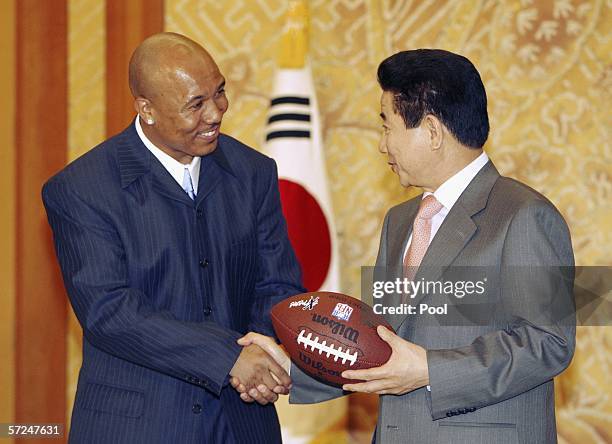
There is also evidence that supports this interpretation. In its 2006 report to the UN Committee on the Elimination of Racial Discrimination, the South Korean government acknowledged that the idea of being a “pure-blooded” nation had contributed to discrimination against mixed-blood people. It also stated that the government was preparing measures to address the problem (Committee on the Elimination of Racial Discrimination [CERD], 2006, paras. 43-45). The report also responded to the Committee’s earlier observations about South Korea. In the same year, the public celebration of football star Hines Ward led to a national discussion about Korean identity and discrimination. This was followed by changes in school textbooks and the introduction of legal status for mixed-race people (Lim, 2009). Kim, as cited in Draudt (2019), also describes multiculturalism as a way for South Korea to improve its international reputation and meet the expectations of a developed nation. Taken together, these developments suggest that the government was also responding to an international audience. However, regular reporting to international treaty bodies alone is not enough to prove that reputational concerns were the government’s main motivation.
Counter-Argument and Limits
There are two main arguments that need to be considered. First, it could be argued that demographic pressures alone were enough to explain the government’s multicultural policies. However, demographic needs explain why the government put the issue on its agenda, rather than why it chose a particular policy approach. More than 70 percent of foreign residents in South Korea were non-skilled workers (Lim, 2009), yet government policies focused more heavily on marriage migrants and mixed-race people. This selective approach could also be connected to image management. People presented as members of multicultural families were easier to show as part of Korean society than migrant workers, whom the government wanted to keep as temporary labour.
Second, there is little evidence that the Korean public itself was mainly motivated by shame or concerns about international reputation. Yoon, Song and Bae (2008) found that around 58 percent of respondents agreed that international organisations had too much influence over the government. They also found that Koreans were more tolerant of immigrants than commonly assumed, partly because immigrants were seen as a small and relatively powerless group. This suggests that reputational concerns were more likely to influence the government than Korean society as a whole. Such a finding supports the idea of a top-down policy approach, but it also makes it harder to argue that international shame was what motivated the public.
There are also other limitations to this argument. Seol and Seo (2014) conclude that the distinction between inclusion and exclusion has developed into a hierarchy of nationhood. Meanwhile, Lan (2023) points out that East Asian countries continue to struggle with the gap between promoting multiculturalism and maintaining assimilationist policies. The idea of a purely “top-down” process also leaves out the role of other actors. For example, activists within the foreign worker community helped move the discussion towards the rights of migrants to belong to Korean society (Lim, 2009).
Conclusion
South Korea’s shift towards multiculturalism was shaped by two main forces. Demographic needs explain why the government took action, while concerns about its international reputation help explain why its policies followed a selective and assimilationist approach. When viewed through the idea of geopolitical multiculturalism, South Korea’s policy appears less as a response to demands from the public and more as an effort to improve its position and image internationally. However, the limitations of this approach are clear. Unless the government also addresses how the majority population understands belonging, multiculturalism introduced from above risks becoming more about maintaining a positive national image than achieving genuine inclusion.
Writer: Muhammad Zein – 202510360110040
References
Ahn, J.-H. (2012). Transforming Korea into a multicultural society: Reception of multiculturalism discourse and its discursive disposition in Korea. Asian Ethnicity, 13(1), 97-109. https://doi.org/10.1080/14631369.2012.625703
Committee on the Elimination of Racial Discrimination. (2006). Reports submitted by States parties under article 9 of the Convention: Fourteenth periodic reports of States parties due in 2006, Addendum, Republic of Korea (CERD/C/KOR/14). United Nations.
Draudt, D. (2019). Multiculturalism as state developmental policy in global Korea. In G. A. Brazinsky (Ed.), Korea and the world: New frontiers in Korean studies (pp. 157-178). Lexington Books.
Finnemore, M., & Sikkink, K. (1998). International norm dynamics and political change. International Organization, 52(4), 887-917.
Kim, N. H.-J. (2015). The retreat of multiculturalism? Explaining the South Korean exception. American Behavioral Scientist, 59(6), 727-746.
Lan, P.-C. (2023). Geopolitical multiculturalism in East Asia. Asia Pacific Viewpoint. https://doi.org/10.1111/apv.12396
Lee, S. (2017). Damunhwa (multiculturalism) and Segyehwa (globalization) in South Korea: An unequal exchange. Sarjana, 32(1), 37-45.
Lim, T. C. (2009). Who is Korean? Migration, immigration, and the challenge of multiculturalism in homogeneous societies. The Asia-Pacific Journal: Japan Focus, 7(30), Article 3192.
Seol, D.-H., & Seo, J. (2014). Dynamics of ethnic nationalism and hierarchical nationhood: Korean nation and its otherness since the late 1980s. Korea Journal, 54(2), 5-33.
Yoon, I.-J., Song, Y.-H., & Bae, Y.-J. (2008). South Koreans’ attitudes toward foreigners, minorities and multiculturalism [Conference paper]. American Sociological Association annual meeting, Boston, MA.