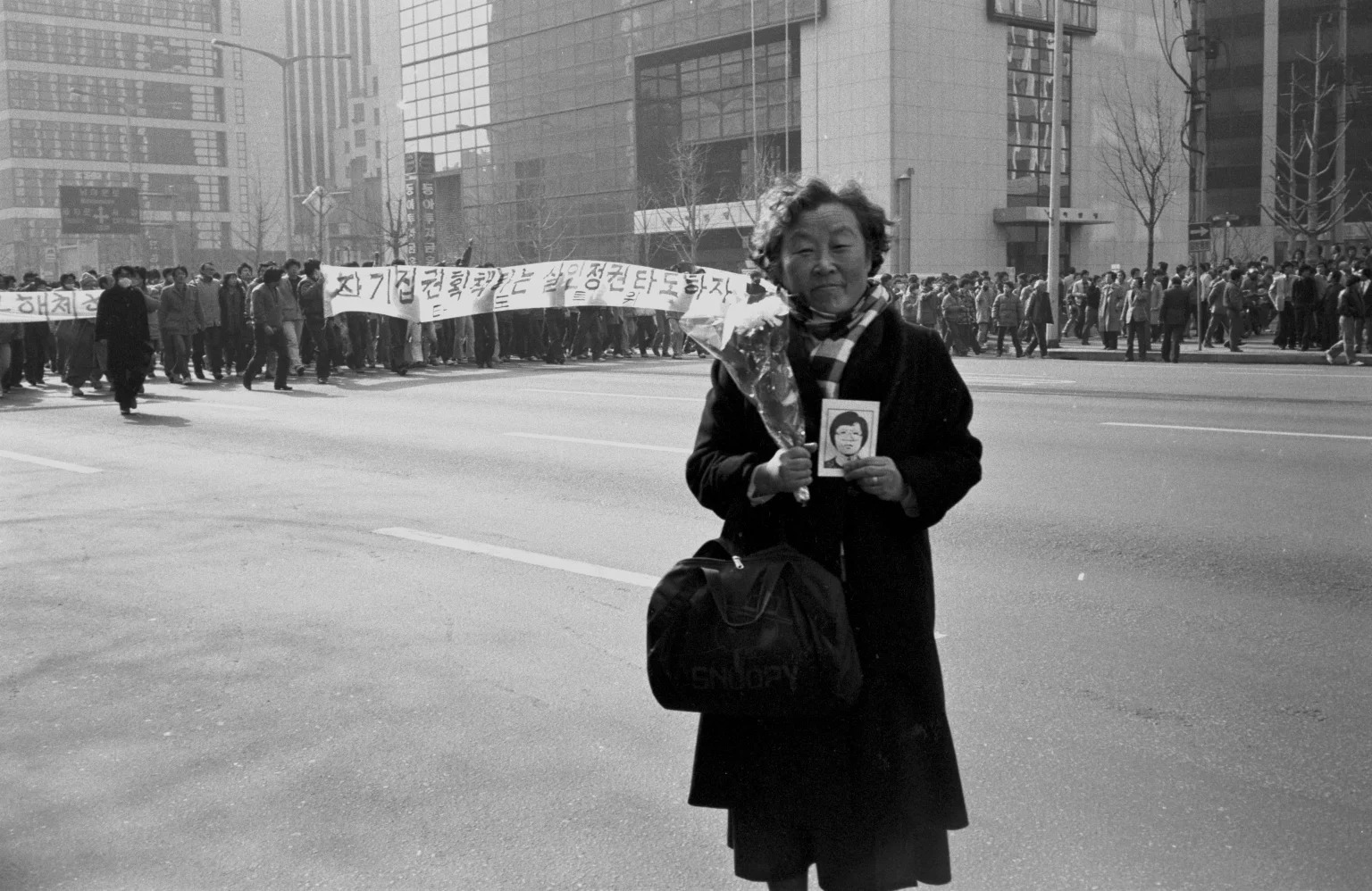

Image source: archives.kdemo.or.kr
Introductiom
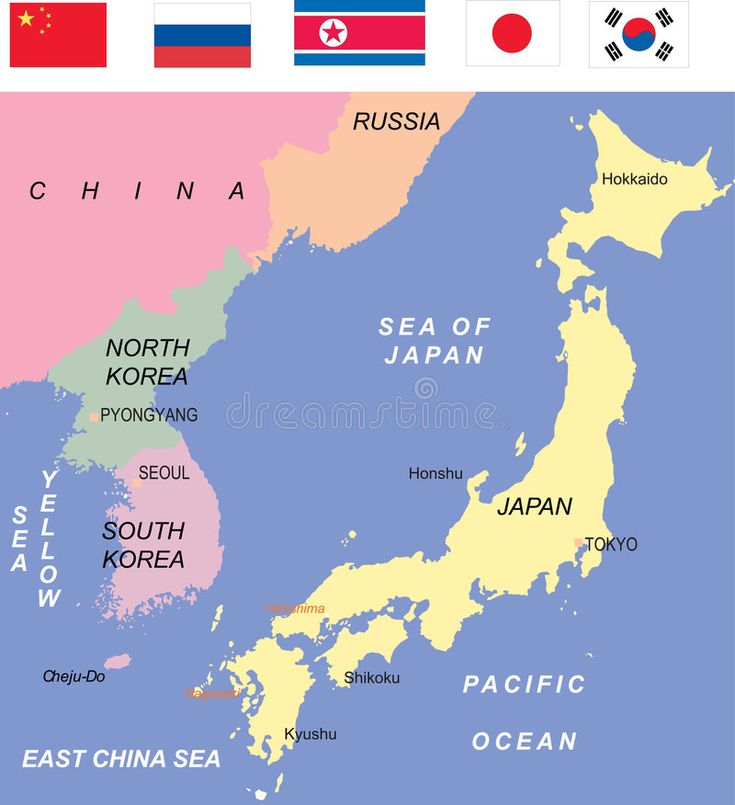
South Korea is a state that has experienced the hardships of colonialism, because of that the impact of colonial era has shaped the nation’s economic mindset. This is evident in South Korea’s GDP data relative to the U.S. dollar, which stood at just 3.97 billion in the 1960s, but today has increase significantly to an average of 1.70 trillion U.S. dollars. It is this success that earned the state the appelation “Miracle on the Han River,” referring to its significant economic growth in the Asian region. This rapid growth was driven by the Developmental State policy through rapid industrialization combined with a bold spirit of democratization, making it one of the most influential nations on the international stage. This essay will analyze how a country that began in poverty due to colonial oppression was able to rise through economic success and stable political maturity, these two main pillars are key to South Korea’s ability to strengthen its influence on the international regime.
Discussion
South Korea’s journey to becoming an influential nation on the international stage began with a strong economic foundation built through the developmental state system. This theory posits that state intervention is necessary to direct market investments in specific ways to foster the state’s economic growth (Bresser-Pareira, 2019). This transformation began in the 1960s under the leadership of Park Chung-hee, who believed that the private sector at the time was still too weak to drive the economy. Through this policy, the government implemented strategic interventions by supporting large conglomerates known as Chaebols, to invest in the national economy. This political boldness successfully propelled South Korea from a focus on light industry to heavy and high-tech industries. The policy reached its height in the 1990s, the government launched the HAN (Highly Advanced National) Project as a visionary pioneering research initiative. This is the project that laid the foundation for the development of semiconductor memory chip technology today, some major companies like Samsung and SK Hynix control 73% of the global DRAM market share and 53% of the NAND flash market share on 2022. This success is not only an economic achievement, but a strategic step toward building national interest and strengthening South Korea’s geopolitical position on the international stage.
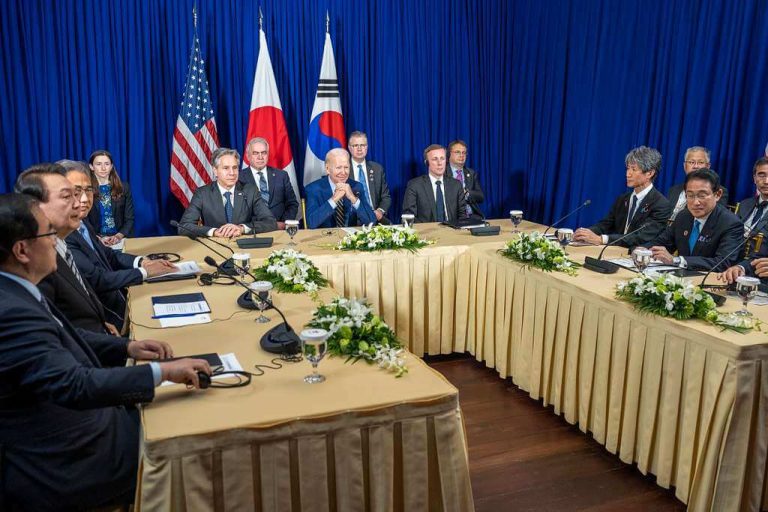
However, if it just economic strength, was not enough to secure South Korea’s position within the liberal world order, given that the state had previously been under authoritarian regime from the 1960s through the 1980s. This struggle for democratization was marked by a successful democratic movement that toppled the regime, leading to a more democratic South Korea. From a liberalism perspective, this transition was not merely a change in the system of government, but an effort to align the nation’s identity with global norms. Democratization enable to paved the way for South Korea to participate in international institutions, culminating when South Korea was officially recognized as a developed state by UNCTAD on July 2, 2021. Thus, democratization complemented economic success by providing moral legitimacy, which has enabled South Korea to reinforces its influence in global diplomacy.
Conclusion
In conclusion, South Korea’s transformative journey demonstrates that a nation’s ability to exert influence on the international stage is not determined by a single dimension alone. The success of its policies in addressing the challenges of industrialization through the developmental state system has provided a strong foundation for Seoul’s economy, establishing it as a leading player in key sectors, particularly the global semiconductor industry. Beyond its economic strength, South Korea’s advancement on the world stage has been accompanied by the courage to undertake a democratic transition. It is this democratization that provides the moral legitimacy for South Korea to be recognized as part of the liberal community on the global stage. By combining material innovation with political stability, the spirit of struggle manifested in reached its peak with UNCTAD’s recognition in 2021, which solidified South Korea’s position no longer as a nation playing catch-up, but now as a key norm setting in global diplomacy. South Korea serves as proof that to achieve sustainable global influence, a state must be able to balance their economic ambitions with domestic political stability.
Writer: Andoro Arya Seno – 202410360110119
References
Britannica, T. Editors of Encyclopaedia. (n.d.). The Yushin order (Fourth Republic). Encyclopedia Britannica. Diakses pada 17 Maret 2026, dari https://www.britannica.com/place/South-Korea/The-Yushin-order-Fourth-Republic
Castillo, M., & Martins, N. (2016). Innovation and production in the digital era: The case of South Korea (No. 113). Economic Commission for Latin America and the Caribbean (ECLAC). https://repositorio.cepal.org/server/api/core/bitstreams/4dde717e-946b-47b1-a34f-6bca1a4b5273/content
Prasetyo, U. D. (2021, 30 Mei). Prespektif liberalisme dalam hubungan internasional. Kompasiana. https://www.kompasiana.com/unggundwiprasetyo/60b2feb08ede483eeb164852/prespektif-liberalisme-dalam-hubungan-internasional
The World Bank. (n.d.). GDP (current US$) – Korea, Rep. World Bank Open Data. Diakses pada 17 Maret 2026, dari https://data.worldbank.org/indicator/NY.GDP.MKTP.CD?locations=KR
Lee, J. (2021, 5 Juli). UNCTAD officially upgrades South Korea’s status to developed economy. The Hankyoreh. https://english.hani.co.kr/arti/english_edition/e_international/1002230.html
International Trade Administration. (2024, 11 Januari). South Korea semiconductors. International Trade Administration, U.S. Department of Commerce. https://www.trade.gov/market-intelligence/south-korea-semiconductors
Lembaga Bahasa Internasional FIB UI. (2023, 27 September). Chaebol: Konglomerat besar di balik majunya ekonomi Korea Selatan. https://lbifib.ui.ac.id/id/blog/artikel/chaebol-konglomerat-besar-di-balik-majunya-ekonomi-korea-selatan