
Image source: Pinterest
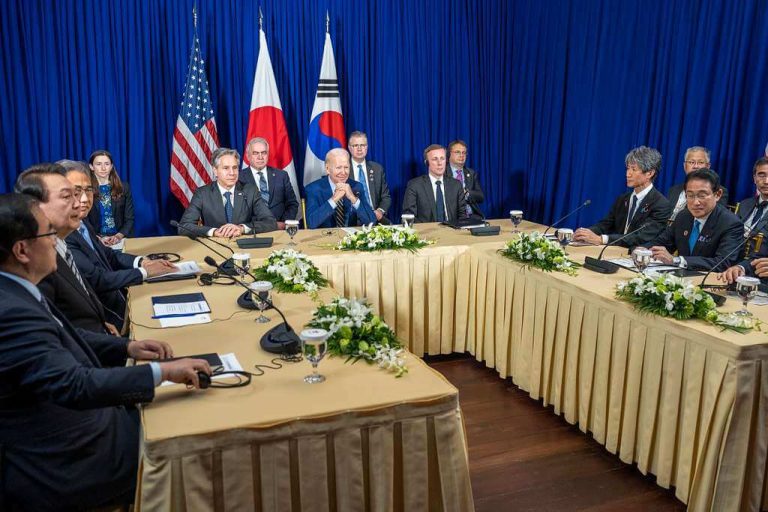
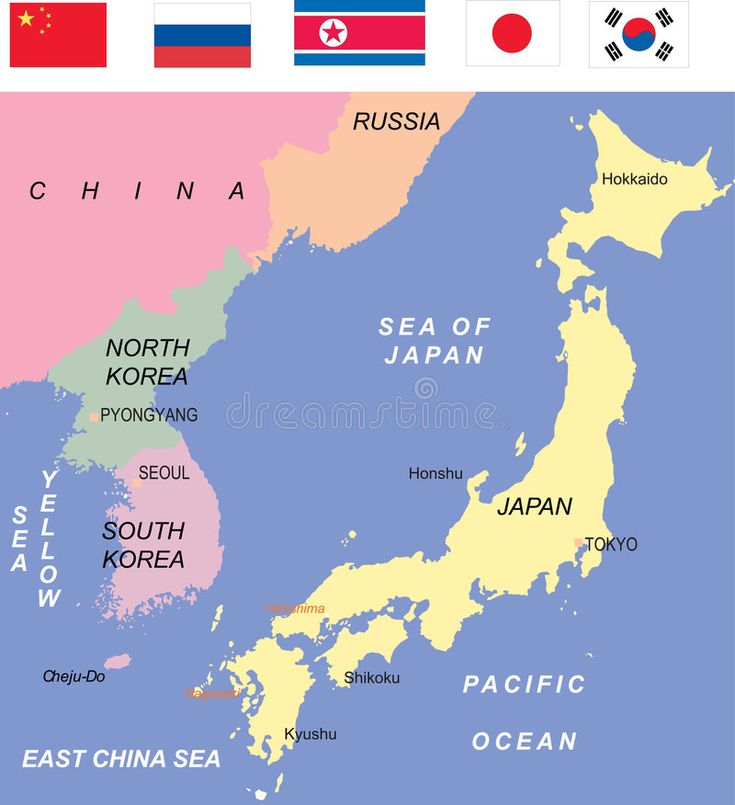
South Korea occupies a rather pivotal geographical position in East Asia, sandwiched between two major world powers that are considered advanced and modern in the Asian region. Situated precisely between the two giants, Japan and China, South Korea occupies a location that could be described as strategic; however, in reality, South Korea’s relations with these two major nations are highly complex and intricate. This is due to South Korea’s diplomatic, security, and foreign policy ties, which remain influenced by historical conflicts that have occurred. This article will discuss the historical conflicts between South Korea and Japan and China and how these conflicts influence South Korea’s foreign policy in East Asia.
Japan and South Korea
The conflict between South Korea and Japan is not merely about territory or economic interests, but also concerns historical memory and national identity. Japan’s colonization of the Korean Peninsula from 1910 to 1945 has left a lasting impact and remains a crucial part of South Korea’s historical narrative and national identity. During Japan’s occupation of the Korean Peninsula, Japan committed human rights atrocities such as the “Comfort Women” and “Labores” phenomena; furthermore, Japan brutally forced Koreans to serve as conscripts in its military during World War II (Dodge, 2018).
This colonial pressure led to a split among independence leaders; Kim Il-sung sought refuge in the Soviet Union, while Syngman Rhee based himself in the United States (Lankov, 2002; Stueck, 1995). Japan’s defeat in 1945 subsequently triggered the division of the peninsula along the 38th parallel, separating Soviet influence in the North and U.S. influence in the South. This tension culminated in the Cold War, which perpetuated the conflict in Korea (Dodge, 2018).
In its development, South Korea established a foreign policy heavily reliant on security considerations. This is evidenced by the formation of the Mutual Defense Treaty with the United States in 1953 as a response to the threat from the North (Kim, 2006). Seoul’s position as a “bulwark” of democracy in East Asia has ensured that its foreign policy remains aligned with Washington’s strategic interests in the Pacific. On the other hand, pressure from the United States and the need to contain communist influence prompted South Korea to normalize diplomatic relations with Japan in 1965, despite lingering, deeply rooted historical sentiments (Lee, 1985).
China and South Korea
China is South Korea’s largest economic partner, and China itself plays a crucial role in Seoul’s economic growth. Unlike South Korea’s relationship with Japan, which has had a rather dark history from the outset, the dynamics of South Korea’s relationship with China are dominated by the dilemma of national security interests, where China’s position as North Korea’s primary supporter creates strategic tension with South Korea, which is directly backed by the United States (Chung, 2007).
In a geopolitical context, South Korea’s foreign policy toward China often employs strategic ambiguity, as South Korea—which is allied with the United States on security matters—must balance its relationship with China, its largest economic partner. Tensions arose when South Korea agreed to deploy the U.S. THAAD missile defense system (2017) to counter North Korean missiles. This prompted China to respond by imposing significant economic pressure as a form of rejection of the Seoul-U.S. military cooperation (Meick & Salidjanova, 2017).
South Korea’s role in East Asia
To navigate historical tensions with Japan and strategic dilemmas with China, South Korea has adopted the identity of a middle power. Through this diplomatic approach, Seoul seeks to position itself as a bridge builder connecting the interests of major powers in East Asia to prevent extreme polarization (Kim, 2014). By leveraging soft power instruments and actively participating in global governance, South Korea seeks to expand its diplomatic autonomy so that it is not merely an object in hegemonic competition, but rather an actor capable of maintaining regional stability (Sook-Jong, 2012).
Conclusion
In conclusion, South Korea’s foreign policy in East Asia is fundamentally shaped by the trauma of its past and the geopolitical reality of being caught between major powers. Japanese colonial rule (1910–1945) not only left historical wounds and nationalistic sentiments but also triggered political fragmentation that led to the division of the Korean Peninsula. On the other hand, relations with China present a contemporary challenge in the form of a dilemma between massive economic dependence and national security needs supported by an alliance with the United States.
Despite being caught between dark historical memories with Japan and hegemonic pressure from China, South Korea has successfully transformed itself from merely an object of conflict into a proactive actor through its Middle Power Diplomacy strategy. By positioning itself as a bridge builder and optimizing soft power instruments, Seoul seeks to navigate great power competition to maintain regional stability. Ultimately, South Korea’s foreign policy reflects a continuous effort to balance diplomatic autonomy, economic growth, and national defense amid the complexities of East Asia.
Writer: Maulana Fareid – 202410360110146
References
Chung, J. H. (2007). Between Ally and Partner: Korea-China Relations and the United States. Columbia University Press.
Dodge, E. (2016). The effects of Japanese colonization in Korea. In Sosland Journal (pp. 66–69). University of Missouri–Kansas City. https://info.umkc.edu/sosland_journal/wp-content/uploads/2019/02/sosland-2016.pdf
Kim, S. S. (2006). The Foreign Policy of South Korea. Cambridge University Press.
Kim, S. S. (2014). South Korea’s Middle Power Diplomacy: A Response to Chinese Hegemony and the U.S. Rebalance to Asia. The Journal of East Asian Affairs.
Lankov, A. N. (2002). From Stalin to Kim Il Sung: The Formation of North Korea, 1945-1960. Rutgers University Press.
Lee, C. S. (1985). Japan and Korea: The Political Dimension. Hoover Press.
Meick, E., & Salidjanova, N. (2017). China’s Response to U.S.-South Korean Missile Defense Cooperation. U.S.-China Economic and Security Review Commission.
Sook-Jong, S. (2012). South Korea as a Middle Power: Its Role in Global Governance. Chatham House.
Stueck, W. (1995). The Korean War: An International History. Princeton University Press.