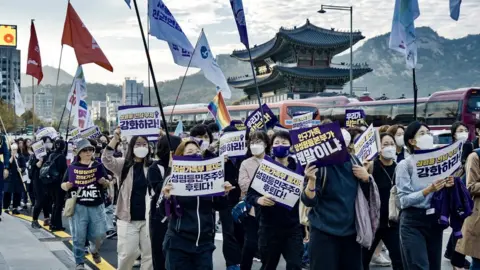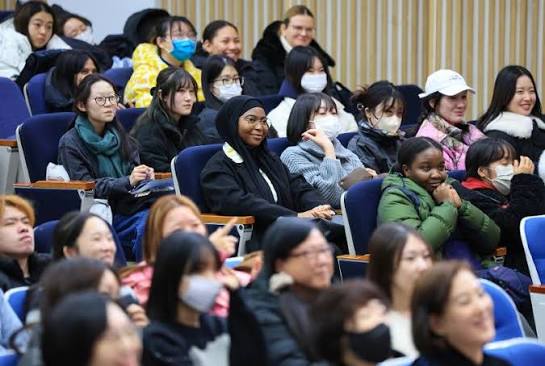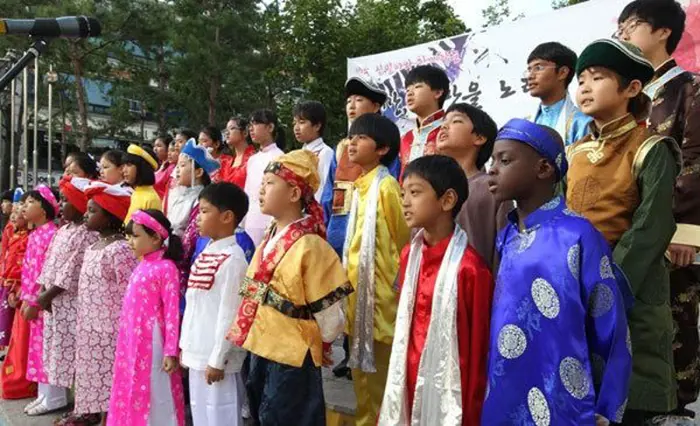

Image source: Newspim
South Korea is a democratic country that has experienced various events, one of which is the Gwangju Movement that occurred between 18 to 27 May 1980 in the city of Gwangju, South Korea, which was a community movement to fight for democracy, the event brought a significant movement for South Korea until the election of Park Youngsam who became the first president elected by the people. How meaningful the movement and the struggle of students and civilians were, making May 18 a national commemoration day also marks the importance of the Gwangju Uprising in the development of democracy in South Korea (Han, C. 2026). Unfortunately, even though South Korea is a democratic country that should not see a superior group among another, the Gwangju Movement was carried out by both men and women who felt there was a mistake in the government, by uniting without looking at their gender they achieved their goals by uniting, the Gwangju movement or the implementation of democracy, young women still uncomfortable with gender gaps in the economic, political, and social fields. On the other hand, young men mostly do not feel affected by information that us detrimental to one side (Hyungjung Mo, C., & You, S. 2025). In addition, According to the index data on women’s political empowerment provided by Our World in Data, women’s involvement in politics only increased significantly in the 1980s and continued to increase until the 2000s, but the index appears unstable and shows ups and downs, indicating that women have not fully enjoyed civil liberties, fully participate in civil society, and are represented in politics (Our World in Data, 2025).
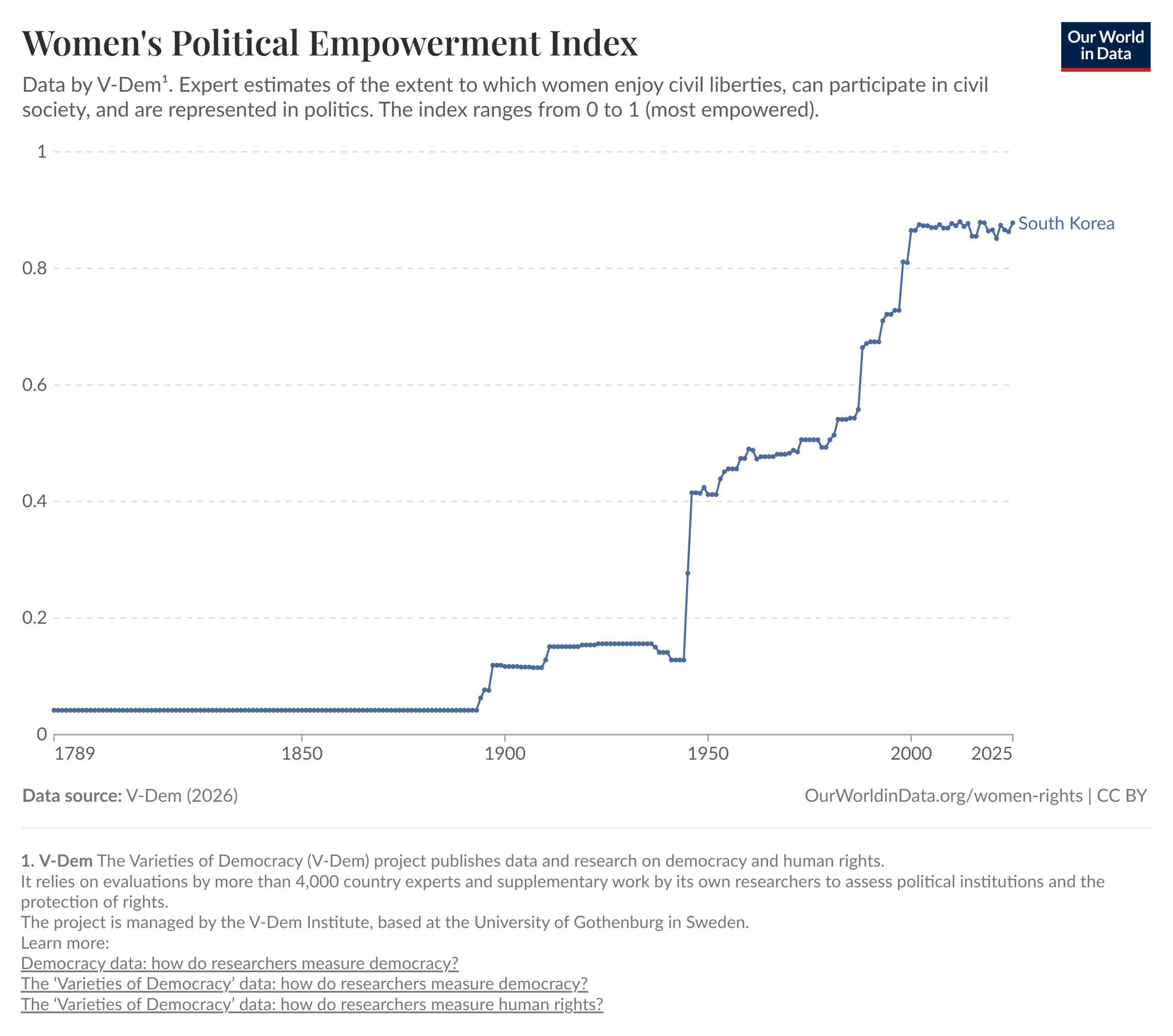
Image source: OurWorldinData.org/women-right
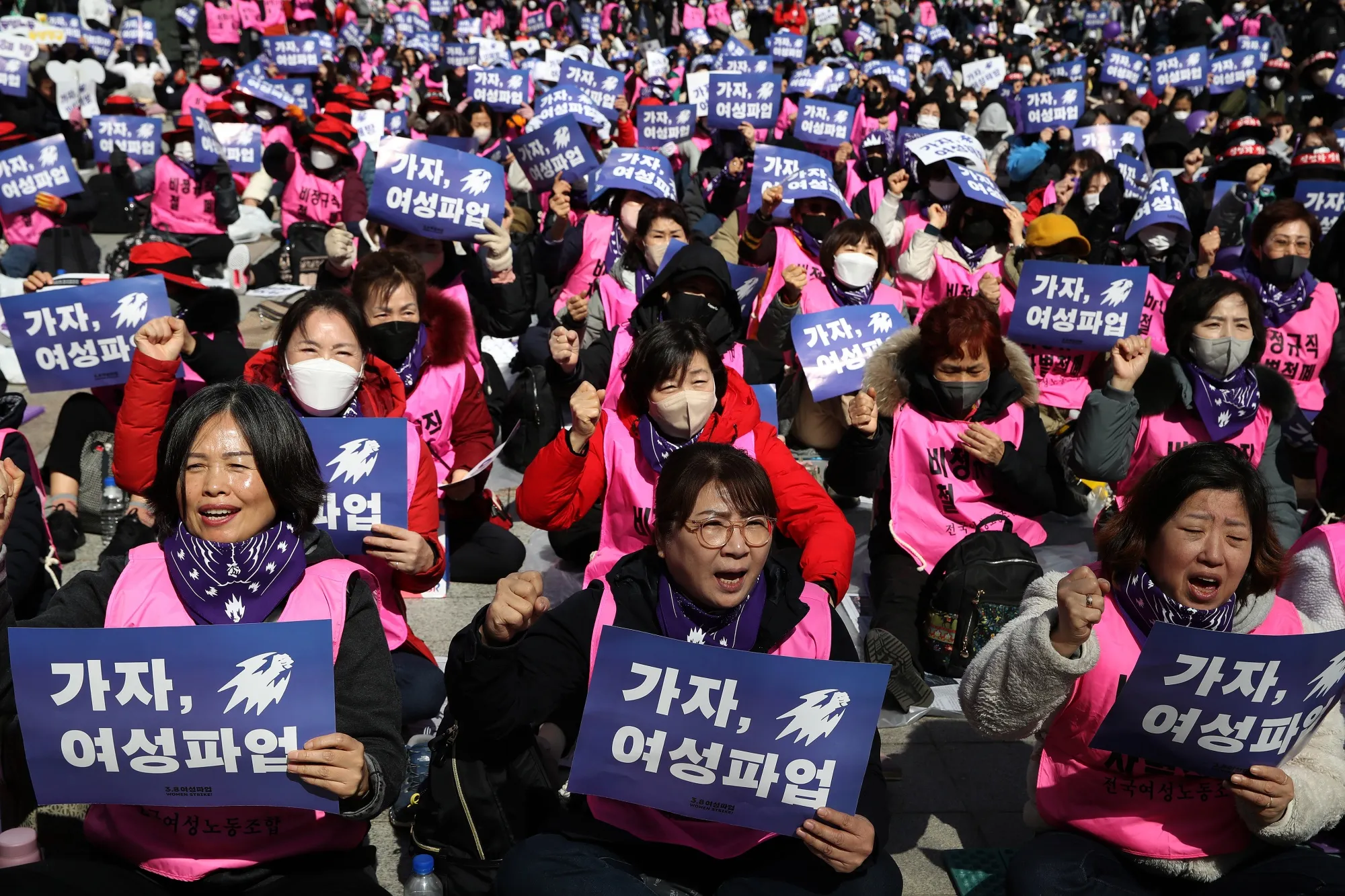
The continuous pressure from young men on young women has given rise to the feminism, which leads to feelings of anger towards sexism, misogyny, and patriarchy, as well as a desire for empowerment and liberation (Jung, G,, & Moon, M. 2025). Sexism itself is defined as discrimination based on sex or gender, especially those who receive and feel the impact the most are women and girls (Masequesmay, G. 2026). In response to this pressure, the South Korean feminist activist movement, which began through the community of young feminist organizations and the media, gave birth to the 4B Movement as a resistance that contains resistance to Bihon (not getting married); Bichulsan (not giving birth); Biyonae (not dating); Bisekseu (not having sex with men), these four mark a radical rejection of patriarchy (Lee, Y. 2025), this movement shows that South Korea’s democratic claims are irrelevant, along with many democratic countries that claim to so-called support equality for women, but none of it have so far achieved it, because many still label women as an afterthought in politics (Lovenduski, J. 2019). In order to suppress this discrimination, starting from women’s rights organizations and the 4B Movement, women in South Korean formed the Women’s Party on March 8, 2020 with 6000 members who joined in just a week and only 38 days of the Party’s formation, they got 208,698 votes (0.74%) resulting to this Party ranked 10th, having a goal of fighting patriarchy, ensuring equality, representing women’s voices, etc (여성의당). The formation of this party should not be necessary because women should be able to feel safe and have rights in their activities, bur some women South Korea feel they have to form this party, warning that discrimination and violence in South Korea are at risk of being ignored (McCurry, J. 2020).
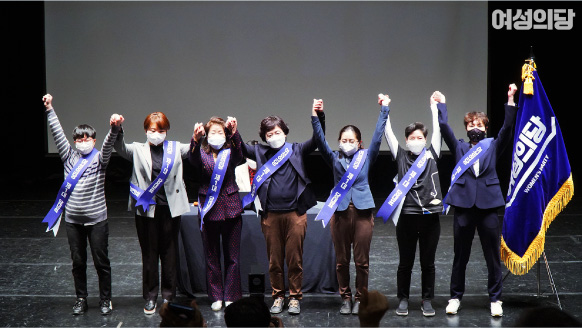
Image source: Hong Su-hyeong – 출처 : 여성신문(https://www.womennews.co.kr)
This issue is an interesting concern, with South Korea’s claim as a democratic country but its implementation, especially towards women, is far from democracy that promotes equality, the formation of a women’s party should not be necessary, not talking about women but rather as fellow human beings, it is better not to see others as objects or prohibit someone from getting their rights. Even after the formation of a Women’s Party, discrimination against women in South Korea is still exist, to the point of the formation of anti-feminists because they reject something that has been fought for hard, which is gender equality, making the gaps even greater with young women carrying out one of the 4B Movements, Bichulsan as known as not giving birth. The fact that the more feminists fight for their rights, the higher the negative reaction to hinder that goal (Miranj, 2026). Although gender equality is still not fully achieved, the formation of the first Women’s Party in South Korea has been proof that South Korea is slowly starting to open up and fight for women’s rights even though they have not yet fully obtained the freedom. Anti-feminists in South Korea, possibly rejecting the emerging of Women’s Party because it is threatened by the radical 4B Movement, even though the Women’s Party uses feminism which by definition means full equality for women in the social, economic, and the political fields (Burkett, E., Brunell, L. 2026). It should be underlined that the feminist movement occurs because the public treats women as something that has no rights in social, economic, and political. Radical feminism cannot be justified but the treatment of men who do not accept equality is more unjustified and unreasonable, therefore the Women’s Party in South Korea which does not adopt radical feminism shows that women can take part in politics and accept equality without discrimination an giving in to negative responses from anti-feminists.
Writer: Sabianti Oktavia Ramadhani – 202410360110047
References
Bastian Herre, Veronika Samborska, Pablo Arriagada, and Hannah Ritchie (2023) – “Women’s Rights” Published online at OurWorldinData.org. Retrieved from: https://ourworldindata.org/women-rights
Burkett, E., Brunell, L. (2026, March 31). feminism. Encyclopedia Britannica. https://www.britannica.com/topic/feminism
Han, C. (2026, March 11). Gwangju Uprising. Encyclopedia Britannica. https://www.britannica.com/event/Gwangju-Uprising
Hyunjung Mo, C., & You, S. (2025, April 16). The fight over gender equality in South Korea. Carnegie Endowment for International Peace. https://carnegieendowment.org/research/2025/04/the-fight-over-gender-equality-in-south-korea
Jung, G., & Moon, M. (2025). “Feminism is like a light to me”: The collective process of feminist awakening among young female college students in South Korea. Asian Journal of Social Science, 53(1), 100177. https://doi.org/10.1016/j.ajss.2024.10.002
Lee, Y. (2025, August 11). 4B movement. Encyclopedia Britannica. https://www.britannica.com/topic/4B-movement
Lovenduski, J. (2019). 3. Feminist Reflections on Representative Democracy. Political Quarterly, 90.
Masequesmay, G. (2026, March 27). sexism. Encyclopedia Britannica. https://www.britannica.com/topic/sexism
Miranj. (2026, March 26). ‘We Will Not Stop!’: Resisting anti-feminist backlash in Korea – MenEngage. MenEngage. https://menengage.org/stories/we-will-not-stop-resisting-anti-feminist-backlash-in-korea
McCurry, J. (2020, April 14). South Korea’s first feminist party holds out hope of election miracle. The Guardian. https://www.theguardian.com/world/2020/apr/14/south-koreas-first-feminist-party-holds-out-hope-of-election-miracle
여성의당. (n.d.). About the Women’s Party. http://www.womensparty.kr/about/eng.php