
Image source: Korean Times
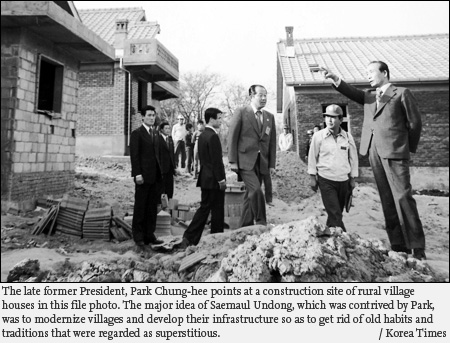
South Korea’s transformation from a war-torn agrarian economy into a global economic powerhouse is widely celebrated as one of the most remarkable developmental success stories of the twentieth century. At the heart of this modernization was the Saemaul Undong (New Village Movement) initiated in the 1970s, a community-driven initiative that revolutionized rural infrastructure and agricultural productivity. However, in the twenty-first century, South Korea faces a profoundly different challenge. A rapidly aging population, critically low birth rates, and massive rural-to-urban migration have created a severe demographic vacuum in agricultural regions. To fill this void, there has been a significant influx of foreign immigrants, particularly female marriage migrants from Southeast and Northeast Asia. This demographic shift has fundamentally altered the social fabric of rural Korea, necessitating a complex transition toward multiculturalism. Adapting to this new demographic reality is not just a matter of domestic social cohesion; it is a critical strategy for South Korea’s survival. Through the lens of International Relations (IR) theories, specifically Constructivism, this essay analyzes the structural challenges of integrating marriage migrants into South Korea’s rural communities and argues for a shift from state-led assimilation to genuine multicultural inclusion.
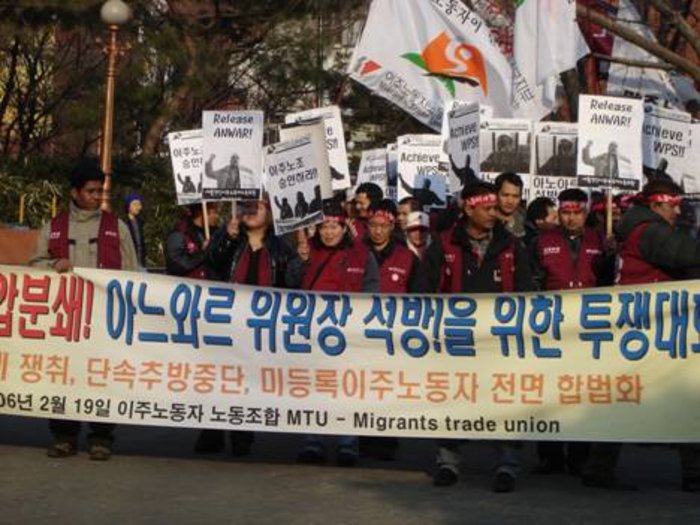
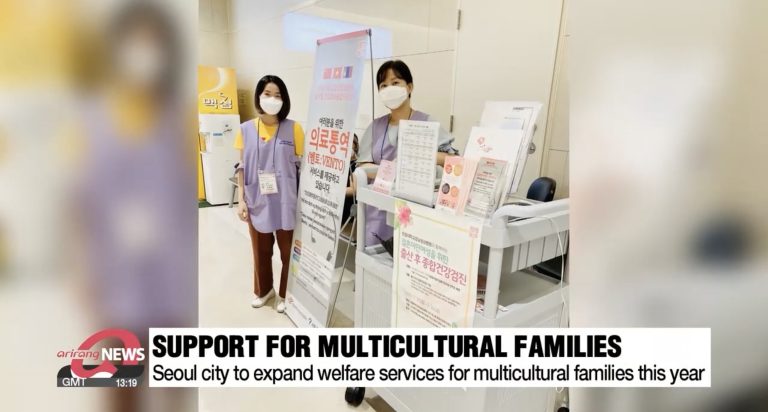
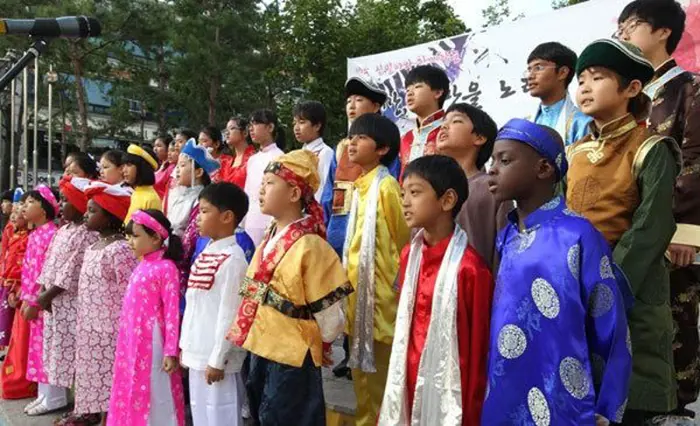
The demographic reality of rural South Korea is currently defined by an acute labor shortage and a crisis of social reproduction. Driven by rapid urbanization, young native Koreans have largely abandoned farming villages. Consequently, international marriages have surged as rural bachelor farmers seek wives abroad. Today, foreign brides primarily from Vietnam, China, and the Philippines form a substantial portion of new rural households. While this migration offers a demographic lifeline to rural areas, it brings profound integration challenges. Marriage migrants, many of whom come from the Global South to marry men in a higher-income country, navigate a process often described as “global hypergamy” (Encinas-Franco, 2024).
Upon arrival, these women are frequently expected to assimilate rapidly into the traditional Korean patriarchal family structure. As Encinas-Franco (2024) observes, state-sponsored integration programs often relegate these migrants to traditional female roles as obedient wives and mothers, requiring them to perform “Koreanness” to gain social acceptance. This dynamic has given rise to the concept of “maternal citizenship,” where rights and inclusion are contingent upon the migrants’ ability to fulfill reproductive and domestic duties rather than being recognized as inherent universal rights (Encinas-Franco, 2024).
This situation reflects a broader national policy of “conditional citizenship.” Chung (2018) notes that South Korea’s willingness to host people of different ethnicities has historically been driven by economic and demographic imperatives rather than a genuine commitment to multiculturalism. In a society where citizenship has traditionally been defined by bloodlines (jus sanguinis) rather than birthplace or civic values, new citizens must “earn” their rights through assimilation, maintaining a hierarchical structure where the native majority grants privileges rather than acknowledging equal rights (Chung, 2018).
To fully understand the friction between South Korean society and incoming marriage migrants, one must apply the International Relations concept of Constructivism. Constructivism posits that a state’s actions, policies, and interests are profoundly shaped by its socially constructed national identity, historical norms, and shared beliefs. For decades, South Korea constructed its national identity around the myth of “Danil Minjok,” or a single-blooded, ethnically homogenous nation. This deeply entrenched norm makes the influx of diverse ethnicities a symbolic threat to traditional notions of what it means to be South Korean.
Denney and Green (2023) highlight that public attitudes toward immigrants in South Korea are heavily influenced by these identity-based drivers. The integration of migrants is often met with resistance because non-ethnic Koreans disrupt the longstanding communitarian identity that prioritizes cultural similarity and shared genealogy. Even when migrants gain legal status, they continue to face racialized differentiation in everyday social interactions, where their nationality, ethnicity, and perceived class position mark them as the “other,” producing stigma and a state of permanent conditional acceptance (Lee, 2026).
Furthermore, South Korea is categorized in intercultural communication as a “high-context culture,” where meaning is embedded in implicit social relationships and unwritten rules. This creates invisible but formidable barriers for marriage migrants. The state’s assimilationist approach is evident in its language policies. Park and Choi (2024) found that while mixed-heritage children in rural South Korea speak Korean as their first language, there is little institutional support for them to maintain their mothers’ heritage languages. This stems from a societal ideology that devalues Southeast Asian languages due to their perceived lack of socioeconomic value, driven by a fear of racial discrimination and a strong desire for assimilation (Park & Choi, 2024). The Constructivist lens reveals that until South Korea reconstructs its national identity to genuinely value diversity, structural discrimination will persist.
In my assessment, South Korea’s current approach to multiculturalism, often labeled as state-led assimilation, is unsustainable. The historical Saemaul Undong framework succeeded because it empowered residents through self-help and cooperation. However, applying these principles to today’s rural demographics requires moving beyond viewing immigrants merely as demographic stopgaps or tools for social reproduction.
South Korea must transition from a “thick,” vertical conception of citizenship based on ethnicity to a “thin,” horizontal liberal conception where all members of the political community are equal, regardless of race or origin (Chung, 2018). First, the government should shift educational policies to celebrate and preserve heritage languages, recognizing them as assets in a globalized world rather than obstacles to Korean integration (Park & Choi, 2024). Second, integration programs must move beyond domesticating foreign wives and instead empower them as independent economic actors and community leaders. If the modern Saemaul Undong utilizes the skills and diverse perspectives of marriage migrants in local leadership roles, rural communities will become far more resilient.
The evolution of South Korea’s rural landscape serves as a microcosm of the broader challenges faced by homogeneous nations navigating globalization. The influx of marriage migrants has exposed the limitations of an identity built strictly on ethnic homogeneity. While state policies have facilitated legal inclusion, the persistent racialized differentiation and conditional citizenship underscore the need for a profound cultural shift. By reconstructing its national identity to embrace genuine multiculturalism supported by inclusive language policies and equal civic participation South Korea can successfully navigate its demographic evolution, transforming its rural communities into vibrant, resilient, and inclusive societies.
Writer: Ananda Fahru Tiar Muslim – 202510360110031
References
Chung, E. A. (2018). The Politics of Conditional Citizenship in South Korea: An Analysis. Journal of Contemporary Asia, 48(3), 1-20. https://doi.org/10.1080/00472336.2018.1504111
Denney, S., & Green, C. (2023). Public attitudes towards co-ethnic migrant integration in South Korea. Journal of Ethnic and Migration Studies, 49(1), 1-20. https://doi.org/10.1080/1369183X.2023.2286207
Encinas-Franco, J. (2024). Negotiating Gender and Kinship within Multicultural Families in Non-highly Urbanised Areas of South Korea. Genealogy, 8(2), 76. https://doi.org/10.3390/genealogy8020076
Lee, S. (2026). Structural Interaction and Marriage Migration in South Korea. OMNES: The Journal of Multicultural Society, 16(2), 94-110. https://doi.org/10.64446/omnes.2026.07.16.2.94
Park, M. Y., & Choi, L. J. (2024). A longitudinal study of marriage-migrant mothers in South Korea. International Journal of Bilingual Education and Bilingualism, 27(4), 1115-1128. https://doi.org/10.1080/13670050.2024.2340007