

Image source: Pinterest
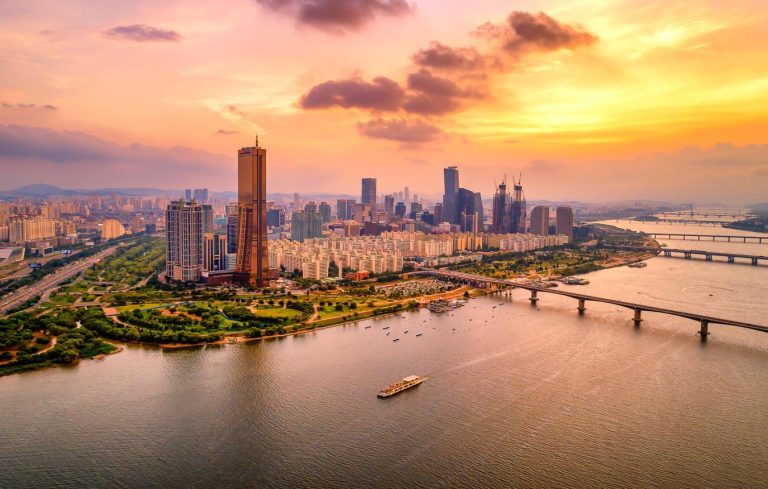
South Korea has experienced significant improvements in just two generations. If we go back in time to the 1960s, South Korea was an agrarian country with limited natural resources, becoming further behind many other countries that are developing. However, the description of “South Korea” is now associated with cutting-edge technology, international pop culture, and active diplomacy. The gradual processes of industrialization and democratization not only transformed domestic conditions but also paved the way for South Korea to expand its influence on the international stage.
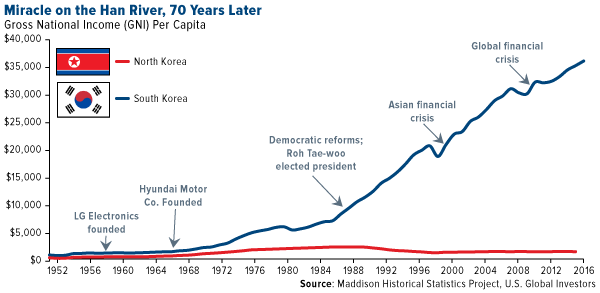
During the Korean War in 1953, South Korea was completely destroyed, its infrastructure was in ruins, poverty was widespread, and it required billions of dollars in aid from the US. Authoritarian regimes like Park Chung-hee’s drove forced industrialization through five-year plans, an export-oriented focus, and support for chaebols such as Samsung and Hyundai, resulting in the “Miracle on the Han River” with an average GDP growth rate of 9% per year. However, this was accompanied by labor repression, social injustice, and environmental pollution, followed by a democratic transition through mass protests such as the June Democracy Movement of 1987, which forced the implementation of direct elections. The chaebols’ power was not immediately destroyed by this process, but it did start to bind them within a framework of better market competition and public accountability. Korea learned how to strike a balance between social justice and economic efficiency during this time. As democracy solidified, the country’s focus transformed from internal power struggles to international expansion.
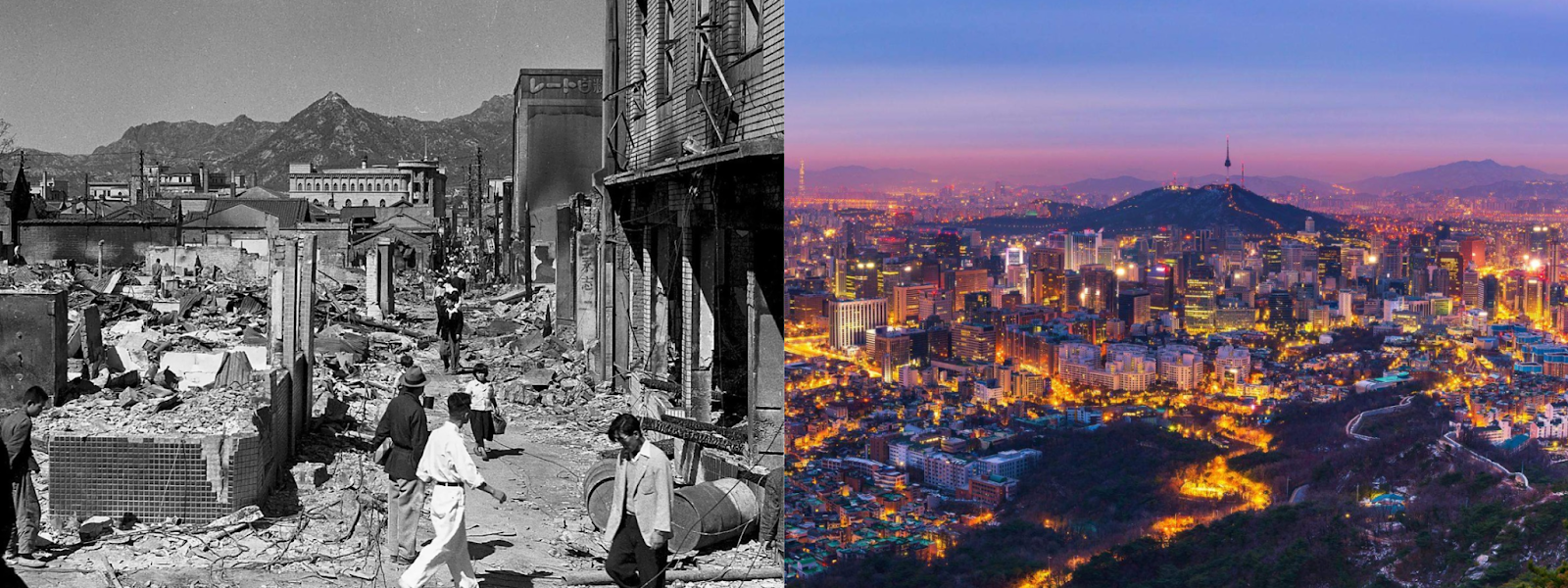
Image source: Pinterest
This is important because it illustrates a “developmental state” model that combines temporary authoritarianism with democratic reforms, resulting in political stability and global influence.
The key to South Korea’s success is not just external aid but also a unique combination of superior human capital and disciplined state intervention. The importance of this transformation is undeniable. By 2026, South Korea was the world’s 10th-largest economy (GDP of $1.8 trillion), with exports of memory chips and EV batteries dominating the global supply chain. A strong foundation was established by the transition from import substitution to export-oriented growth, the 1950s land reforms that produced a middle class, and investments in education.
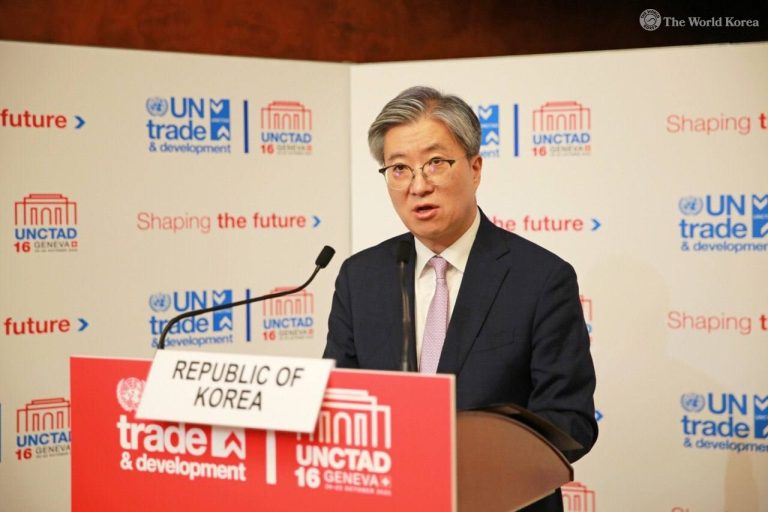
South Korea now plays a central role as one of the world’s top-10 economies, a technology leader through companies like Samsung and AI, and a soft power force via Hallyu (K-pop and K-drama pop culture). Cultural diplomacy boosts tourism, trade, and geopolitical influence, including regional mediation and alliances with the U.S.
The relationship between industrialization and democratization in South Korea cannot be viewed as a linear one, but rather as a mutually influential process. While industrialization did indeed take place within an authoritarian context, it ultimately laid the social foundation that made democratization possible. Economic growth not only improved living standards but also fueled public demands for political participation.
South Korea’s success is also closely tied to external factors, particularly support from the United States during the Cold War. This demonstrates that South Korea’s transformation was not solely the result of domestic policies but was also influenced by the global geopolitical context. Therefore, South Korea’s development model cannot be fully replicated by other countries without taking these factors into account.
However, these achievements have also been accompanied by challenges. Social inequality, the dominance of chaebols, and dependence on exports remain domestic issues that need to be addressed. However, South Korea’s position between major powers such as the United States and China calls for a cautious foreign policy strategy.
South Korea’s journey demonstrates the industrialization and democratization can be a powerful combination in building global influence. However, this process is not always smooth and often involves political and social compromises. South Korea’s success lies not only in its economic growth but also in its ability to adapt to domestic and international changes.
South Korea can be seen as an example of how a country can turn limitations into strengths. Rising from difficult postwar conditions, South Korea has successfully built an economic and political foundation that has enabled it to play a significant role on the global stage. If it can continue to manage the challenges it faces, South Korea has the potential to maintain its position as one of the key players of the 21st century.
Writer: ALEXANDRA MAHADEWI CINTA MAKARIM – 202410360110100
Source
Johnson, C. (n.d.). The democratization of South Korea: What role does… Copenhagen Journal of Asian Studies. https://rauli.cbs.dk/index.php/cjas/article/download/1766/1786/6395
Britannica Editors. (2025, November 3). South Korea – Economy, technology, education. Encyclopædia Britannica. https://www.britannica.com/place/South-Korea/Economic-and-social-developments
EBSCO Research Starters. (n.d.). South Korea’s economic expansion. EBSCO. https://www.ebsco.com/research-starters/politics-and-government/south-koreas-economic-expansion
Johnson, C. (n.d.). The democratization of South Korea: What role does… Copenhagen Journal of Asian Studies. https://rauli.cbs.dk/index.php/cjas/article/download/1766/1786/6395
Koo, H. (1991). Middle classes, democratization, and class formation. Journal Name. https://www.jstor.org/stable/657688
Oh, K. (2016, July 27). Korea’s path from poverty to philanthropy. Brookings Institution. https://www.brookings.edu/articles/koreas-path-from-poverty-to-philanthropy/