
Image source: Google
In the mid-20th century, South Korea was still in a state of severe devastation due to the effects of colonialism, compounded by a civil war that had pushed the state to the margins of the global geopolitical landscape. However, in a relatively short period of time, South Korea began transforming into a one of leading developer of advanced technology with accounting for 20% of global semiconductor capacity. Today, the modernity of global society relies on microscopic circuits manufactured in Seoul, where DRAM memory chips produced by Samsung and SK Hynix are used as storage devices in most electronic devices worldwide. In addition, the success of this industrialization led to a more developed society, culminating in calls for political reform in the 1980s to promote democratization. This called for greater transparency, particularly in the industrial sector regarding intellectual property rights, transforming South Korea from a nation that had previously been playing catch-up into one capable of setting new standards in the global technology sector. All of that can be achieved because an synergy between aggressive industrialization and the maturity of a transformative democratic system. This essay will demonstrate that the legacy of repression does not prevent to becoming pioneers of global technological modernity, this also demonstrating that political stability and technological innovation can build national strength in the digital era.
 Image source: Google
To reach the point where South Korea became one of a major player in the semiconductor market, it all began with the bold vision of a South Korean leader in the early 1960s named Park Chung-hee, who at the time believed that the private sector was still too weak to serve as the driving force of the national economy, so the state became the legitimate institution to intervene in the economy or, in other words, to guide the private sector in order to drive the nation’s economic growth at that time (Wiranti, 2003), as the state was preparing for a major leap into the industrial world. By employing the concept of the developmental state, the foundation established in the 1960s enabled South Korea to undertake its first top-down industrial research initiative in 1992, known as the Highly Advanced National Project (HAN) or the G-7 Project (Minah, 2014). It was this project that served as the cornerstone for the creation of DRAM memory chip technology, enabling major electronics companies like Samsung to compete and dominate the global market to this day.
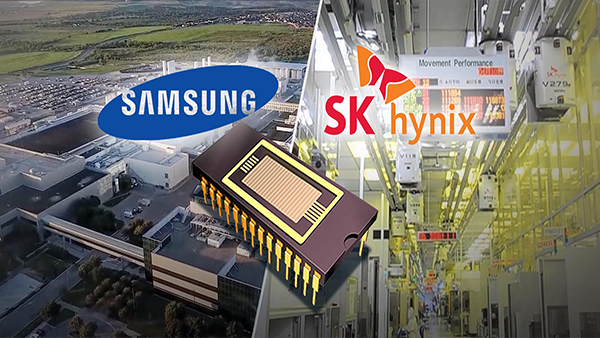
Image source: Google
On the other hand, while industrialization provided the framework for South Korea’s economy, the transition to democracy served as the driving force that made that framework more innovative. This began with the Gwangju Uprising in the 1980s, which are attempting to overthrow the military government. These democratization efforts became the foundation for the state’s economic development, as evidenced by the significant rise in research and development (R&D) expenditure as a percentage of South Korea’s GDP from approximately 2.06% in 1999 to 5.13% in 2024. Additionally, following the 1998 financial crisis, a system of outside directors was established to enhance corporate transparency. The results are evident in 2022, where major companies such as SK Hynix and Samsung are projected to dominate 70% of the revenue market share in 2025. Thus, the presence of democracy has made South Korea more stable and enabled it to develop into one of the world’s largest semiconductor suppliers.
In short, South Korea’s economic rise in the semiconductor sector is clear evidence of consistent development efforts. The transition from a nation grappling with the legacy of colonialism to a technological powerhouse contributing 20% of global semiconductor capacity was not merely a matter of luck, but rather the deliberate result of a combination of state directed industrialization and democratic maturity. By fostering intellectual freedom, transparency, and a strong commitment to R&D South Korea has succeeded in becoming a nation that is not merely a follower of trends but a setter of global technological standards. Ultimately, South Korea’s dominance in semiconductors proves that the integration of political stability and technological innovation is a powerful path to becoming a global influence in the digital age.
Writer: Palmeda Hersa Putra Abhista – 202410360110111
References
Lestari, Y. D. (2012). Developmental state dan tantangan globalisasi: Pengalaman Korea Selatan. Jurnal Global & Strategis, 6(2), 205-218. https://media.neliti.com/media/publications/37656-EN-developmental-state-dan-tantangan-globalisasi-pengalaman-korea-selatan.pdf
Minah, T. (2014). Strategi pembangunan ekonomi Korea Selatan masa pemerintahan Park Chung Hee (1961-1979) [Skripsi, Universitas Islam Negeri Syarif Hidayatullah]. Repository UIN Jakarta. https://repository.uinjkt.ac.id/dspace/bitstream/123456789/39514/3/TUR%20MINAH-FISIP.pdf
Invest Korea. (2023, 24 Agustus). The semiconductor industry: A key engine of Korea’s economy. https://www.investkorea.org/ik-en/bbs/i-5025/detail.do?ntt_sn=490812
Lapedus, M. (2024, 25 Mei). SK Hynix surpasses Samsung in DRAM. Semiconductor Engineering. https://marklapedus.substack.com/p/sk-hynix-surpasses-samsung-in-dram
Library of Congress. (n.d.). South Korean democratization movement: Kwangju Uprising. Research Guides. Diakses pada 21 Mei 2024, dari https://guides.loc.gov/south-korean-democratization-movement/kwangju-uprising
Kim, H. (2007, 18 Juni). Korea’s semiconductor industry continues to lead world. Korea.net. https://www.korea.net/NewsFocus/Sci-Tech/view?articleId=284767
Winanti, P. S. (2003). Developmental state dan tantangan globalisasi: Pengalaman Korea Selatan. Jurnal Ilmu Sosial dan Ilmu Politik, 7(2), 175-204.