
Image source: Pinterest
On the global stage, South Korea is known as a country with significant cultural influence through the hallyu phenomenon. From music and drama to cuisine, these elements have gained global recognition, creating an image of a modern and open society. However, behind this facade, Korean society continues to grapple with deep-seated issues of racism. This unique phenomenon is rooted not only in colonialism but also in the doctrine of “Danil Minjok” or “one-blooded nation” which emphasizes ethnicity as the foundation of identity. This essay analyzes racism in South Korea through the lens of legal structures, racial hierarchies, and the challenges of integration faced by non-Korean ethnic groups.
Sociological Roots: A Nation of the Same Blood.
Racism in South Korea stems from a strong narrative of ethnic nationalism. According to Watson (2010), this narrative was used as a tool to unite the nation during the Japanese colonial period and after the Korean War to foster a sense of nationalism. However, in modern times, this narrative has become a double-edged sword. The belief that being Korean is a matter of biological lineage creates difficulties for foreign communities, even for those who have lived there for a long time and are fluent in Korean. This creates a doctrine in which diversity is viewed as a threat rather than a cultural asset.
Discrimination against foreign workers.
Racism is most evident in the labor sector. South Korea relies heavily on foreign labor, particularly in the “3D” sectors (Dirty, Dangerous, Difficult). However, legal protections for foreign workers are minimal. Through the Employment Permit System (EPS), the government grants disproportionate power to employers. Amnesty International (2020) reported that this system creates exploitative working conditions, in which foreign workers are prohibited from changing jobs without their employer’s permission, leading to the exploitation of foreign workers. The legal system’s failure to protect the rights of foreign workers is a form of racism that demeans individuals based on their country of origin.
Racial Hierarchy and the “Kosian” Phenomenon.
In addition to discrimination against foreign workers, there is a striking difference in treatment between Western whites and people from Southeast and South Asia. This difference reflects economic racism, in which a person’s worth depends on the economic strength of their country of origin.
The impact of this hierarchy is acutely felt by mixed-race families, commonly referred to as “Kosian” (Korean-Asian), who face discrimination. In school settings, they are often bullied because their physical appearance is considered not Korean enough (Moon, 2015). Although the government frequently implements multiculturalism programs, these programs merely focus on forcing foreign residents to become like Koreans rather than fostering an appreciation for each other’s cultural differences.
Lack of legislation: Anti-discrimination laws.
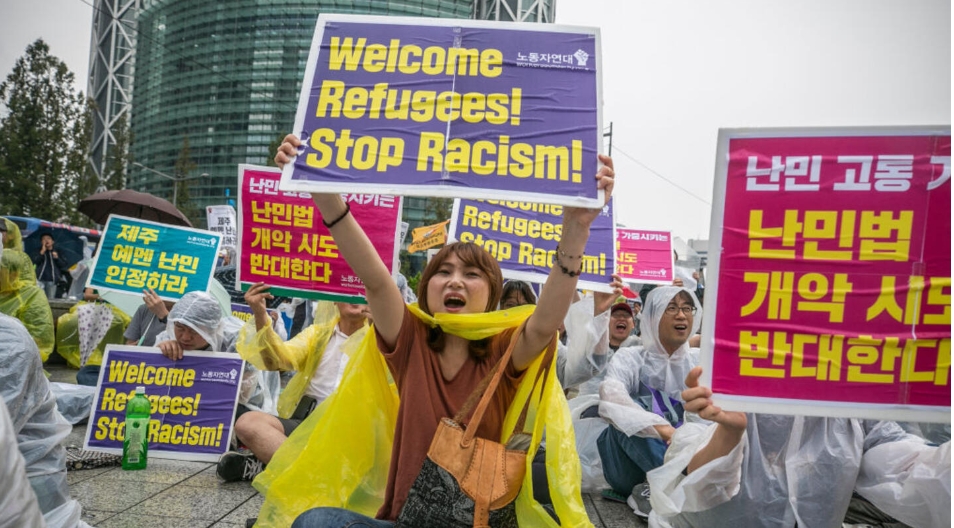
One of South Korea’s greatest failures is the lack of anti-discrimination laws to address the issue of racism. For over a decade, draft legislation has been repeatedly proposed but rejected by the National Assembly. This rejection typically comes from conservative groups and radical religious organizations (Human Rights Watch, 2023). Without this law, victims of racism lack strong legal protection to seek justice when facing discrimination in legal settings. This legal vacuum indirectly allows racism to thrive in public spaces.
Conclusion.
Racism in South Korea is a complex issue because it is linked to national identity and economic growth. Globalization has brought the global community to South Korea, yet South Korean society has not yet been able to accept this as part of Korea’s new identity. To address this, legal reforms and multicultural education that emphasize empathy and equality of human rights are necessary. If South Korea wishes to be recognized as a global leader, it must be able to embrace the differences that stand as barriers to social justice.
Writer: Muhammad Nurhadi – 202410360110099
References:
Amnesty International. (2020). South Korea: Migrant workers exploited under unfair employment system. https://www.amnesty.org/en/latest/news/2020/10/south-korea-migrant-workers-exploited/
Human Rights Watch. (2023). World report 2023: Events of 2022. Seven Stories Press.
Kim, N. K. (2016). Multiculturalism and the politics of appearance in South Korea. Routledge.
Moon, K. J. (2015). International marriage, multi-ethnic families, and the role of the state in South Korea. Citizenship Studies, 19(3-4), 320–334. https://doi.org/10.1080/13621025.2015.1006176
National Human Rights Commission of Korea. (2020). Survey on racial discrimination in South Korea. NHRCK Publishing.
Watson, I. (2010). Paradoxical multiculturalism in South Korea. Asian Politics & Policy, 2(2), 233–258. https://doi.org/10.1111/j.1943-3476.2010.00014.x