
Image source: Reuters
As a country that has transformed from an aid recipient to a global donor in a short time, South Korea now holds an increasingly crucial strategic role in the dynamics of global organizations in 2026. The issue of South Korea’s position in the international architecture is not simply a matter of diplomatic existence, but rather a shift in the country’s identity into what is known as a Global Pivot State (GPS). This issue is crucial as the world currently faces sharp geopolitical fragmentation between the Western and Eastern blocs, as well as multidimensional challenges such as the climate crisis, the vulnerability of global supply chains, and cybersecurity. In this context, South Korea positions itself as a “bridge” or mediator, possessing advanced economic capabilities while still understanding the aspirations of developing countries (the Global South). This makes Seoul’s role crucial in maintaining the stability of a rules-based international order amidst global uncertainty.
When analyzed through the lens of International Relations Theory, South Korea’s role is best explained through Middle Power theory and the Constructivist Perspective. Traditionally, middle powers use multilateral diplomacy to increase their influence beyond their raw military capacity. However, South Korea has shifted from being a mere norm follower to a norm-setter. Through a constructivist perspective, South Korea has consciously cultivated an identity as a globally responsible nation to gain international legitimacy. This identity is manifested through a significant increase in Official Development Assistance (ODA), with Seoul allocating substantial resources to digitalization projects in Southeast Asia and strengthening healthcare infrastructure in Africa through partnerships with organizations such as the WHO and the World Bank.
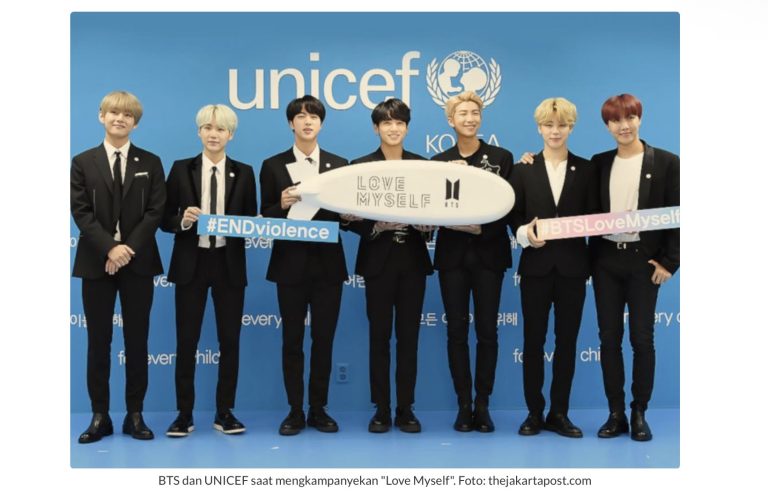
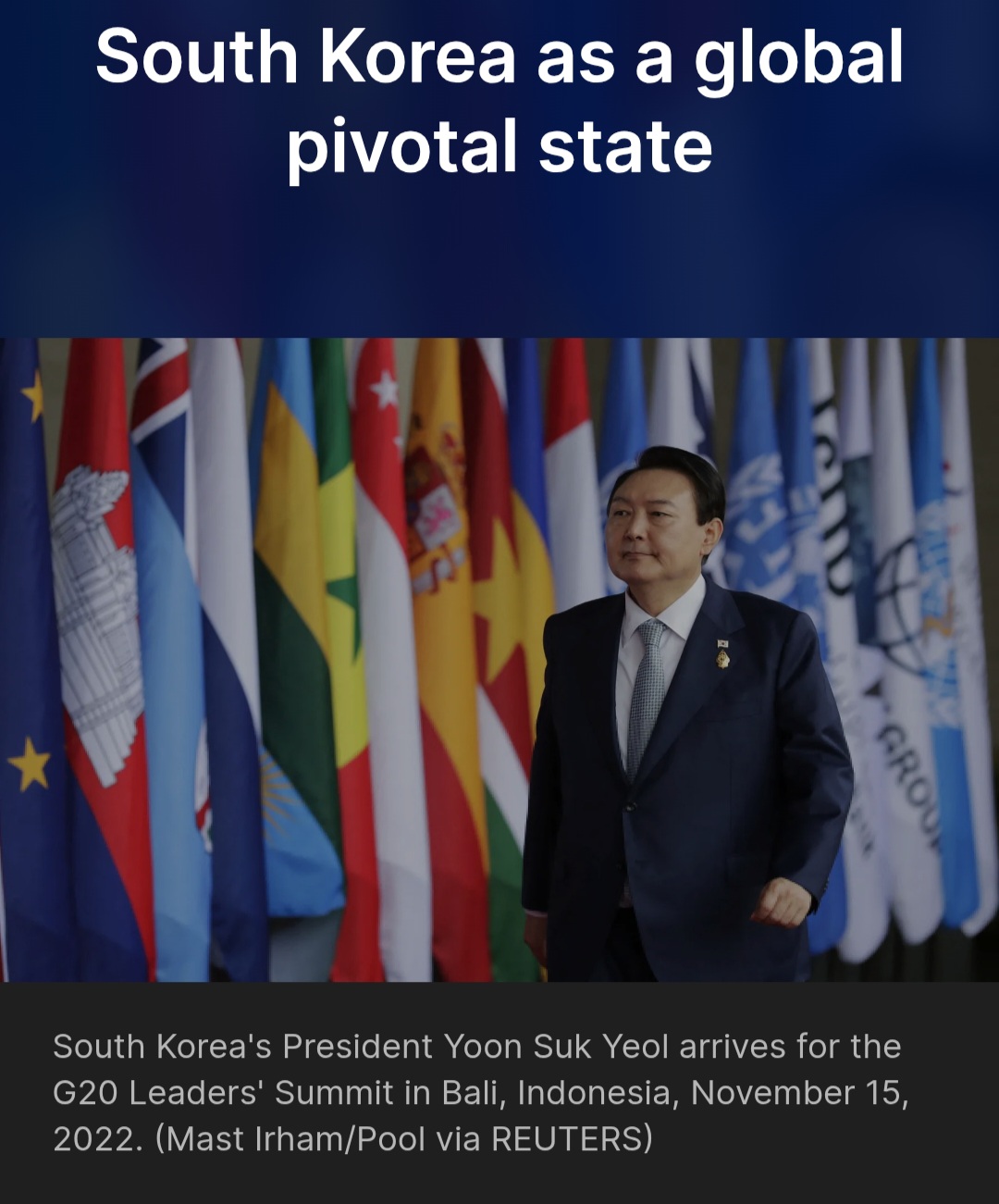
A closer analysis shows that this role is inseparable from complex geopolitical challenges. As a country caught between the hegemonic rivalries of the United States and China, South Korea frequently faces security dilemmas. However, under its Global Pivot State vision, Seoul is attempting to transcend the Korean Peninsula issue by actively leading initiatives at the G20 and OECD forums. South Korea is taking a leadership role in the governance of artificial intelligence (AI) and green technology, ensuring that future technology standards are not solely determined by superpowers but are also inclusive of developing countries. This strategy demonstrates the effective use of soft power, where technological and cultural advantages (such as the Korean Wave) are used as instruments to strengthen its bargaining position in international organizations.
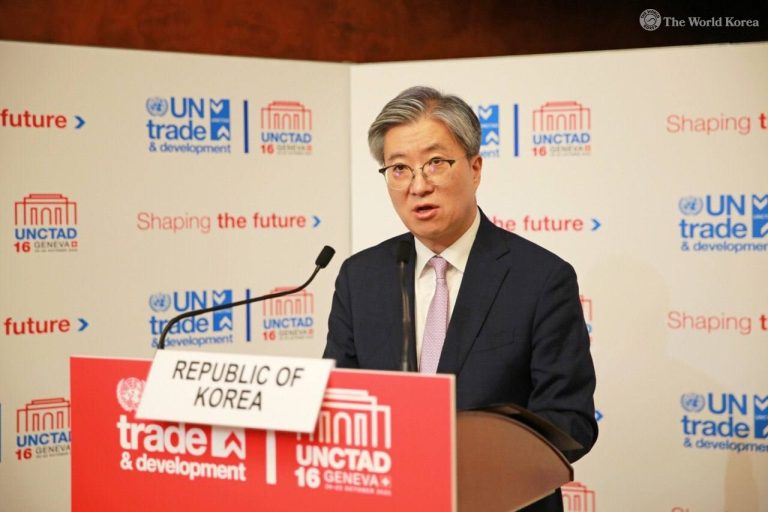
Furthermore, South Korea’s involvement in non-traditional security issues at the UN also reflects its active role in maintaining global peace. Consistent contributions of peacekeeping troops and humanitarian aid demonstrate that South Korea is no longer an isolationist state. However, a key challenge remains: how to maintain strategic autonomy as global organizations become increasingly polarized. Critical analysis suggests that South Korea’s success hinges on its ability to remain steadfast in its democratic values while maintaining a pragmatic economic dialogue with ideologically opposed powers. Regionally, South Korea’s role in international organizations is also strongly reflected through its strategic partnership with ASEAN. Through the Korea ASEAN Solidarity Initiative (KASI), Seoul focuses not only on trade but also on green technology transfer and cyber capacity building. This is crucial because South Korea uses its position in organizations like the International Telecommunication Union (ITU) to advocate for digital inclusivity for developing countries in Southeast Asia. This strategy strengthens South Korea’s position as a more “equal” and reliable partner compared to other major powers that often impose rigid political agendas. Thus, South Korea’s influence in global organizations is not merely top-down from the UN or the G20, but is deeply rooted in pragmatic and sustainable regional collaboration.
Reflecting on South Korea’s role reveals a profoundly positive impact on the global order. South Korea’s success in integrating its economic development agenda with the strengthening of democratic institutions has inspired many developing countries that economic progress need not come at the expense of social stability. Seoul has demonstrated that active involvement in global organizations can protect against geopolitical risks while opening up new market opportunities for future industries. Its impact is evident in the standardization of global digital technology and the strengthening of the international health security system. Overall, South Korea is no longer merely a secondary actor; it is an indispensable integrator. This role ensures that the voices of middle powers remain heard, ensuring that international collaboration remains a key pathway to resolving increasingly complex global crises.
Writer: Muhamad Alfarizi – 202410320110032
REFERENCES
Skinner, A., & Moon, S. (2023, Desember 12). South Korea as a global pivotal state. Brookings. https://www.brookings.edu/articles/south-korea-as-a-global-pivotal-state/
Cho, Y. C. (2024). South Korea’s middle power diplomacy: A constructivist approach. Johns Hopkins University Press
Fealy, G. (2023, Oktober 16). Can South Korea become a global pivotal state? The Interpreter; Lowy Institute. https://www.lowyinstitute.org/the-interpreter/can-south-korea-become-global-pivotal-state
Choi, S. (2023, September 20). The Korea-ASEAN Solidarity Initiative: Recalibrating socio-economic connectivity. Fulcrum; ISEAS – Yusof Ishak Institute. https://fulcrum.sg/aseanfocus/the-korea-asean-solidarity-initiative-recalibrating-socio-economic-connectivity/