
Image source: Pinterest
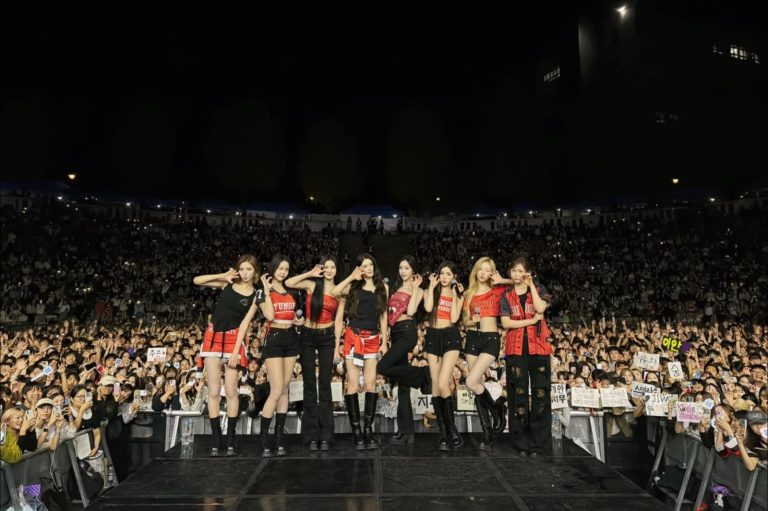
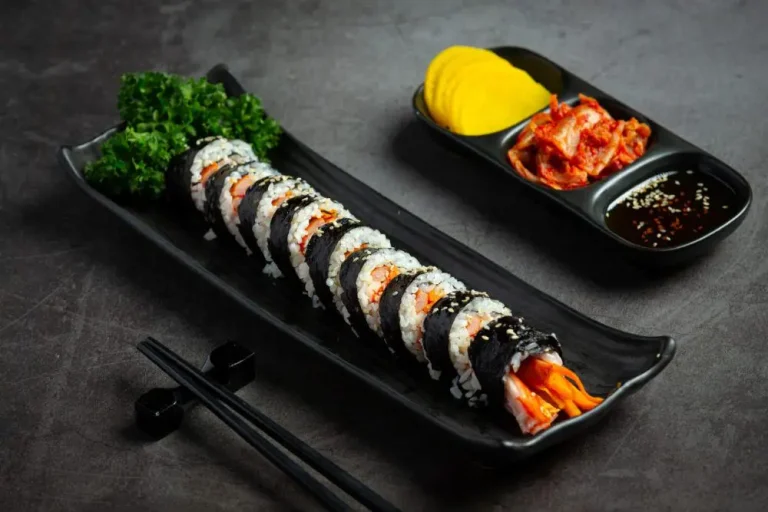
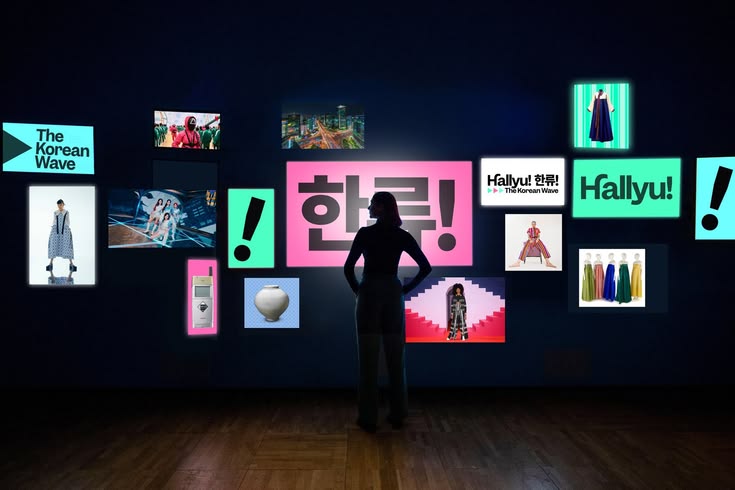
Korean culture has grown rapidly and spread globally over the past two decades. It has increasingly gained acceptance among the public from various walks of life, giving rise to a phenomenon that can be observed in Indonesia, and its impact is strongly felt in daily life, particularly among millennials and massive advancements in information technology have driven Generation Z. Its development; consequently, globalization has become the primary factor behind the public’s immense enthusiasm for the Korean Wave in Indonesia. When a country’s dramas, music, food, speech patterns, language, and cosmetics gain popularity abroad, their influence extends far beyond the market. This phenomenon is known as Hallyu, or the Korean Wave-the global spread of South Korean popular culture since the late 1990s (Glodev dkk., 2023; Jang & Paik,2012). One of the most sought-after products of the Korean Wave is pop music, often referred to as K-pop. This demonstrates the South Korean government’s commitment to leveraging the popularity of its artists. Thus, this essay examines Hallyu as an instrument of South Korea’s soft power. I argue that Hallyu is a highly effective source of appeal, but its long-term value depends on consistent and supportive public diplomacy, not merely on popularity.
Why Is This Issue Important?
This issue is important because it aims to promote South Korean culture and lifestyle to the rest of the world. This culture and lifestyle are easily accessible and closely resemble the daily lives of Indonesian youth; this ultimately inspired Indonesians to adopt this lifestyle. Through the process of acculturation with South Korean culture, there has been a positive impact on sales of Korean products, such as skincare, cosmetics, food, and fashion items.
There are three reasons for this: first, South Korea is a middle power, and its soft power remains a primary source of international prestige (Shafie, 2025). Second, the economic impact is tangible: Sari (2025) reports indicate that Hallyu contributed 1,87 billion U.S. dollars to the gross domestic product in 2004 and 12,3 billion U.S. dollars in 2019. Third, Indonesia ranked highest among 26 countries in consumption of Korean cultural content, according to a 2023 South Korean government survey (Sari,2025). For Indonesia, Hallyu is not merely entertainment but an example of how culture serves as a tool of foreign policy.
Conceptual Framework
In the field of international relations, soft power is defined as a country’s ability to influence the behavior of other countries in a persuasive and attractive manner-rather than through threats or rewards- drawing on cultural aspects, political values, and national policies, without imposing its will through military or economic force (Nye, 2004, as cited in Jang & Paik, 2012). Jang and Paik (2012) add that cultural diplomacy is a component of public diplomacy, which aims to influence public opinion in other countries by introducing uniqueness. This process is not merely about disseminating information but also about forging deep emotional and intellectual bonds between people from different nations.
The concept of “middle power” explains why this choice to employ soft power is highly rational and strategic: countries with limited military and economic capacity-or those unable to directly rival major powers-can build influence through their image and appeal. In other words, they utilize soft power as an alternative to strengthen their international standing without having to engage in violent competition or economic domination.
The Role of the Government as a Supporter
Hallyu is not a coincidence of the market. After the 1997 Asian financial crisis, the government decided to invest in popular culture, not just industry (Glodev et al., 2023). Jang and Paik (2012) trace this logic back to a 1994 advisory report stating that a single Hollywood film (Jurassic Park) could generate revenue equivalent to the sales of 1.5 million Hyundai cars, which was subsequently followed by the establishment of the Bureau of Cultural Industries and the enactment of film promotion legislation. The 1999 Framework Act on the Promotion of the Cultural Industry allocated approximately 148.5 million U.S. dollars to develop Korean popular culture, and today a ministry-led institutional framework coordinates the creative sector (Sari, 2025). The government even utilizes K-pop idols as public diplomats. Shafie (2025) analyzed five cases from 2018 to 2022, including BTS’s meeting with the U.S. president and their address at the United Nations and argued that the economic and cultural power of this industry makes it a prime example of contemporary soft power.
Evidence of Appeal
This appeal works in part because it presents national identity in a modern form. Apriyulia et al. (2024) show that K-pop idols incorporate hanbok, palace settings, and traditional musical instruments into their music videos, making cultural heritage appear appealing and reinforcing South Korea’s image. The impact is also evident among the audience. In a study of 64 college students in the Philippines, Banug et al. (2026) found that Hallyu shapes attitudes, language use, and lifestyles, and that participants acknowledged its contribution to South Korea’s economy and global image.
Limitations and Risks
Attraction is not the same as influence, and Hallyu has its limits. First, excessive politicization triggers a backlash. Jang and Paik (2012) note anti-Korean Wave movements in Japan, China, and Taiwan, and cite Lee (2009, as cited in Jang and Paik, 2012), who warns that deliberate efforts to use cultural assets for political and economic purposes can provoke resistance. Second, a one-way flow of culture raises identity concerns. Sari (2025) notes perspectives that characterize the dominance of Korean culture in Indonesia as cultural and economic imperialism, as well as concerns about the weakening of young people’s national identity. E vem Banug et al. (2026) report that some participants perceive negative aspects of Korean culture. Third, credibility depends on itself. Shafie (2025) cautions that linking celebrities to the state carries risks and points to the industry’s treatment of women as a threat to its future. Finally, Jin (2024) demonstrates that digital soft power now operates through private platforms whose interests may conflict with those of the government, thereby hindering coordinated cultural diplomacy.
My Opinion and Recommendations
In my view, these limitations do not weaken the case for Hallyu; rather, they highlight the work that remains to be done. South Korea needs to do three things. First, position the state as a supporter, not a director. Jang and Paik (2012) recommend a non-governmental and nonpartisan body to coordinate cultural diplomacy, along with balanced organizations in line with findings that overt political exploitation triggers backlash. Second, it must transform appeal into relationship. Jang and Paik (2012) propose student exchanges and networks for young professionals, while Sari (2025) identifies scholarships and cultural exchanges as channels for deepening interactions. Seoul also needs to encourage reciprocity, for example, through coproductions with partners like Indonesia so that cultural exchange flows in both directions. Third, maintain credibility by improving platform governance (Jin, 2024) and addressing labor and gender issues within the industry (Shafie, 2025).
Conclusion
Hallyu demonstrates that middle powers can build influence through cultural appeal, and South Korea’s experience shows how state support, creative freedom, and a global audience can work together. However, appeal becomes fragile when it is politicized, one-sided, or detached from credible institutions. If Seoul pairs Hallyu with public diplomacy that is consistent, supportive, reciprocal, and trustworthy, popularity can be transformed into lasting influence.
Writer: Rossie Rossytasary Wibowo – 202510360110053
References:
Apriyulia, A., Adriati, I., & Damayanti, N. Y. (2024). SOFT POWER ANALYSIS THROUGH KPOP IDOL IN PRESEVATION AND CULTURAL PROMOTION. Journal Albion : Journal of English Literature, Language, and Culture, 6(2). https://doi.org/10.33751/albion.v6i2.10529
Banug Jr, B., Agustin, J. P. G., Dangue, P. W. L. R., Deocariza, P. I. O., Galpo, K. M. P., Lumanlan, K. H., Millian, K. M., Quitoriano, W. M. R., Regalado, H. B., Salon, J. T. A., Santos, G. C. G., Saqui, I. L. S., Vendiola, M. A., Corpuz, J. T., Martinez, A. R. M. Y., & Pasagui, E. E. (2026). Exploring Hallyu Content as South Korea’s Soft Power. Advanced Social Science in Research Journal, 1(1). https://doi.org/10.11594/assrj.01.01.03
Glodev, V., Wijaya, G., & Ida, R. (2023). The Korean Wave as the Globalization of South Korean Culture. WACANA: Jurnal Ilmiah Ilmu Komunikasi. https://doi.org/10.32509/wacana.v22i1.2671
Jang, G., & Paik, W. K. (2012). Korean Wave as Tool for Korea’s New Cultural Diplomacy. Advances in Applied Sociology, 02(03). https://doi.org/10.4236/aasoci.2012.23026
Jin, D. Y. (2024). The rise of digital platforms as a soft power apparatus in the New Korean Wave era. Communication and the Public, 9(2). https://doi.org/10.1177/20570473241234204
Sari, I. (2025). Drama Korea Queen of Tears sebagai Soft Power Diplomacy dan Pendorong Perekonomian. Jurnal Ilmiah Global Education, 6(2). https://doi.org/10.55681/jige.v6i2.3811
Shafie, T. (2025). K-pop Idols as Diplomats: South Korean Celebrities and Soft Power. Athens Journal of Politics & International Affair, 1(3). https://doi.org/10.30958/ajpia.1-3-1