
Image source: Pinterest
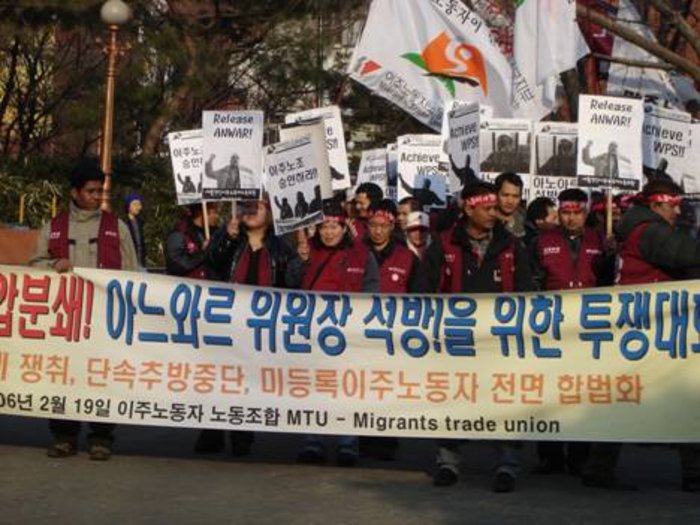
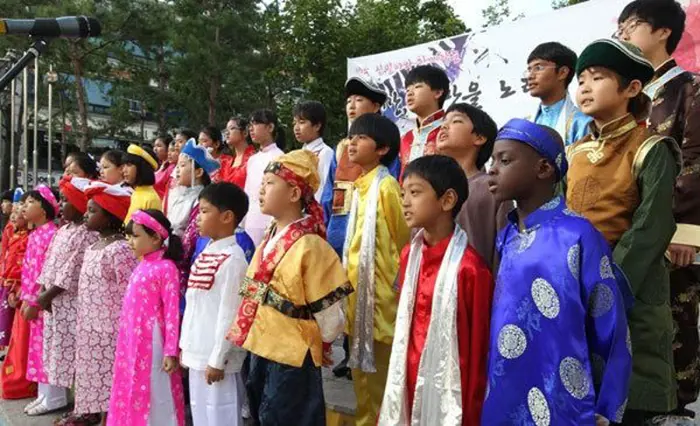
As one of the developed countries in Asia, South Korea has achieved global economic excellence and holds significant influence, much of which is spread through its cultural industry. However, behind this success, its domestic situation faces some serious internal problems. The country is undergoing a demographic transition marked by an increasing number of migrant workers, transnational marriages, and foreign residents, all of which together create a new multicultural condition in South Korea. This emerging reality directly conflicts with the mono-ethnic doctrine called Minjok, which has long been the foundation of the nation’s self-identity. From a constructivist perspective, national identity is not a fixed fact that is inherent from birth, but a socially produced narrative that is continuously shaped by history, institutions, and society’s perception of itself compared to ‘the other’ (Hall, 1996).
The concept of Minjok, commonly translated as ‘nation’ or ‘race,’ defines Koreans as an ethnic group united through shared lineage, history, and ancestors. Rather than seeing this as an eternal tradition, a constructivist reading traces its origins to the mid-20th century, when this concept was mobilized as a form of resistance against Japan’s efforts to assimilate Korean identity during the occupation (Min, 2010). From the perspective of Alexander Wendt’s constructivist theory, it emphasizes that ‘the identities and interests of actors with goals are shaped by these same ideas, not given by nature.’ This shows that the Minjok narrative about ethnic unity is indeed an identity that was created and deliberately built, and this affects how multiculturalism is understood and managed today.
In this case, Minjok functions as a defensive narrative to protect the unity of lineage, language, and culture, becoming a tool to redefine the nation in the face of external threats, which is then constructed as homogeneity as an important marker of Korean nationhood. This identity is systematically reinforced through strong institutions, including the national education curriculum, mass media, and citizenship laws, all of which actively promote monoethnic values. The result is a rigid symbolic framework that clearly marks who belongs to the nation and who remains outside, showing how identity construction, once institutionalized, can last longer than the historical conditions that created it.
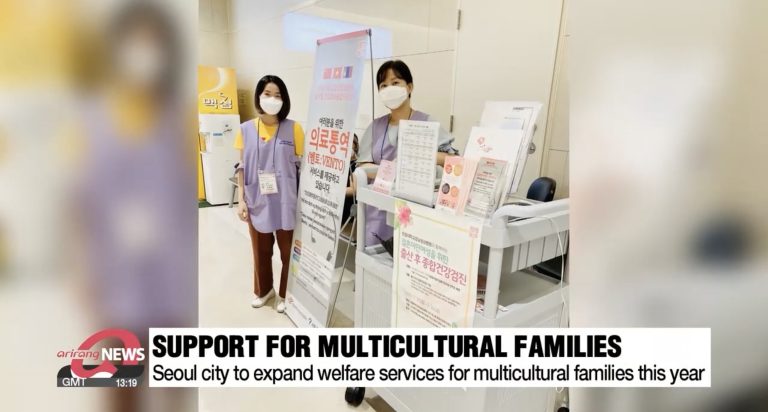
The ideology that was built has a strong impact on how multicultural populations are viewed and treated. It creates a sharp social divide between the ‘uniqueness of native Koreans’ and ‘the others’ from outside, a division most evident in the official designation of multicultural families, or damunhwa gajok, a label given to households formed through international marriages. Even though the term seems neutral, it places these families in a separate social category, portraying them as a group that needs state intervention and guidance to adapt to the dominant society (Yoon, 2010). This categorization not only reflects reality in the community, but it also actively creates social stigma that continuously labels immigrant families as foreigners forever, even after formal integration. It’s a dynamic that aligns with the broader race-based identity construction pattern seen in Korean society (Suh, 2015).
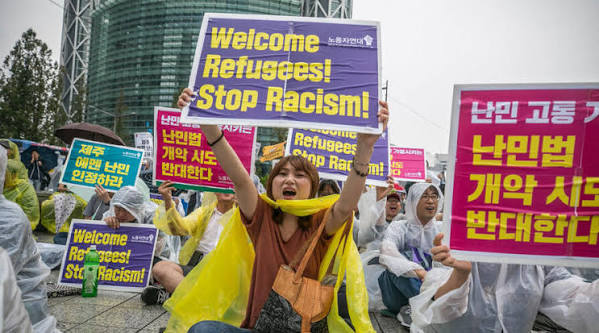
Image source: Pinterest
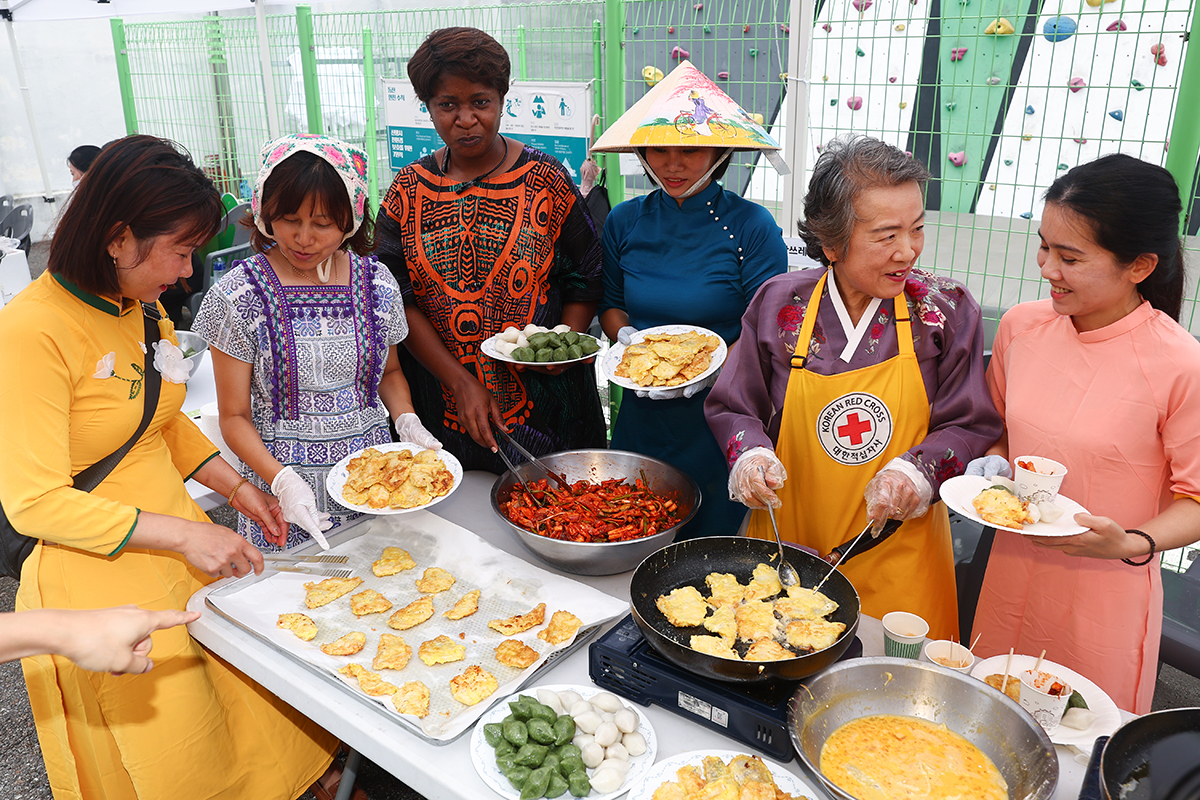
This separation or distinction is directly reflected in policy design. Although the South Korean government has introduced various multicultural programs, many serve more as assimilation agendas than pluralist ones. For example, programs aimed at immigrant women heavily emphasize intensive Korean language mastery and adjustment to local customs, while paying little attention to preserving migrants’ original cultures or recognizing the values they bring. Government support for damunhwa gajok is also tied to the country’s pragmatic interest in addressing South Korea’s persistently low birth rate. In reality, immigrant women are mobilized as instruments of demographic policy, expected to contribute to national reproduction and development rather than being accepted as carriers of different cultural identities (Ku, 2012). Multiculturalism, in this context, is being rebuilt not as a celebration of diversity but as a mechanism to enforce uniformity, showing how a country’s ideological commitments can quietly change even the most seemingly progressive policies.
Taken together, these historical and policy dynamics confirm that South Korea’s monoethnic ideology is not a neutral cultural inheritance but an active, evolving social construct that continues to dictate the terms of the nation’s engagement with multiculturalism. Through a constructivist lens, it becomes clear that multicultural policy in South Korea is rarely oriented toward celebrating pluralism; instead, it is consistently channeled into an assimilationist agenda, whether through the stigmatizing category of damunhwa gajok or through programs that prioritize adaptation over recognition. “The other” is accepted only insofar as it can be absorbed into the dominant national narrative, not as a legitimate expression of difference. Ultimately, this suggests that South Korea’s central challenge in building a genuinely inclusive society lies not in the administrative management of its growing foreign population, but in the deeper ideological work of deconstructing and renegotiating the entrenched Minjok identity that continues to define who counts as truly Korean.
Writer: Palmeda Hersa Putra Abhista – 202410360110111
Reference
Hall, S. (1996). Introduction: Who needs ‘identity’? In S. Hall & P. du Gay (Eds.), Questions of cultural identity (pp. 1–17). SAGE Publications.
Ku, S. A. (2012). Feminist critiques of multiculturalism and the case of South Korea: Marriage migrants, patriarchy, and nation-building [Master’s thesis, Victoria University of Wellington].
Mengshu, Z. (2020, 19 Mei). A brief overview of Alexander Wendt’s constructivism. E-International Relations. https://www.e-ir.info/2020/05/19/a-brief-overview-of-alexander-wendts-constructivism/
Min, S. C. (2010). Minjok juui: The intellectual origins and evolution of Korean nationalism [Unpublished thesis]. Union College.
Suh, J. (2015). Korean identity constructions in relation to racialized differences [Doctoral dissertation, University of Illinois at Urbana-Champaign].
Yoon, I. (2010). Plurality and solidarity: Multicultural minority groups and multicultural coexistence in Korean society. Korea Observer, 41(4), 517–557.