
Image source: Pinterest
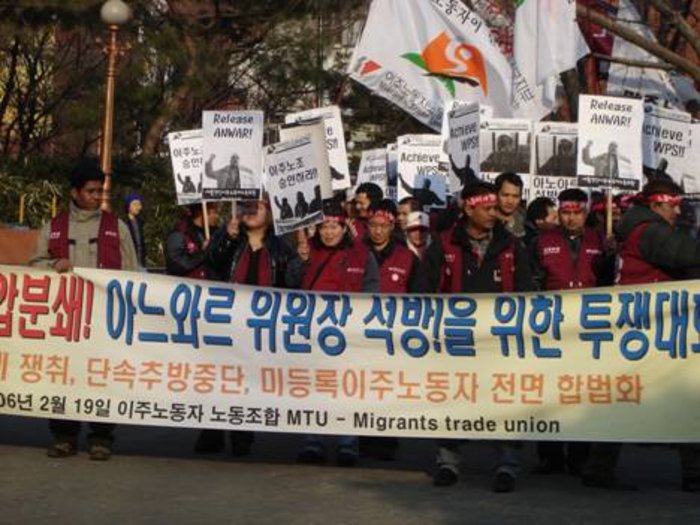
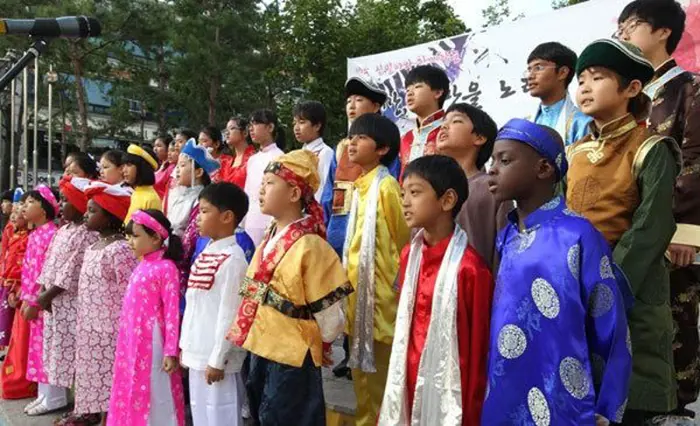
South Korea long built its national identity on ethnic homogeneity. However, in 2006 its government launched a National Multiculturalism Policy to create a more inclusive society for immigrants and ethnic minorities (Pradana, 2026). The first Multicultural Family Support Center also opened that year, followed by related laws in 2008 (Kim, S., 2025). Unlike the Western experience, where multiculturalism was often driven by civil rights movements, Korea’s approach was largely state led (Pradana, 2026). Following Pradana’s (2026) identification of two pressures, international stigma and demographic crisis, this essay argues that South Korea’s multicultural turn was more a response to these pressures than a genuine change in national values, resulting in selective inclusion.
This issue matters because international judgement can reshape influence domestic policy and shape who is accepted as part of society. Kim, C. J. (2024) explains how states deal with status anxiety caused by international stigma and notes that they do not simply accept negative judgements from others (pp. 668, 672). Instead, states may changes domestic policies to meet international expectations and protect their reputation. (Kim, C. J., 2024, p. 670). Korea therefore offers a useful case for asking whether inclusion adopted under pressure produces equality or only a better reputation.
The international criticism became clear in 2007, the UN Committee on the Elimination of Racial Discrimination (CERD) warned that Korea’s emphasis on ethnic homogeneity could limit understanding and tolerance between ethnic groups. It also encouraged the government to discourage the government to discourage the use of terms such as pure blood and mixed blood. (Bae, 2007). Furthermore, the Committee recommended include the history and culture of the different groups in school curricula. (Bae, 2007). These recommended sparked public debate about whether such terms were harmless descriptions or sources of prejudice (Bae, 2007). As a result, an idea associated with national pride became an issue of internationally concern.
I believe South Korea’s multicultural policy can also be understood through the concept of stigma management. Pradana (2026) suggests that the government views domestic discrimination as a threat to Korea’s moral and diplomatic standing. Therefore, multicultural policies can be see as an effort to improve the country’s international image and status. Kim’s (C. J., 2024) framework helps explain this through Adler Nissen’s (2014, as cited in Kim, C. J. 2024, p. 672) concept of stigma stigma recognition, in which states respond to accusation of deviance by changing their behaviour to meet international expectations. Applying thus to Korea’s multicultural policy is ,y own step, since Kim does not analyse it. Because support policies began in 2006, before CERD’s 2007 statement ( Kim, S., 2015; Bae, 2007), I treat the two as parts of one environment of external scrutiny, not as cause and effect. The reading is consistent with Kim and So’s (2018, as cited in Jatula & Goode, 2021) view that multiculturalism in Korea is top down and often used by liberal politicians and parties to bolster Korea as an inclusive destination, as rhetoric rather than a way to change society.
Demography is the second pressure, which Pradana (2026) links to labour shortages. Official statistics show a total fertility rate of 0. 72 in 2023, 0. 75 in 2024 and 0. 80 in 2025, while deaths exceeded births in every year, with a natural change of 122,483 in 2023 and 108,627 in 2025 (Ministry if Data and Statistics, 2026, vital statistics table). Foreign residents reached 2,662,967 in 2025, or 5.1% of the population (The Korea Times, 2026). The recent rise in births does not reverse the natural decline. Marriage migration also peaked in the mid 2000s, driven by rural bachelors seeking wives in China and Southeast Asia, and one anthropologist summarised government policy as asking immigrants to bear children and provide the to bear children and provide the labour Korea needs (Kim, S., 2015). That is one critic’s view, but it matches the demographic data.
The pattern of who is welcomed is revealing. In 2024, Korea recorded 21,450 multicultural marriages, up from 17,428 in 2022. In that year, 15,624 wives were foreign nationals and 15,832 husbands were native born Korean citizen (Ministry of Data and Statistics, 2026, multicultural marriages table), each about 73% of the total (author’s calculation). These figures are consistent with a policy centred on marriage based families, although they show a pattern, not the government’s intent. Jatula and Goode (2021) argue that current policies are adequate for bringing in brides to cover marriage market shortfalls, as well as students and workers, but inadequate for shaping public understanding of migrants. Inclusion, in other words, is strongest where it meets a national need.
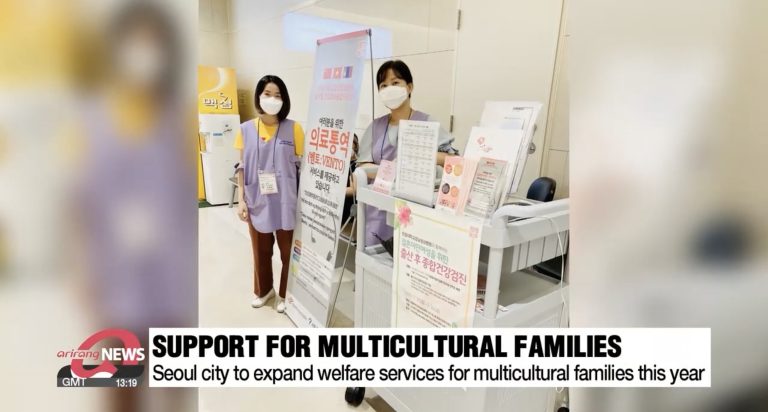
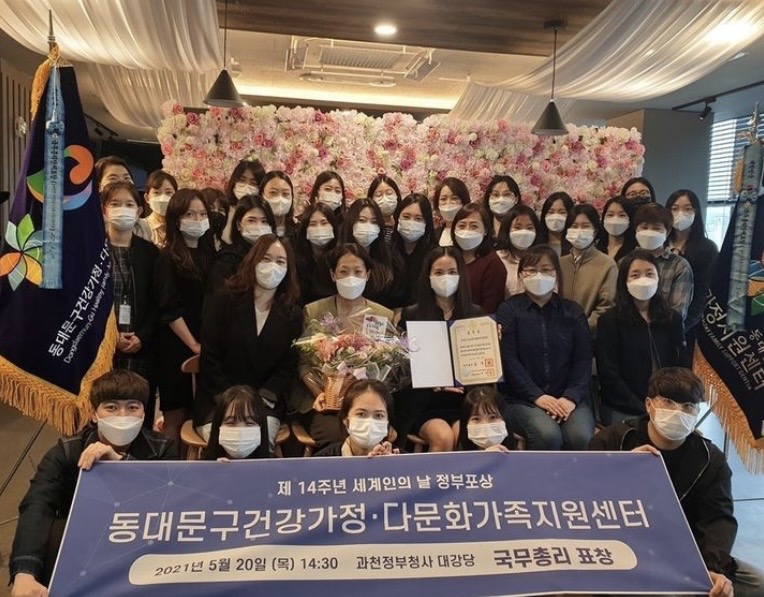
I thing South Korea’s multicultural policy is neither completely negative nor fully inclusive. Support centres and a legal frameworks already exist. (S. Kim, 2015), while the 2007 debate over blood purity shows that the issue was also contested within Korean society (Bea, 2007). However, workshop participants criticised these policies as too nationalistic (S. Kim, 2015) argue that minorities are still noy fully recognised as equals. They also point to the lack of a clear path to permanent residency and citizenship. These findings do nit prove the government’s actual intentions, but they support the argument that inclusion remains selective. In my view, improving South Korea’s international image is not enough while discrimination against immigrants and minorities continues.
South Korea’s multicultural turn emerged amid international criticism of pure blood thinking and a declining population. The evidence suggests that acceptance remains selective, favouring those who meet national needs. Moving from stigma management to genuine inclusion requires recognising multiculturalism as a matter of equal membership, not merely national interest.
Writer: Ayu Shinta Dewi – 202410360110088
References
Bae, J. (2007, September 2). Koreans reassess concept of blood purity. The Korea Times. https://www.koreatimes.co.kr/www/news/nation/2007/09/117_9419.html
Jatula, V., & Goode, T. (2021). Same color, different realities: Analysis of Black experience in South Korea. African and Black Diaspora: An International Journal, 14(1), 52–66. https://doi.org/10.1080/17528631.2022.2047272
Kim, C. J. (2024). Status hierarchies and stigma shifting in international relations. International Organization, 78(4), 668–700. https://doi.org/10.1017/S0020818324000316
Kim, S. (2015, April 2). Immigrant wives need tailored support programs. The Korea Times. https://www.koreatimes.co.kr/southkorea/defense/20150402/immigrant-wives-need-tailored-support-programs
The Korea Times. (2026, October 28). Foreign resident population in Korea hits record 2.66 mil. as int’l student numbers surge. https://www.koreatimes.co.kr/southkorea/others/20261028/foreign-resident-population-in-korea-hits-record-266-mil-as-intl-student-numbers-surge
Ministry of Data and Statistics. (2026). KOSIS Korean Statistical Information Service [Database]. Retrieved November 2, 2026, from https://kosis.kr/statHtml/statHtml.do?sso=ok&returnurl=https%3A%2F%2Fkosis.kr%3A443%2FstatHtml%2FstatHtml.do%3ForgId%3D101%26tblId%3DDT_1B8000F%26language%3Den%26
Pradana, H. A. (2026, October 7). The challenges & efforts to realize Multiculturalism in South Korea [Guest lecture slides]. Multiculturalism in Asia, Universitas Muhammadiyah Malang.
Bahk, E. (2021, July 6). Dongdaemun center plays major role in supporting multicultural families. The Korea Times. https://www.koreatimes.co.kr/southkorea/society/20210706/dongdaemun-center-plays-major-role-in-supporting-multicultural-families