
Image source: KCNA
North Korea or as known as Democratic People’s Republic of Korea (DPRK) is known as an isolated country and always uses nuclear power as a tool in world politics, focused only on nuclear development rather than caring about the persuasion of peripheral countries, this attitude is believed that North Korea considers nuclear power to be the most powerful negotiating tool, which makes them refuse to participate in negotiations, for North Korea nuclear power is the main key to avoid foreign influence and maintain dictatorship. In fact, it is stated in the declaration of ‘Parallel Development of Nuclear-Economy’ since being led by Kim Jong-un to imply that nuclear weapons are to maintain the system in the regime. As a result, North Korea was sanctioned and isolated from the international stage, which makes North Korea Powerless in the global world (Ji, K, n.d). In contrast to South Korea which prioritizes diplomacy by expanding influence in cultures such as K-Pop and food, which creates an imbalance and asymmetric in the implementation of diplomacy from both countries despites having the same identity, there is a difference from North Korea which prioritizes dictatorship with South Korea using culture and gastrodiplomacy.
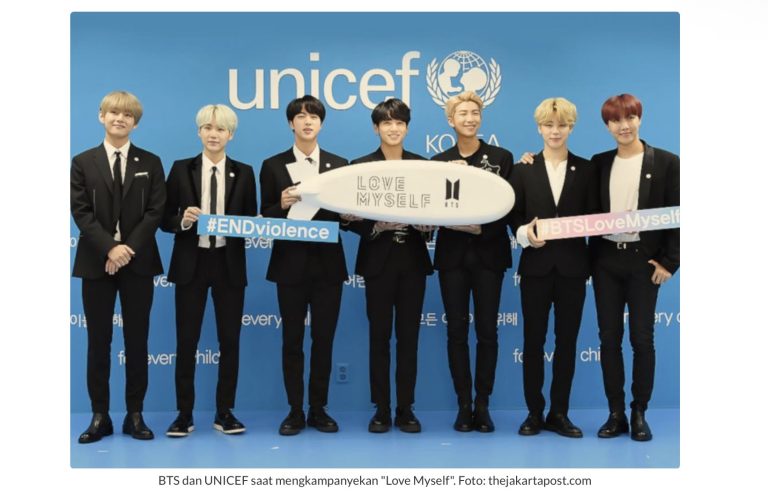
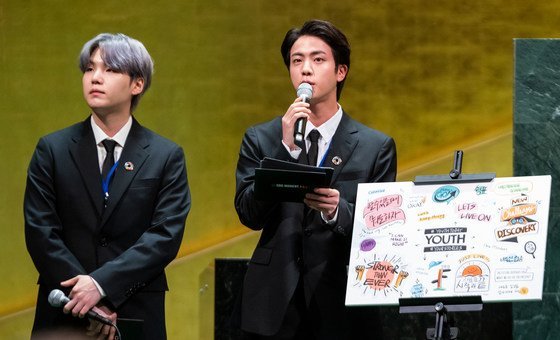
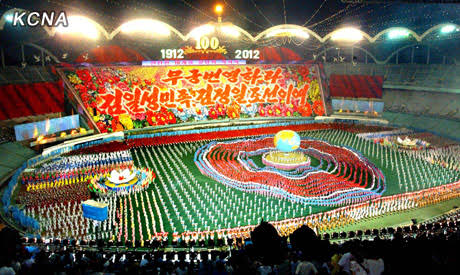
There is a unique ideology adopted by North Korea that makes it justify dictatorship, namely the ‘Juche’ ideology which is based on the theory of ‘class-based government’ by depicting the dictator as the head of the family (Ji, K, n.d). Power is the core of the international system, Joseph Nye stated that soft power is the ability to influence others to achieve desired results through attraction rather than coercion (Grzelczyk, V. 2017). It is quite interesting in the concept of a hardened and isolated country like North Korea to consider soft power, since this country glorifies nuclear so much. There are striking differences in the use of soft power in North Korea and South Korea. North Korea with the Mass Games during the Cold War which was a mass gymnastics show that for Kim Jong-Il was a development of friendly relations and a diplomatic effort with third world countries. The soft power carried out by North Korea in the Mass Games tended to emphasize the precision used as propaganda, making the Mass Games often met with resistance from decolonizing countries that disliked the essence of communism (Young, B. R. 2020). On the other side, in South Korea diplomacy, especially in K-food, South Korea has adopted gastrodiplomacy, which is defined as the practice of using experience as a political tool for foreign relations and supporting the country’s image (Nihayati, A., Pertiwi, E., & Haripa, I. T. 2022). South Korea benefits not only economically but also through diplomatic relations with other countries (Luthfiyana, A. 2025). South Korea utilizes all diplomatic instruments with its culture, creating numerous collaborations with various countries.
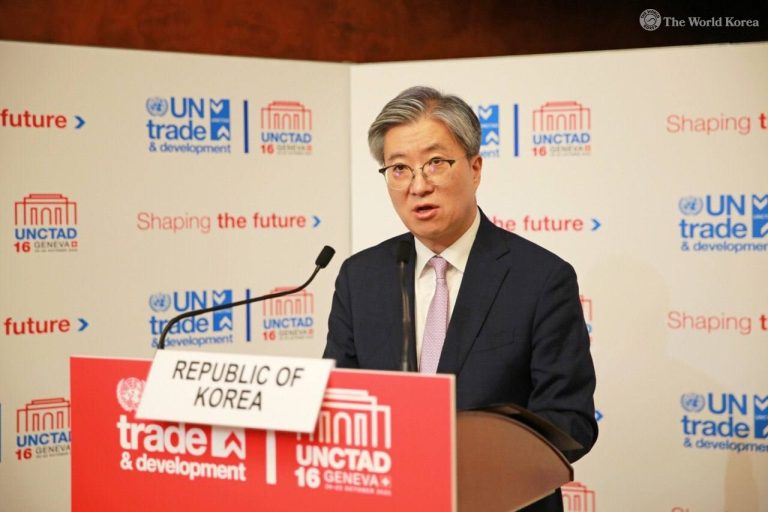
Despite the differences in soft power adopted by two Koreas, during the leadership of three South Korean presidents, starting from Kim Dae-Jung, Who Moo-Hyun, and Moon Jae-In, the two countries showed development and relations. In Kim Dae-Jung administration (1998 – 2003), the Sunshine Policy was introduced, which is a strategy of engagement with North Korea, based on three principles: the rejection of the use of military force as a means of resolving inter-Korean issues, the pursuit of peaceful coexistence rather than the collapse or absorption of North Korea, and increasing trust and cooperation between Koreas. The most prominent success was the holding of the first inter-Korean summit in Pyongyang on June 15, 2000. However, military tensions persisted, exacerbated by nuclear efforts. Domestically, North Korea used the Sunshine Policy as a propaganda tool. Furthermore, during the Roh Moo-Hyun administration (2003 – 2008), by continuing the Sunshine Policy, real achievements is pursued such as the operation of the Kaesong Industrial Complex, the expansion of tourism to Mount Kumgang, and the 2007 inter-Korean summit. Challenges remained, due to the worsening nuclear issue, and domestic South Koreans considered that the policy only benefited North Korea. Last but not least, during the Moon Jae-In administration (2017 – 2022), when the North Korean nuclear crisis intensified, the South Korean government refused to avoid inter-Korean communication channels in order to build trust and dialogue with the goal of unification. As a result, at the PyeongChang Olympics in February 2018, South Korean and North Korean delegations marched together under the Korean unification flag, and President Moon also officially visited Pyongyang in September 2018 to sign a declaration promoting inter-Korean relations. A focus on soft power strategies ultimately resulted in the formation of North and South Korean teams for the Olympics and the Asian Games. This strategy is not limited to non-political matters, the right strategy is also crucial for gaining North Korean cooperation and engaging in political negotiations (Kim, Y, 2026).
Eventually, even when North Korea is isolated from world politics, the fact that its system will not work if it refuses to cooperate or trade with other countries is an unavoidable fact. South Korean culture, which is slowly and secretly entering and being shared among North Korea society, threatens the ‘Juche’ ideology and this will trigger a threat to North Korea itself. This becomes a dilemma for North and South Korea, widening the barriers to unification and the asymmetry of South Korea’s soft power, threatening the long-rigid nuclear regime with the entry of South Korean culture that can trigger social change in society.
Writer: Sabianti Oktavia R (202410360110047)
References:
Grzelczyk, V. (2017). Hard, Soft, Smart? North Korea and Power: It’s All Relative. Asian International Studies Review, 18(1), 131-152. https://doi.org/10.1163/2667078X-01801007
Ji, K. (n.d). South Korea’s soft power strategies to deal with North Korea’s threat. Global Affairs and Strategic Studies. https://www.unav.edu/web/global-affairs/detalle/-/blogs/south-korea-s-soft-power-strategies-to-deal-with-north-korea-s-threat#
Kim, Y. (2026). South Korea’s soft power influence on North Korea. Fondation pour la Recherche Stratégique. https://www.frstrategie.org/en/publications/notes/south-korea-s-soft-power-influence-north-korea-2026
Lutfiana, A. (2025). Culinary Diplomacy -How Korean Cuisine Shaped South Korea’s Image in Indonesia.
Nihayati, Arina & Pertiwi, Elyana & Haripa, Tri. (2022). The Analysis of South Korean Gastrodiplomacy Towards the Increases of South Korean Kimchi Export. Journal of World Trade Studies. 6. 53-66. https://10.22146/jwts.v6i2.3607
Young, B. R. (2020). Cultural diplomacy with North Korean characteristics: Pyongyang’s exportation of the mass games to the Third World, 1972–1996. The International History Review. https://doi.org/10.1080/07075332.2019.1609545