
Image source: Pinterest
In the contemporary international system, the traditional metrics of a state’s power—military capabilities, territorial size, and economic strength—are increasingly being supplemented by a more intangible, yet remarkably potent force: cultural influence. South Korea presents one of the most compelling case studies of this shift through its strategic deployment of “K-pop diplomacy.” Over the last two decades, the South Korean government has actively leveraged the global phenomenon of the Korean Wave (Hallyu), and specifically Korean pop music (K-pop), to achieve its foreign policy objectives. This essay explores the issue of K-pop diplomacy, articulating its importance in modern international relations, presenting a critical evaluation of its effectiveness, and analyzing the phenomenon through the theoretical framework of soft power and middle-power diplomacy.
The issue at hand is how South Korea, a middle power situated in a highly volatile geopolitical region surrounded by superpowers, utilizes the immense global popularity of its idol groups as an official instrument of statecraft. The South Korean government does not merely passively benefit from K-pop’s success; it actively incorporates idols into its diplomatic agenda. The importance of this issue cannot be overstated. In an era where information flows freely and public opinion heavily influences state behavior, the ability to shape a positive national image—nation branding—is a vital strategic asset. K-pop diplomacy allows South Korea to transcend its historical associations with the Korean War and the constant security threat posed by North Korea. Instead, it rebrands the nation as a modern, vibrant, and technologically advanced cultural hub. Furthermore, the economic ramifications are significant. The “Hallyu effect” generates billions of dollars annually by boosting tourism, increasing the export of Korean consumer goods, and driving language learning.
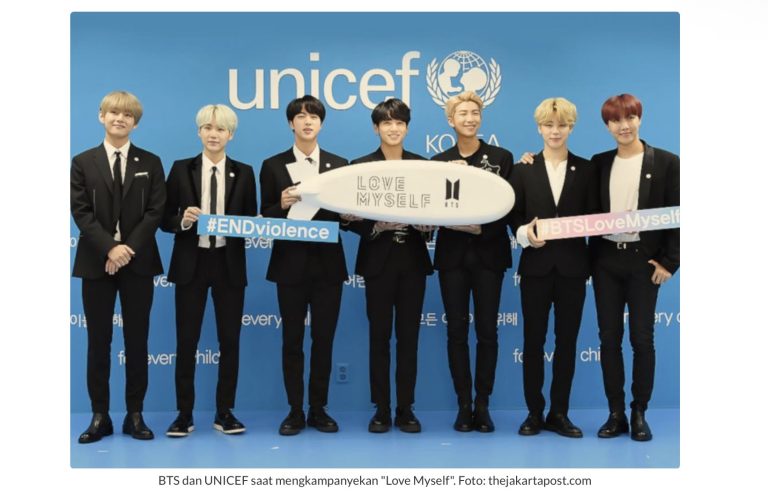
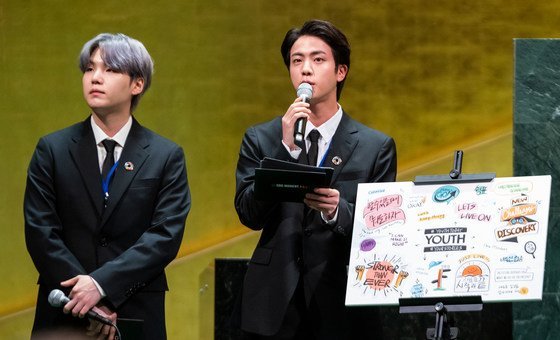
In my opinion, K-pop diplomacy represents one of the most innovative and successful applications of public diplomacy in the 21st century. Traditional diplomacy often struggles to engage foreign publics, relying on elite-to-elite communication. K-pop, however, speaks directly to the youth across borders, transcending linguistic barriers. When groups like BTS speak at the United Nations General Assembly as Special Presidential Envoys, they transcend their roles as entertainers to become transnational icons of cosmopolitanism, advocating for anti-discrimination, youth empowerment, and global unity (Rizkyta et al., 2024). However, I also believe this strategy is not without its pitfalls. Relying on commercial entities for state diplomacy introduces vulnerabilities, as idols are human beings whose personal controversies can inadvertently damage the national brand. Despite these risks, the strategic dividends South Korea reaps far outweigh the vulnerabilities, making K-pop diplomacy a masterful stroke of modern statecraft.
To properly analyze this issue, one must turn to the international relations theory of “soft power.” Soft power is defined as the ability of a country to shape the preferences and behaviors of other actors through attraction rather than coercion or financial inducement. As de Oliveira (2025) observes, South Korea’s Hallyu wave is not a spontaneous cultural trend but a deliberate, state-led diplomatic project designed to project soft power. The government has strategically institutionalized K-pop as a core vector of international influence, generating a voluntary affinity for South Korea that translates into measurable political and commercial outcomes on the global stage.
Moreover, this phenomenon operates heavily within the realm of public diplomacy, serving as an effective bridge for cross-cultural communication. The immense popularity of K-pop in regions like Southeast Asia has been actively utilized to shape a positive national image and strengthen bilateral relations. For instance, the use of K-pop and K-drama as diplomatic instruments has directly correlated with increased soft power influence and tourism growth from Indonesia, highlighting how entertainment media can support a country’s diplomatic and economic interests (Payung, 2025).
However, analyzing this through the lens of international relations also reveals the limitations of soft power when confronted with hard power realities. A notable example is the 2016 THAAD (Terminal High Altitude Area Defense) crisis. When South Korea deployed the US anti-missile system, China retaliated not with military force, but by imposing an unofficial ban on South Korean cultural exports. This incident perfectly illustrates the intersection of soft and hard power: while K-pop can build bridges, its efficacy is ultimately contingent upon the broader geopolitical climate. It highlights that while soft power can set a favorable agenda, it remains highly susceptible to the punitive economic and political measures wielded by dominant superpowers.
In conclusion, South Korea’s K-pop diplomacy is a paradigm-shifting approach to international relations, perfectly illustrating how middle powers can punch above their weight on the global stage. By transforming cultural exports into soft power, South Korea has successfully rebranded its national image, boosted its economy, and created innovative channels for diplomatic engagement. While vulnerabilities exist—particularly the susceptibility of cultural diplomacy to hard power conflicts—the overall success of the Hallyu wave demonstrates that in the modern era, the power to attract is just as critical as the power to coerce. K-pop diplomacy stands as a testament to the evolving nature of global politics, where a catchy chorus can echo just as loudly as a political decree.
Writer: Dafa Dafitra – 202410360110025
References
de Oliveira, C. V. A. (2025). The Hallyu Wave as a Strategic Soft Power Tool: South Korea’s Cultural Diplomacy in the 21st Century. SciELO Preprints.
Payung, V. G. T. (2025). Soft Power Korea Selatan Di Indonesia: Peran Drama Dan Musik Sebagai Instrumen Diplomasi Dalam Meningkatkan Wisatawan Dari Indonesia. Jurnal Niara, 17(3), 94-107. https://journal.unilak.ac.id/index.php/nia/article/view/25396
Rizkyta, A., Eby Hara, A., Sunarko, B. S., & Susilo, D. (2024). Transcending Boundaries: Bangtan Sonyeondan (BTS) as a Transnational Icon of Cosmopolitanism. Cosmopolitan Civil Societies: An Interdisciplinary Journal, 16(2), 1-18. https://doi.org/10.5130/ccs.v16.i2.8692