

Image source: unsplash
South Korea is widely remarked as one of Asia’s greatest economic success stories. The country has transformed into a global leader in technology, manufacturing, education and popular culture despite being one of the poorest countries in the world after the Korean War (World Bank, 2023). South Korea’s international influence has noticeably grown because of its technology companies such as Samsung, Hyundai and LG together with the worldwide popularity of K-pop and Korean dramas. In spite of this impressive development, there are still several vital social issues that affect Korean society. These include intense social force and competition, gender inequality, an ageing population with declining birth rates and increasing multiculturalism through migration. These challenges affect both South Korea’s domestic development and its international reputation and foreign policy. These major social issues will be discussed, explained why they are important and analyzed them using Liberalism and Constructivism in International Relations.
Social Pressure and Competition
In South Korea, the social anxiety to achieve success has become one of the most urgent social issues to discuss because Korean society greatly emphasizes on educational achievement, occupational success and social status. To prepare for the College Scholastic Ability Test (CSAT) which is recognized as one of the most important examinations in the country, students have to frequently study for long hours. This competitive atmosphere creates stress, anxiety, depression and leads to one of the highest suicide rates among developed countries (WHO, 2022). Young people often experience pressure through parents, schools and society for achieving brilliant academic and professional accomplishments. According to the concept of Liberalism, the state should boost citizens’ well-being by regulating better public policies. In South Korea, the investment in mental health services and youth support programs has been expanded revealing how institutions can tackle social challenges through cooperation and policy reforms.
Gender Inequality
Even though the state has implemented significant advancement in women’s education and employment, discrimination about gender still endures as a crucial issue (UNDP, 2024). Women continuously encounter wage gaps, limited leadership opportunities and unfair expectations regarding family responsibilities. Conventional gender roles still dominate many workplaces and families. As the impact of discrimination, marriage and birth rates has declined because many young women either suspend marriage or choose not to have children due to career concerns and unequal domestic responsibilities. Based on Constructivism theory, political and social behavior is figured out by social norms, identities and cultural values. Traditional Confucian values influence the society to define gender roles. Reducing the gaps of different perspectives among youngers are gradually challenging these traditional expectations conducting debates on equality and social reform.
Ageing Population and Declining Birth Rates
Becoming one of the world’s lowest fertility rates is related to the facts such as expensive housing, education costs, demanding work schedules and financial insecurity which lead to delay getting married and having children. South Korea experiences an ageing population due to the result of declining birth rates while life expectancy rises. This situation leads to labor shortages, increases healthcare expenses and raises pressure on pension systems. Although childcare subsidies, parental leave, financial support for families and housing assistance has been provided by the state, these measures have contributed only limited improvements because many of the underlying social and economic pressures remain unresolved. From a Liberal’s point of view, demographic challenges can be solved through government intervention and international policy learning. South Korea has adapted family-support policies to its own social context studying policies have been implemented in European countries.
Multiculturalism and Migration
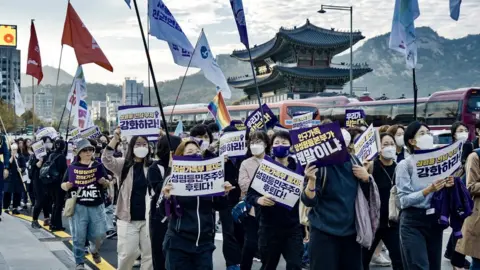
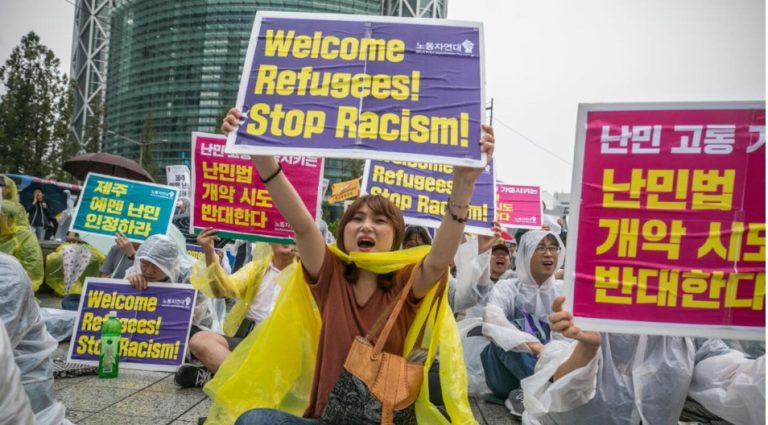
Although South Korea assumes itself as an ethnically homogeneous nation, globalization has escalated migration through foreign workers, international students and multicultural marriages. Thus, Korean society has become more culturally diverse. Even though diversity creates economic opportunities and reducing labor shortages, immigrants sometimes encounter discrimination, language barriers and social exclusion. Therefore, integrating multicultural communities has become an important policy issue.
Based on Constructivist’s theory, national identity is socially constructed rather than fixed. As the country becomes more diverse, society is gradually redefining what it means to be Korean. Government education programs and multicultural policies aim to promote greater social inclusion while maintaining national unity.
Opportunities for South Korea
Although South Korea faces these challenges, it also has many opportunities to establish a stronger society.
First, public awareness of mental health and social well-being become significantly increased due to the state’s effort. Discussions about stress, work-life balance and emotional health are becoming more open than in previous generations.
Second, new solutions for healthcare, education and elderly care have been developed through technological invention. The smart healthcare systems and online mental health services were innovated by utilizing advanced digital infrastructure.
Third, increased international cooperation allows South Korea to learn through other countries’ experiences in addressing demographic decline, migration and gender equality. South Korea, an active member of international organizations, enables to exchange knowledge and adopt successful policy practices.
Finally, the youths have become involved in public discussions about equality, diversity and social justice. Their involvement may contribute to long-term social change and more inclusive public policies.
Conclusion
From my point of view, these issues are closely related to its rapid economic development. The country’s remarkable success not only has contributed prosperity and global influence but has also expand social pressure and inequality. People’s joy or quality of life cannot be assured by economic growth alone.
I believe investments in mental health services, family support, equality in gender and multicultural unification should continuously implement while society encourages a harmless work-life balance and reduces excessive academic competition. Moreover, through international cooperation, the country can also learn from countries experiencing similar demographic and social challenges.
In conclusion, South Korea attains too much success through remarkable economic development, but important social issues still remain. The country’s future is continued to shape by social pressure, gender inequality, demographic decline and multicultural integration. Constructivism reveals how cultural values and social identities figure public attitudes and policies while Liberalism discloses the importance of institutions and government cooperation in tackling these issues. Through technological innovation, policy reform and transforming social values, South Korea has significant opportunities even as the complex problems exist. South Korea will strengthen both society and its position in the international community by addressing these issues successfully.
Writer: May Phyo Aung (EMPM Student in University of Muhammadiyah Malang)
References
Kim, Y. (2022). Social change and demographic challenges in South Korea. Routledge.
Organisation for Economic Co-operation and Development. (2023). Society at a glance 2023: OECD social indicators. OECD Publishing.
United Nations Development Programme. (2024). Human development report 2023/2024. UNDP.
World Bank. (2023). World development indicators. World Bank.
United Nations Educational, Scientific and Cultural Organization. (2023). Global education monitoring report 2023: Technology in education. UNESCO.
World Health Organization. (2022). World mental health report: Transforming mental health for all. World Health Organization.