
Image source: Google
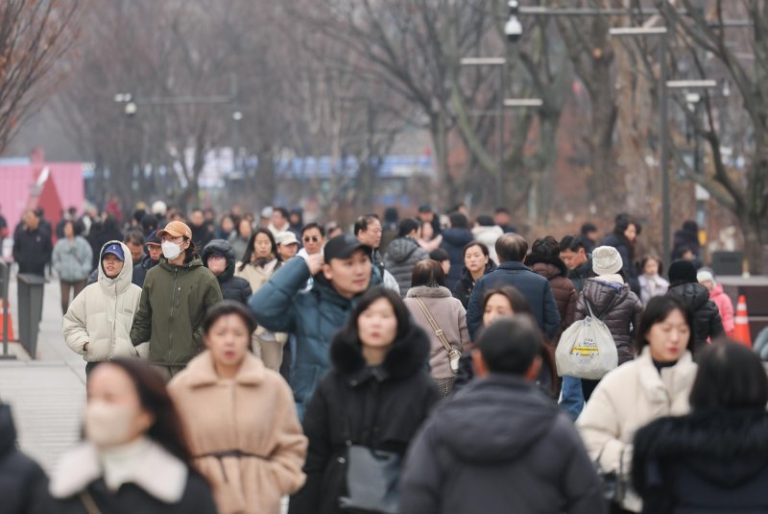
South Korea’s phenomenon today is both fascinating and alarming. On one hand, the country has transformed into a global cultural powerhouse, with K-pop songs filling millions of minds, Korean dramas watched worldwide, and the other hand, South Korea faces its most serious existential threat: its own people are slowly disappearing as birth rates plummet, schools close one by one, and military strength begins to erode. This is South Korea’s greatest irony, a country so deeply loved by the world is losing its next generation. South Korea’s success in building soft power is no coincidence but the result of a well-planned public and cultural diplomacy strategy. Realizing they could not compete directly with major global powers in military or economic might, the government chose the path of culture, establishing a dedicated ministry to promote Korean culture to the global stage and giving birth to the Hallyu phenomenon (Kurniawati, 2021). Through films, dramas, and music, South Korea shaped a positive image, perfectly exemplifying Joseph Nye’s concept of soft power, the ability to influence others through cultural attraction rather than coercion. Simply with boy bands and handsome actors, the name of Korea became known and loved by millions, shaping public opinion across various countries to view South Korea positively (Kurniawati, 2021). However, the rise of South Korea’s soft power will not save the nation from demographic collapse, because even the most attractive culture cannot replace the fundamental need for human beings to be born and strengthen their country. However, herein lies the problem. When looking at South Korea’s fertility rate graph, profound concerns arise.
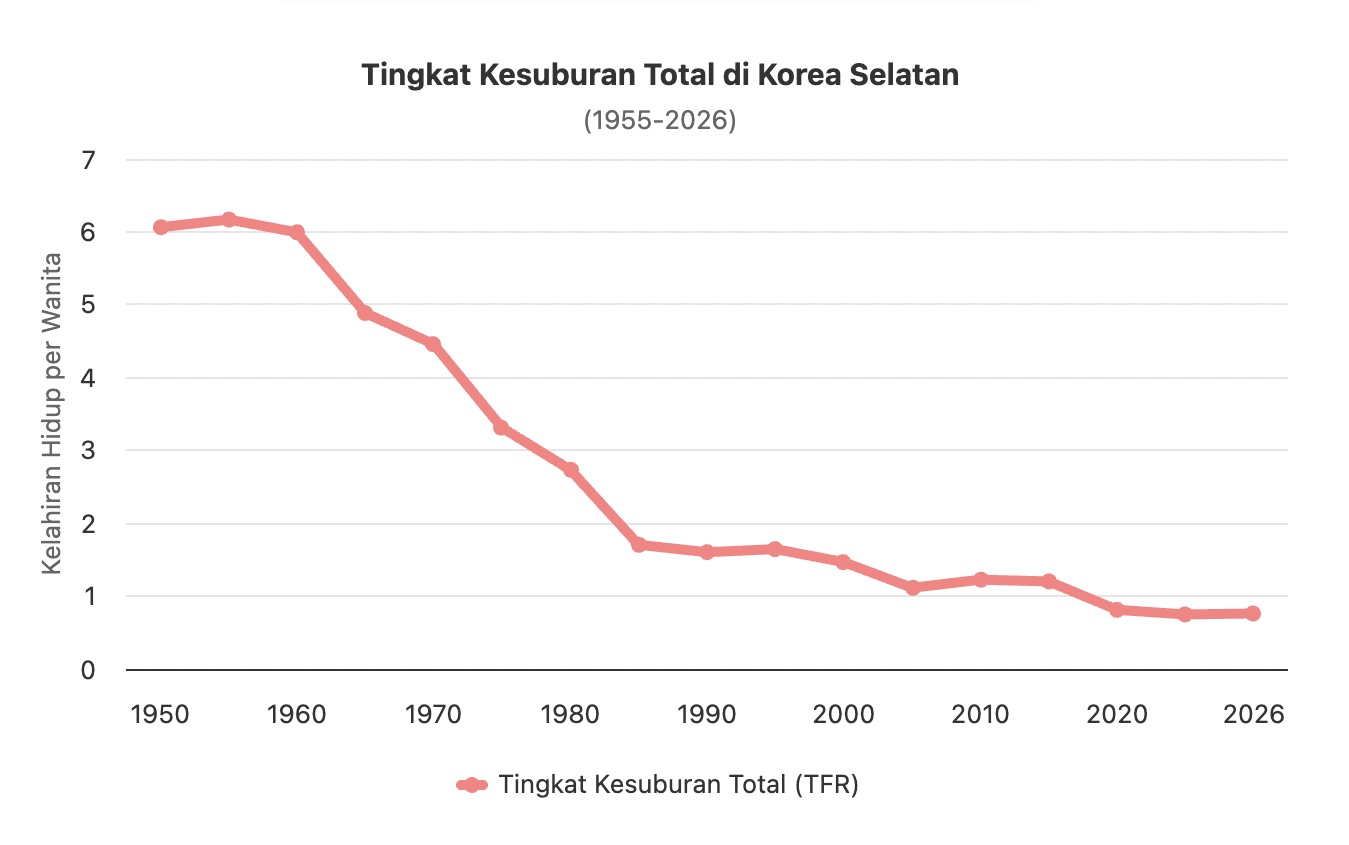
Image source: Worldometers (2026)
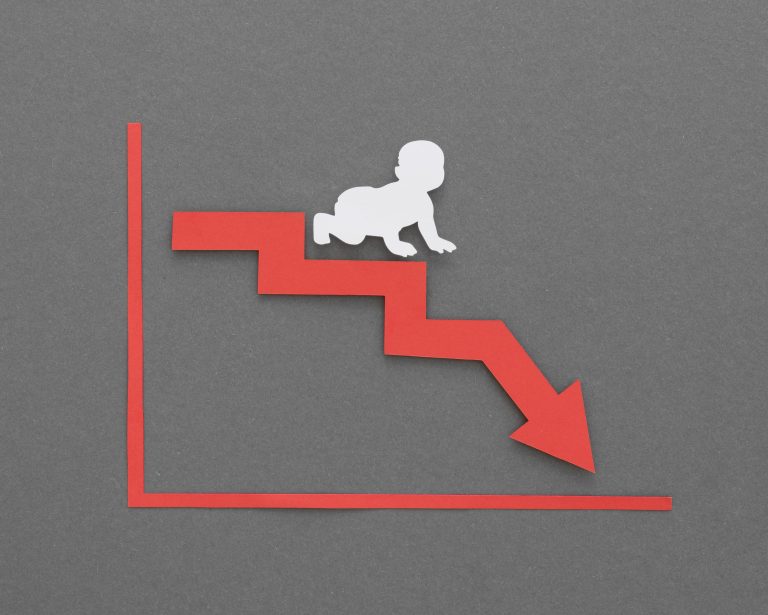
The graph shows the birth rate decline over more than seven decades, in the 1950s and 1960s, South Korea’s fertility rate was around six children per woman, but since then it has steadily dropped, falling to 2.7 in the 1980s, 1.6 in the 1990s, and below one in the 2010s (Min, 2024). By the end of 2023, the total fertility rate hit 0.65, the lowest globally and below war-torn Ukraine, and although it rose slightly to 0.80 in 2026 based on Worldometers, the long-term pattern is clear: South Korea’s birth rate is at its lowest point in history, evidence of a serious demographic crisis. The question is how a country this advanced could fail at the most basic task of birthing the next generation. Many women avoid having children due to the difficulty of returning to work after childbirth, high child-rearing costs on a single income, long working hours, and expensive housing (Lainufar, 2025). The government spent billions on housing, babysitting subsidies, and cash assistance for couples, yet none succeeded because money alone cannot solve deeper social problems (Lainufar, 2025). The impact is visible: 4,008 schools closed due to dwindling student numbers, with 3,674 elementary, 264 middle, and 70 high schools permanently shut down (Rahmadania, 2025). In five years, 158 schools closed, and another 107 are projected to close soon (Rahmadania, 2025). Yet 2.1 children per woman are needed just to keep the population stable, presenting a bleak picture where schools close, the population shrinks, and regeneration stops.
What is even more concerning is the impact on the military. A report from South Korea’s ministry of defense in August 2025 revealed that the number of active military personnel fell from 563,000 in 2019 to approximately 450,000 in July 2025, a 20 percent decline in just six years, with the army losing more than 100,000 troops (Yeung & Bae, 2025). The main cause is the 30 percent drop in the population of military-age males between 2019 and 2025, from around 330,000 to only 230,000 people (Yeung & Bae, 2025). Currently, the South Korean military is short of 50,000 personnel to maintain full combat readiness (Ewe, 2025). The demographic cliff is no longer a distant concern but reality for national security. This concern is further amplified given that North Korea still maintains approximately 1.3 million active military personnel.
This is the danger of relying too heavily on soft power. Culture can make the world love a nation, but it cannot protect it when an enemy attacks, nor can it fill the empty ranks of soldiers. As Joseph Nye emphasized, soft power should complement hard power, not replace it. Yet South Korea became so preoccupied with its power success that it ignored the collapse of its hard power beneath the surface. There is a deeper irony: the K-pop industry relies heavily on creative young talent, but the number of young people is dwindling as schools close, making it increasingly difficult to sustain the glory of Hallyu. In conclusion, South Korea is walking on a tightrope between cultural glory and demographic collapse. No matter how radiant its soft power, it cannot save the nation if hard power continues to wither. No amount of Hallyu can replace the cry of a newborn baby, no drama can fill the military’s empty ranks, and no K-pop song can rebuild a closed schools. It is time for South Korea to look inward, not just outward, and salvage its own future.
Writer: Safra Zarwandah – 202410360110094
References
Ewe, K. (2025). South Korea military shrinks as population declines. BBC News. https://www.bbc.com/news/articles/c79llljy4qeo
Kurniawati, R. (2021). Keberhasilan Korea Selatan melalui Soft Power Diplomasi. ResearchGate. https://www.researchgate.net/publication/355408367_Keberhasilan_Korea_Selatan_melalui_Soft_Power_Diplomasi
Lainufar, I. R. (2025). Krisis Populasi di Korea Makin Mengkhawatirkan: Puluhan Sekolah Ditutup. Kompas.com. https://www.kompas.com/global/read/2025/02/25/142526870/krisis-populasi-di-korea-makin-mengkhawatirkan-puluhan-sekolah-ditutup
Mayasari, S. F. (2025). Soft Power Korea Selatan: Bagaimana K-pop Mengubah Citra Negara? uinsa.ac.id. https://uinsa.ac.id/soft-power-korea-selatan-bagaimana-k-pop-mengubah-citra-negara
Min, J. K. (2024). The predetermined future: tackling South Korea’s total fertility rate crisis. Clinical and Experimental Pediatrics, 68(3), 225-227. https://doi.org/10.3345/cep.2024.00871
Rahmadania, S. R. (2025). Krisis Populasi di Korsel Makin Ngeri, Lebih dari 4 Ribu Sekolah Ditutup. DetikHealth. https://health.detik.com/berita-detikhealth/d-8284723/krisis-populasi-di-korsel-makin-ngeri-lebih-dari-4-ribu-sekolah-ditutup
Worldometers. (2026). Korea Selatan Demografi. https://www.worldometers.info/id/demografi/demografi-korea-selatan/
Yeung, J., & Bae, G. (2025). As South Korea’s population falls, its military is shrinking rapidly. Is that a problem as North Korea ramps up its forces? CNN World. https://edition.cnn.com/2025/08/14/asia/south-north-korea-military-population-decline-intl-hnk