
Image source: picryl.com
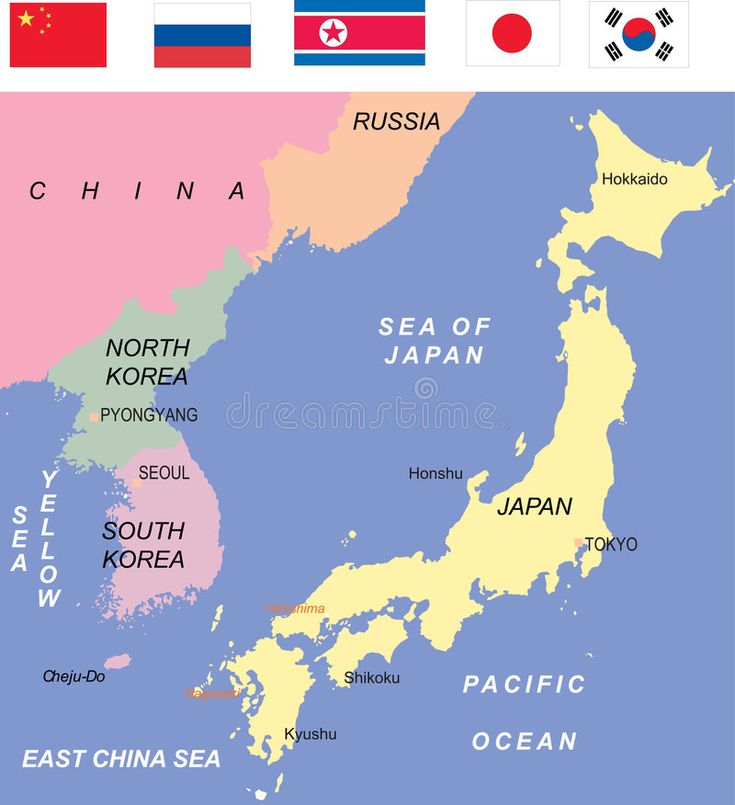
In East Asia, a phenomenon commonly referred to as the “Asian Paradox” has been observed on several occasions, wherein the highly advanced economic integration and interdependence among South Korea, Japan, and China are at odds with the stability of diplomatic relations among these three nations. For South Korea, this dynamic is not merely a matter of realpolitik, but the result of a deep rooted narrative dispute. Viewed through a constructivist lens, a nation’s identity is shaped by shared or collective memory and its perception of “the other.” For Seoul, the historical memory of Japanese colonialism and concerns regarding China’s extensive cultural hegemony are not merely a record of the past, rather they shape its national interests today. This essay will analyze how this narrative dispute can influence South Korea’s foreign policy and its role in East Asia.
The diplomatic impasse that persists to this day can be traced to two main pillars of contention from South Koreans’ collective memory of Japan and China, and their defense of national identity. Regarding Japan, this dispute stems from the trauma of 35 years of colonial rule (1910–1945), the effects of which are still felt today. Seoul demands compensation from Japan regarding several critical issues such as the ‘Comfort Women’ or ‘Jugun lanfu’ and forced labor, however, this is not merely a matter of financial compensation but a struggle for the recognition of a nation’s dignity that has been lost (Chariska, 2025). On the other hand, tensions with China are fueled by a “war of narratives” that seeks to erase the cultural and historical boundaries of their ancestors. One such issue is China’s claim that the ancient Goguryeo Kingdom is part of Chinese history, which has sparked public outrage in South Korea, as Seoul believes that the Kingdom is a historical legacy of the Korean Peninsula. Furthermore, other claims, such as those regarding the origins of kimchi and the hanbok, have further fueled anti-China sentiment among South Koreans. Thus, these narrative disputes with these two neighboring nations demonstrate that history serves as a battlefield for sovereignty, determining how a nation positions itself in the face of the giants of East Asia.
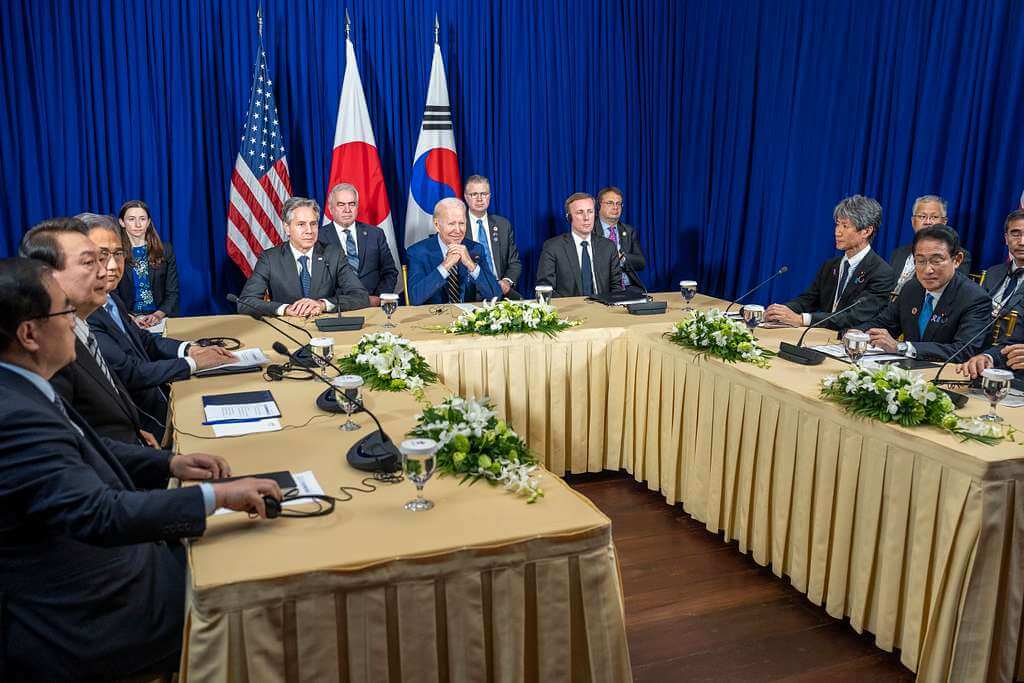
This narrative conflict has systematically constrained South Korea’s foreign policy maneuvering room, significantly impacting its efforts to balance interests between the two major powers. On the other hand, the historical dispute with Japan creates various challenge to establishing trilateral security cooperation among Seoul, Tokyo, and Washington. According to an analysis by the East Asia Forum, traumatic collective memory often triggers strong domestic pressure that forcing the Seoul government to remain skeptical of Japan even after their agreeing to cooperate. This was evident when Seoul nearly severed military cooperation with Japan during the 2019 GSOMIA crisis. On the other hand, historical and cultural disputes with China have made Seoul’s hedging strategy increasingly fragile. This occurs because every time South Korea want to maintain economic cooperation with China, it often clashes with domestic nationalism fueled by claims from Beijing, which ultimately encourage Seoul to rely on its security alliance with the United States, where Seoul has strengthened its nuclear security alliance through the Washington Declaration in 2023. These two factors resulting South Korea trapped in a crisis of trust rooted in the past, which prevent its flexibility in the East Asian region.
Based on this discussion, the South Korea disputes with Japan and China demonstrate that historical memory is not merely a relic of the past, but a force that shapes the direction of South Korea’s diplomatic policy in East Asia to be more careful. The inability to move beyond this historical trauma not only hinders trilateral cooperation with Japan but also gradually erodes cooperation trust with China. Consequently, this has led to a skeptical foreign policy stance toward these two major powers, compelling South Korea to position itself as a strong and independent nation in East Asia to reinforce its strength and ensure that the traumas of the past are not repeated.
Writer: Palmeda Hersa Putra Abhista – 202410360110111
Referances
Chariska, A. E. (2025). Dampak penyelesaian isu comfort women terhadap diplomasi Jepang dan Korea Selatan. Global Insight Journal, 2(1), 1-16. https://doi.org/10.36859/gij.v2i1.2718
Choe, H. (2024, 12 September). Historical memories haunt South Korea–Japan relations. East Asia Forum. https://eastasiaforum.org/2024/09/12/historical-memories-haunt-south-korea-japan-relations/
Deutsche Welle. (2023, 14 Maret). Korea Selatan dan Jepang ingin kesampingkan beban sejarah. DW. https://www.dw.com/id/korea-selatan-dan-jepang-ingin-kesampingkan-beban-sejarah/a-64978185
Hasanah, A. A. (2023). Judul Skripsi Lengkap Anda [Skripsi, Universitas Islam Negeri Syarif Hidayatullah]. Repository UIN Jakarta. https://repository.uinjkt.ac.id/dspace/bitstream/123456789/79206/1/ARINI%20ALFA%20HASANAH.FISIP.pdf
Hays, J. (2008). Goguryeo (Koguryo): History, culture and the China-Korea dispute. Facts and Details. Diakses pada 17 Maret 2026, dari https://factsanddetails.com/korea/Korea/Ancient_History/entry-7140.html
KBS World. (2022, 11 Februari). Isu Hanbok di Olimpiade Beijing picu sentimen anti-Tiongkok di Korea Selatan. https://world.kbs.co.kr/service/contents_view.htm?lang=i&board_seq=418313
Park, H. (2023, 10 Mei). Government marks 1st anniversary with focus on national interest, future. Korea.net. https://indonesian.korea.net/NewsFocus/policies/view?articleId=231976
Snyder, S. A., & Kim, J. (2025, 20 Mei). The transformation of South Korean progressive foreign policy. Carnegie Endowment for International Peace. https://carnegieendowment.org/research/2025/05/the-transformation-of-south-korean-progressive-foreign-policy