

Image soure: JurnalPost
When people talk about South Korea today, they rarely mention the Korean War or the Asian financial crisis anymore. Instead, they talk about BTS, Squid Game, Parasite, and Korean skincare. I have seen this shift myself-friends who never cared about Korea suddenly learn Korean, plan trips to Seoul, or binge-watch K-dramas until 3 a.m. This is Hallyu, or the Korean Wave. What started as a few TV dramas exported to neighboring countries in the late 1990s has turned into a global cultural phenomenon. But Hallyu is more than just entertainment. In my opinion, South Korea has smartly used its pop culture as a form of “soft power” a concept coined by Joseph Nye to build a positive image, form international friendships, and increase its influence without firing a single bullet. This essay explains why Hallyu works so well as soft power, using two international relations ideas: constructivism (how culture changes identities) and liberalism (how cultural ties create cooperation).
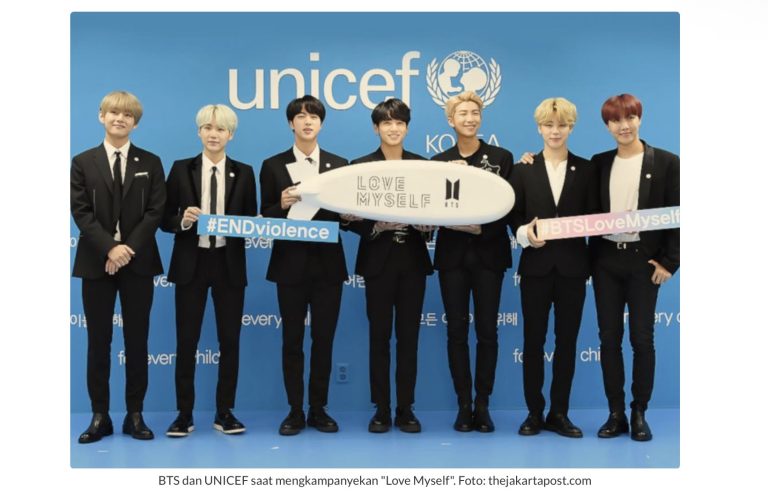
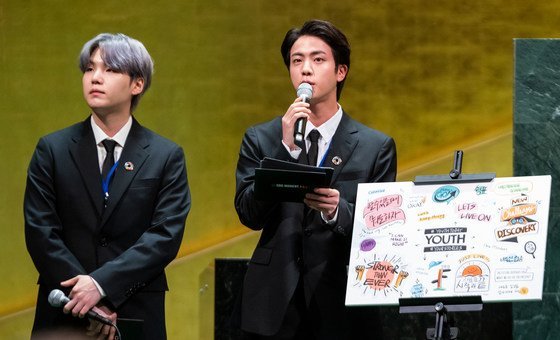
South Korea is not a superpower like the US or China. It is a middle-sized country, still technically at war with North Korea, and surrounded by bigger neighbors. Hard power military strength or economic pressure is not its strongest card. But culture is. According to Nye (2004), soft power is “the ability to influence others through attraction rather than coercion” (p. 5). Hallyu attracts people naturally. In 2019, Parasite won the Oscar for Best Picture. BTS filled stadiums from Los Angeles to Jakarta. The Korean government has been actively supporting this growth through agencies like the Korean Foundation for International Cultural Exchange (KOFICE, 2021). Why does this matter? Because when millions of foreigners fall in love with Korean dramas and music, they start to trust and admire South Korea. That admiration translates into tourism, foreign investment, and diplomatic goodwill.
Constructivist scholar Alexander Wendt (1999) argues that “identities and interests are socially constructed” (p. 1). This means that what countries think of each other is not fixed it can change through ideas and interaction. Before Hallyu, many people outside Asia only knew South Korea for the 1988 Olympics or the Samsung brand. Now, thanks to K-pop and K-dramas, South Korea is seen as cool, creative, and modern. Take BTS: their lyrics talk about self-love and mental health, messages that young people around the world connect with. This emotional connection changes how people see the entire country. I remember a friend from Brazil who told me, “I used to know nothing about Korea, but after watching Crash Landing on You, I feel like I understand Korean values-family, loyalty, and humor.” That is constructivism in action: culture reshapes identity.
Liberals like Keohane and Nye (1977) highlight that “interdependence affects world politics by creating patterns of cooperation and conflict” (p. 8). Hallyu creates interdependence. When millions of fans want to learn Korean, buy Korean products, or visit filming locations, economic and social links grow. The Korea Tourism Organization (2022) reported that over 2 million international visitors came to South Korea specifically for Hallyu-related activities. I saw this myself during a trip to Seoul in 2023 the line outside the Hybe Insight museum (BTS’s agency) was full of fans from the US, Japan, and even Chile. Also, more than 150,000 people take the TOPIK (Korean proficiency test) every year. These numbers show that cultural exports lead to real, measurable connections. And these connections make other countries more willing to cooperate with South Korea on trade, security, or environmental issues.
Frankly, I think South Korea’s Hallyu strategy is brilliant. Unlike sending warships or imposing sanctions, sharing music and stories creates goodwill without enemies. It feels less threatening. But there are risks. First, trends change. What if K-pop loses its charm five years from now? South Korea could suddenly lose its cultural influence. Second, competition is fierce. Japan has anime, China is promoting C-dramas, and Hollywood never sleeps. As Nye (2011) warns, “soft power resources are not static; they require constant renewal” (p. 82). Third, too much dependence on a few big names like BTS or BLACKPINK is dangerous if they stop, the wave might slow down. So, South Korea needs to keep investing in new artists, diverse genres, and also maintain government support without suffocating creativity.
Hallyu is not just a fad. It is a real example of how a country can rise in global politics through music, drama, and film. By using soft power, South Korea has changed how the world sees it (constructivism) and built strong people-to-people ties that lead to cooperation (liberalism). Of course, challenges remain, but for now, the Korean Wave offers a powerful lesson: in the 21st century, culture can sometimes speak louder than cannons.
Writer: I Gede Budi Artawan – 202410360110117
References:
Keohane, R. O., & Nye, J. S. (1977). Power and interdependence: World politics in transition. Little, Brown.
Korea Foundation for International Cultural Exchange. (2021). 2019 KOFICE white paper on Hallyu. KOFICE.
Korea Tourism Organization. (2022). 2021 International visitor survey report. KTO.
Nye, J. S. (2004). Soft power: The means to success in world politics. PublicAffairs.
Nye, J. S. (2011). The future of power. PublicAffairs.
Wendt, A. (1999). Social theory of international politics. Cambridge University Press.