
Image source: Google
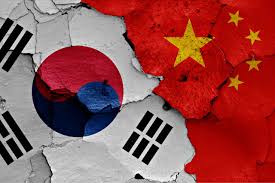
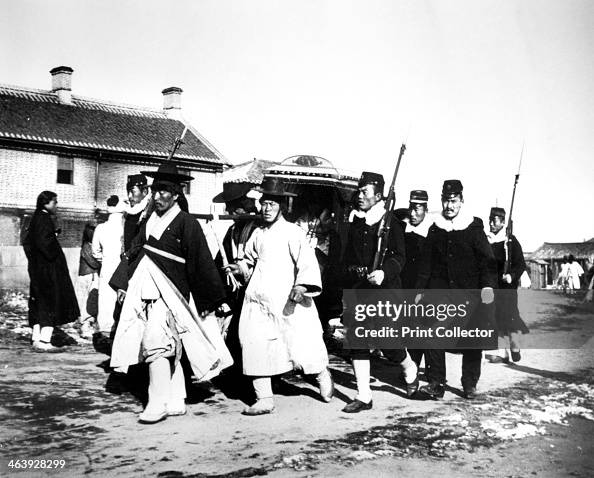
South Korea finds itself in a particularly vulnerable position in East Asia. It is a medium-sized democracy that continues to face unresolved historical issues with its two most powerful neighbors, Japan and China. With Japan, the disputes center on the legacy of Japanese colonial rule in 1910-1945, including the Chonggun Wianbu (comfort women) system, the process of Japanization (Prinanda, 2023), forced labour (Mackenzie & Yong, 2023), and the on going territorial disputes over Dokdo/Takeshima islets (Min, 2022). While with China, tensions arise from the Koguryo historical controversy, where China claims that the ancient kingdom was part of its history (Gries, 2005), recurring cultural appropriation disputes (Luo & Eoyang, 2022), and most consequentially China’s aggressive economic retaliation following South Korea’s 2016 agreement to host the US Terminal High Altitude Area Defense (THAAD) missile system (Meick & Salidjanova, 2017).
These disputes matter because they are not only historical but also directly shape alliance decisions, trade policy, and South Korea’s strategic posture in a region where US, China, Japan, and North Korea’s nuclear ambitions intersect. Thus, South Korea’s foreign policy is fundamentally constrained by its position at the intersection between great-power rivalry, making historical grievances a political inevitability rather than just a diplomatic choice (Snyder, 2018).
As I see it, South Korea’s historical disputes with Japan and China have made its foreign policy more reactive, making the country vulnerable and limiting its freedom to act independently in the region. It’s true that South Korea has managed its situation carefully while trying to balance its security ties with the US against its economic need for China. But at key moments, these old historical issues keep coming back and throwing that balance off.
From a constructivist perspective, this is predictable. Constructivism argues that state behavior is shaped not only by material interests/conditions but by identity, ideas, and norms (Mengshu, 2020; Wendt, 1999). It seems that South Korea’s national identity is deeply rooted in the trauma of Japanese colonial rule. This makes it politically dangerous for any government to appear too willing to compromise with Japan. For example, the 2015 agreement on ‘comfort women’, which was made under pressure from the US, lost public support almost immediately (Kim, 2016). Rejection of the agreement was expressed through various demonstrations, including one in which a Buddhist monk took the extreme step of setting himself on fire in protest (Ramaj, 2022). This shows that formal diplomatic deals can’t easily erase or override a nation’s collective memory.
China interpreted a defensive installation as a threat to its strategic deterrence and responded with a systematic economic coercion, estimating South Korea’s losses at approximately $7.5 billion (Dalton et al., 2018). This shows how South Korea’s hedging strategy under normal conditions becomes ineffective when great powers force them to make a dual choice. By referring to Mearsheimer’s (2001) theory of offensive realism, which argues that states in a competitive international system can’t forever avoid the consequences of competition among great powers, South Korea’s position between US and China precisely illustrates this.
To add that, it seems to me that South Korea serves as an example of an emerging middle power, a democratized state that pursues multilateral engagement and regional influence to legitimize its position in the region as well as the international system (Jordaan, 2010). The global success of the Hallyu cultural wave, like K-pop, cinema, and cuisine, is not incidental but also reflects a deliberate effort to build international legitimacy and a positive image on the international stage to balance the geopolitical risks it faces.
At last, South Korea’s experience offers a broader lesson in international relations, where hhistorical memory is not just a domestic political issue but a structural factor in foreign policy. Its ability to build stable and long-term partnerships with Japan or China will remain constrained as long as historical wounds are not acknowledged. The solutions is not to ignore history, but to build systems strong enough to manage it. That kind of effort needs leadership from every side, and so far that leadership has been lacking.
Writer: Mudrika Sausan Shabira Maruapey – 202410360110140
References
Dalton, T., Michishita, N., Zhao, T. (2018). Security Spillover: Regional Implications of Evolving Deterrence on the Korean Peninsula. Carnegie Endowment. https://carnegieendowment.org/china/research/2018/09/security-spillover-regional-implications-of-evolving-deterrence-on-the-korean-peninsula
Gries, P. H. (2005). The Koguryo controversy, national identity, and Sino-Korean relations today. East Asia, 22, 3-17. https://doi.org/10.1007/s12140-005-0001-y
Jordaan, E. (2003). The concept of a middle power in international relations: distinguishing between emerging and traditional middle powers. Politikon, 30(1), 165–181. https://doi.org/10.1080/0258934032000147282
Kim, M. Y. (2016). The US the big winner in ‘comfort women’ agreement. East Asia Forum. https://eastasiaforum.org/2016/01/07/the-us-is-the-big-winner-in-comfort-women-agreement/
Luo, Z. S., Eoyang, C. (2022). Cultural Clashes Between Korea and China: Lost in Translation, History and Pride. The Gazelle. https://www.thegazelle.org/issue/224/cultural-clashes-korea-china-translation
Mackenzie, J., Yong, N. (2023). South Korea to compensate victims of Japan’s wartime forced labour. BBC. https://www.bbc.com/news/world-asia-64858944
Mearsheimer, J. J. (2001). The tragedy of great power politics. Norton.
Meick, E., Salidjanova, N. (2017). China’s Response to U.S.-South Korean Missile Defense System Deployment and Its Implications. USSC. https://www.uscc.gov/sites/default/files/Research/Report_China%27s%20Response%20to%20THAAD%20Deployment%20and%20its%20Implications.pdf
Mengshu, Z. (2020). A Brief Overview of Alexander Wendt’s Constructivism. E-International Relations. https://www.e-ir.info/2020/05/19/a-brief-overview-of-alexander-wendts-constructivism/
Min, N. G. (2022). Dok-do or Takeshima? The Territorial Dispute Between South Korea and Japan. Brown ULR. https://www.brownulr.org/blogposts/dok-do-or-takeshima-the-territorial-dispute-between-south-korea-and-japan
Prinada, Y. (2023). Sejarah Penjajahan Jepang di Korea, Faktor Penyebab, & Dampaknya. Tirto.id. https://tirto.id/sejarah-penjajahan-jepang-di-korea-faktor-penyebab-dampaknya-gGvm
Ramaj, K. (2022). The 2015 South Korean–Japanese Agreement on ‘Comfort Women’: A Critical Analysis. Brill. https://brill.com/view/journals/icla/22/3/article-p475_004.xml?srsltid=AfmBOop45pH3FNqiOrBfESd_PaXfTpC7Y6r-GkXWEFVeuQPtHC8kc2me
Snyder, S. A. (2018). South Korea at the crossroads: Autonomy and alliance in an era of rival powers. Columbia University Press.
Wendt, Alexander (1999) Social Theory of International Politics First Edition. Cambridge: Cambridge University Press. https://www.guillaumenicaise.com/wp-content/uploads/2013/10/Wendt-Social-Theory-of-International-Politics.pdf