
Photo source: Korean Economic Institute
Throughout history, Korea has been in a vulnerable position, located between three major imperial powers: China, Russia, and Japan. In this situation, a strong sense of ethnic unity and nationalism helped keep Koreans together, especially before and during Japanese colonial rule. Many scholars argue that this commitment to a single homogeneous identity enabled Korea to survive various efforts by surrounding countries to dominate it, and it continues to influence the strong ethnocentric mindset found in Korean society today, which is based on the state narrative of “danil minjok” or “one blood nation” (Jatula & Goode, 2021). An interesting way South Korea has responded to the conditions shaping its version of multiculturalism is by developing the idea of ‘multicultural (damunhwa) families’ (Park H, 2019). Korea has experienced multicultural marriages since the 1960s, though the numbers were small and involved mostly local Korean women and foreigners, such as Japanese and American men (Lee et al., 2025). Thus, the number of mixed-race marriages in South Korea has increased dramatically in recent years. In 2022, there were over 100,000 mixed-race marriages, up from just 10,000 in 2000 (The Guardian Life, 2023). Understanding the rise of multicultural families is therefore essential, not only to analyze the causes behind Korea’s changing demographic landscape but also to evaluate the long-term effects this phenomenon has on cultural cohesion.
The increase in the number of multicultural families in South Korea is inseparable from the demographic crisis facing the country. South Korea has one of the lowest fertility rates globally, recorded at 0.84 in 2020 and slightly rising to 0.92 in 2021, though still showing a downward trend overall (Jatula & Goode, 2021). This decline, coupled with an aging population, has resulted in a shortage of potential spouses. Another contributing factor is the rural marriage market and socioeconomic disparity between urban and rural regions. Many rural men, often employed in agriculture and fisheries, struggle to attract domestic partners due to the migration of young women to urban centers for education and employment (Lee et al., 2025). Hence, the state introduced various measures, including the Multicultural Family Policies, that encouraged the migration of women, particularly from Southeast Asian countries, to marry Korean men with the goal of increasing both the population and cultural diversity (Jatula & Goode, 2021). Moreover, globalization has also facilitated the increase in multicultural families. Korea’s rapid industrialization and growing labor demands have led to an influx of migrant workers from Southeast Asia and beyond. These workers sometimes settle permanently, marry Korean citizens, and further increase the multicultural population. Cities with higher numbers of multicultural residents, such as Ansan, Incheon, and certain Seoul suburbs (Lee T, 2022).
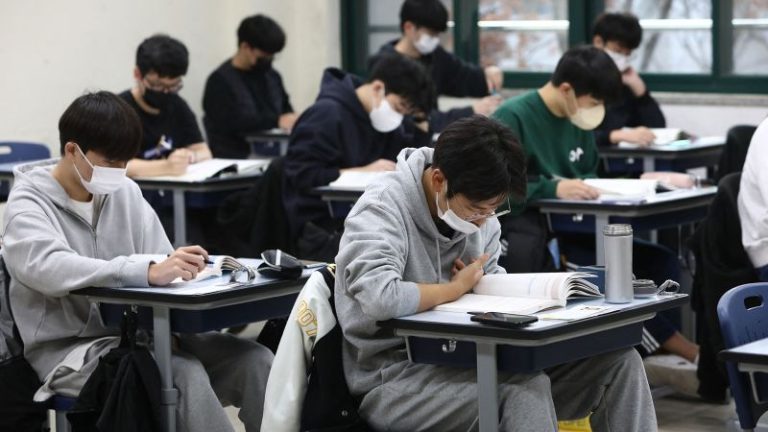
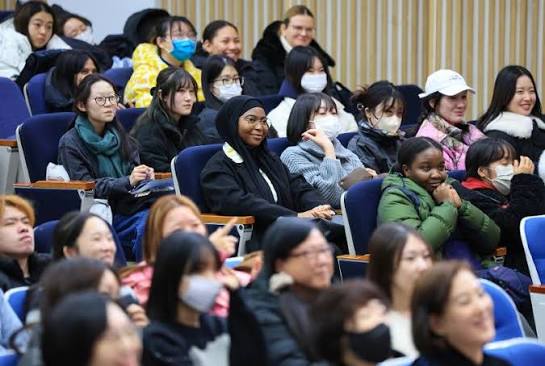
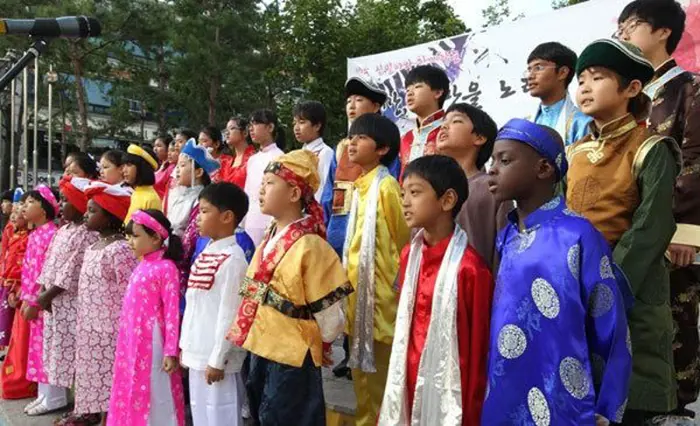
The effects of these demographic and economic causes are strongly visible among children of multicultural families. Often referred to as “Honhyeol” children, these individuals may struggle with their identity, especially if they differ in appearance or language from their peers (Kim G, 2025). Despite being equally Korean, mixed Koreans of White and East Asian descent are placed higher on the hierarchy than mixed Koreans of Black and Southeast Asian descent. Darker skin is an indication of “perpetual foreignness” in Korea, a sign that one is an outsider who can not be “true” Korean despite one’s citizenship or Korean blood tie (Dickinson, 2022; Kim, 2020). This identity conflict highlights the broader social challenge of integrating multicultural families into a society that has traditionally been toward ethnic homogeneity. Furthermore, the growing number of multicultural families has an impact on the country’s education system. In 2023, over 10% of all students in South Korean public schools had a foreign background. This number is expected to continue to increase in the coming years (The Guardian Life, 2023). Thus, the government established a multicultural support center and implemented Korean language programs, aiming at promoting students’ academic and social development (Jin & Ahn, 2025).
To sum up, the rise of multicultural families in South Korea is a direct result of demographic pressures, including the country’s low birth rate, aging population, and rural marriage imbalance, as well as the broader effects of globalization and labor migration. These causes have produced tangible effects on society, particularly in shaping the experiences of multicultural children, who often face identity challenges and discrimination, and in prompting changes in the education system to accommodate a more diverse student population.
By: Mudrika Sausan Shabira Maruapey – 202410360110140
Further Reading:
Dickinson, B. (2022). K-Colorism over K-Pop? Youth in South Korea and Their Consumption of Colorism. Sharing Sociology. https://soc.hamiltonlits.org/sharingsociology/fall-2022/k-colorism-over-k-pop-youth-in-south-korea-and-their-consumption-of-colorism/
Kim, G. (2025). The Border of Korean: The Case of Hines Ward Syndrome. Omnes Journal of Multicultural Society, 15(2). https://doi.org/10.64446/omnes.2025.07.15.2.01
Kim, H. A. (2020). Understanding “Koreanness”: Racial Stratification and Colorism in Korea and Implications for Korean Multicultural Education. State University of New York.
Lee, M., Govindasamy, G., & Tan, S. K. (2025). Korean Multiculturalism and the Emergence of Foreign Brides in South Korea. ResearchGate: International Journal of East Asian Studies, 14(1), 85-83. https://doi.org/10.22452/IJEAS.vol14no1.7
Lee, T. (2022). Migration Data and Marriage Migrants in the Republic of Korea. International Organization for Migration (IOM). Geneva. https://publications.iom.int/system/files/pdf/pub2023-064-l-migration-data-and-marriage- migrants-in-the-republic-of-korea.pdf
Jatula, V., & Goode, T. (2021). Same Color, Different Realities: Analysis of Black Experiences in South Korea. Routledge, 14(1), 52-56. https://www.tandfonline.com/doi/epdf/10.1080/17528631.2022.2047272?needAccess=true
Jin, Y., & Ahn, H. S. (2025). Acculturative Stress and Achievement Motivation: The Moderating Role of Immigrant Mothers’ Korean Proficiency in South Korean Multicultural Adolescents. Frontier, 16. https://doi.org/10.3389/fpsyg.2025.1652737
Park, H. G. (2019). The ‘Multicultural Family’ and the Politics of Selective Inclusion in South Korea. European Journal of Korean Studies. https://www.ejks.org.uk/download/pages-5-19-hyun-gwi-park-the-multicultural-family-and-the-politics-of-selective-inclusion-in-south-korea/#nav-files
The Guardian Life. (2023). South Korea to Become a Multiracial Nation in 2024. https://guardian.ng/life/south-korea-to-become-a-multiracial-nation-in-2024/