
Image source: AI Image
Introduction
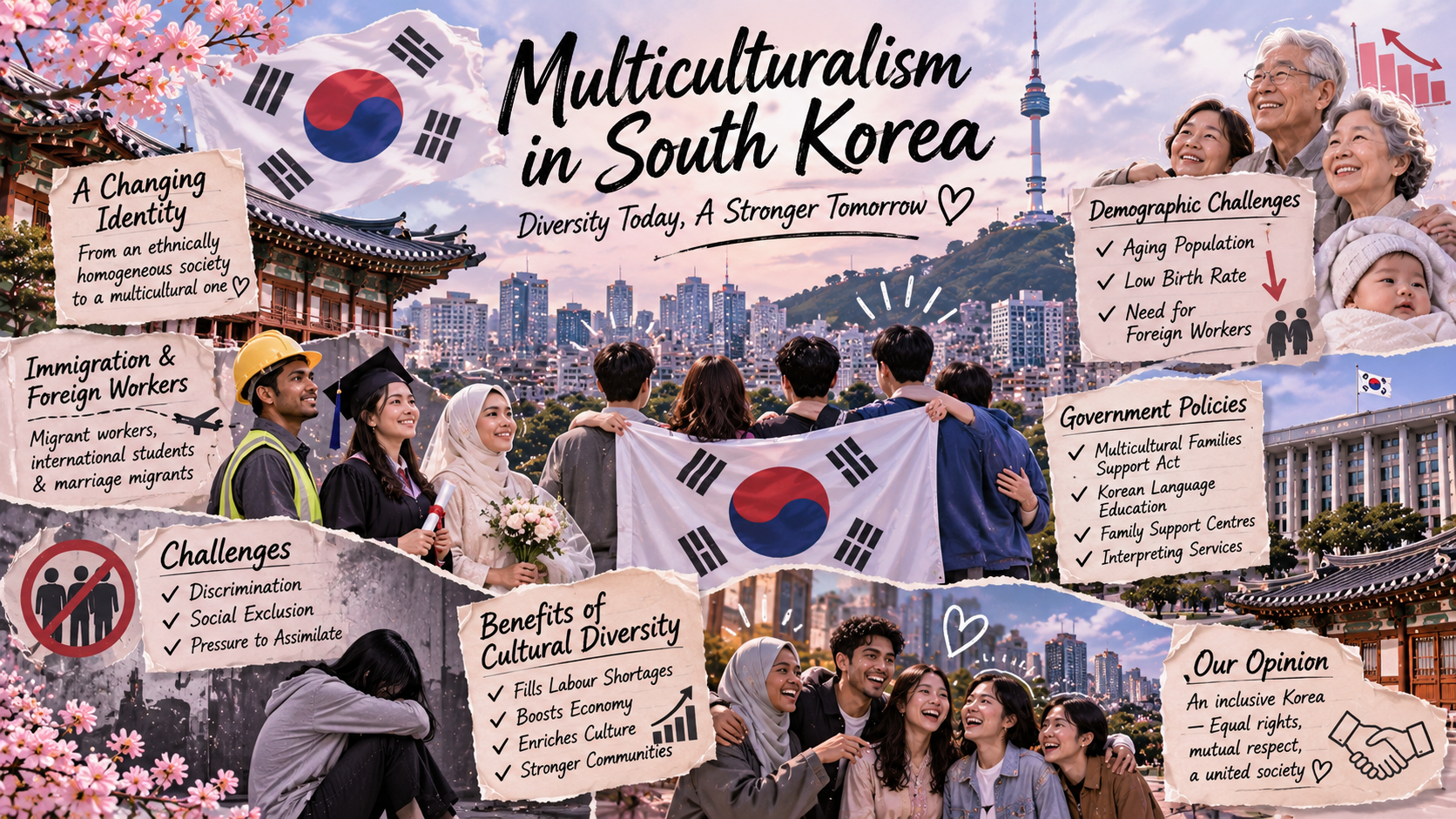
South Korea is often called a country with a culture. Because of the idea of shared heritage, language and history the nation has been seen as having a sense of national identity. However because there has been an influx of migrants, international couples and migrant workers the nation has become more diverse. This makes people wonder how does South Korea keep its culture alive while also making people from cultures equal members of society?
Immigration and South Korea’s Demographic Challenges
The creation of a society in South Korea ties closely to many changes in numbers of people and money. Because the population is getting older and fewer children are born, people are looking more at the importance of workers in places that do not have enough labour. By bringing immigrants into the job market South Korea can quickly answer its shrinking number of people and keep enough workers for the economy (OECD, 2024).
Immigration now comes in forms: migrant workers, international students, marriage migrants and other citizens who differ from the native people of South Korea. These groups help a lot in manufacturing, farming and other areas. This shows that the issue is not cultural but also economic. However if South Korea uses workers without paying attention to their rights and how they fit into society it will create more inequalities among this group.
Government Policies on Multiculturalism
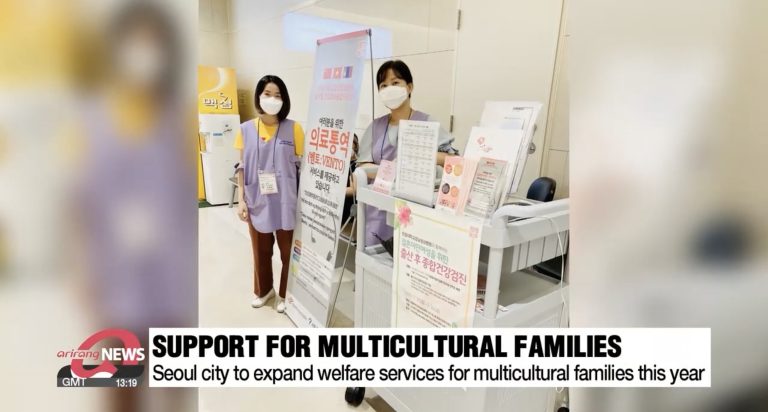
The Korean government has implemented many policies to help immigrants and families from different cultures. The important one is the Multicultural Families Support Act. This policy aims to improve the quality of life for families and make them feel like they belong in society (Ministry of Government Legislation, 2018). The Korean government has created many programs that are available at multicultural family support centers. These include language classes, family education, child care, translation services and support for bilingualism in the family (Ministry of Gender Equality and Family n.d.). This helps immigrants deal with language barriers.
However these policies show that the government of South Korea has recognized the need for multiculturalism to be part of the country.. How the policies are carried out will depend on how immigrants are treated in the workplace and, in the community.
Challenges to National Identity and Social Inclusion
One major issue in this topic is how South Korea sees its identity over time.In the lecture about multiculturalism in Korea and Japan.South Korea was taught that the idea of homogeneity was key to building the modern South Korean nation.Ethno-nationalism in South Korea grew because South Korea was under colonial rule and people wanted to keep South Korean identity.
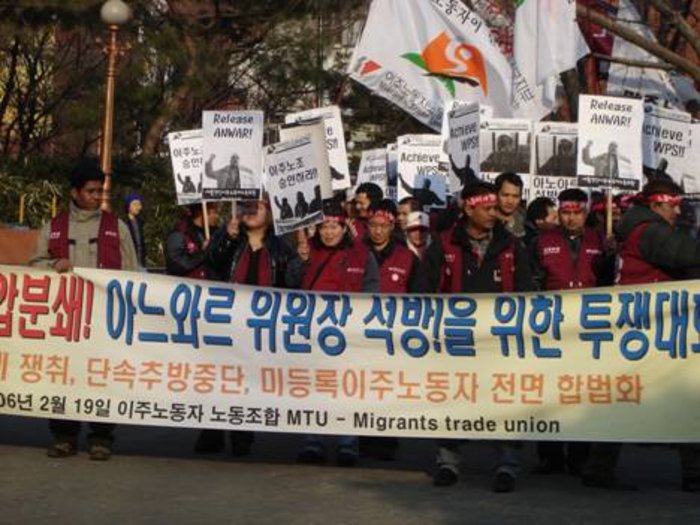
A shared Korean national identity can bring people together but it can also create problems. Those who do not fit the South Korean identity may face trouble. Immigrants may be forced to follow Korean ways and language. Their own culture is given respect.Discrimination can be a problem. Some migrant workers may experience working conditions and few chances to change employers. The OECD report (2024) says temporary migrants also face working conditions and social exclusion. The UN Committee on the Elimination of Racial Discrimination (2025) raised concerns. Gave recommendations about racial discrimination, in South Korea.
Benefits of Cultural Diversity
Despite some challenges that come with multiculturalism there are good things about South Korea. Immigration brings benefits because foreigners often help fill gaps in the workforce start businesses and learn new skills and experiences.Throughout the lectures examples of societies and inclusive rural development were shown, illustrating how diverse areas can positively influence the community.
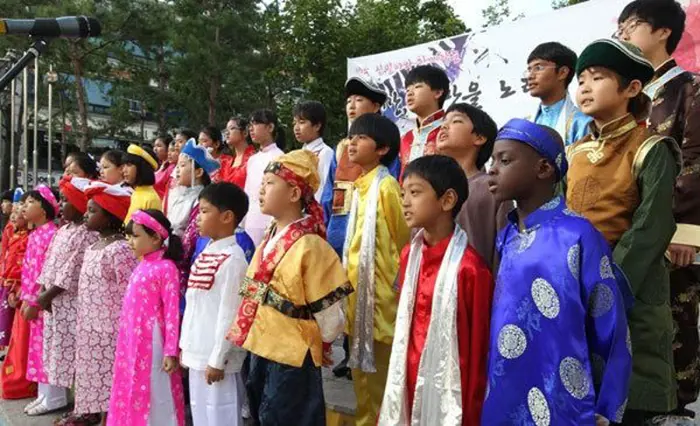
This can be achieved by giving people chances to get involved. Schools, companies and local authorities can create an environment where Koreans and immigrants collaborate.
My Opinion and International Perspective
South Korea needs to take an approach to multiculturalism. People who come from countries may be there to work but they are also people who have families that go to school and are part of the community. They should be treated equally. It seems to be a two way process. Immigrants can learn Korean. Adapt to Korean traditions but Koreans should also understand other cultures. This does not mean that Koreans should stop practicing their traditions but they will be able to create an identity which includes people of different ethnicities.
Multiculturalism is an issue. South Korea is a country, within the world community meaning how South Korea treats immigrants will affect how South Korea is seen in the global society regarding equality and human rights.
Conclusion
Immigration has made a difference in South Korea and this impact is likely to grow because of the country’s shrinking population and lack of workers. The government has tried to help families by offering some options when they move to South Korea. Still problems like discrimination, unfair treatment at work and being left out of society are still common. Because of this it is very important for South Korea to make things better for migrants and immigrants. This means giving them access to schools and public services. South Korea should also promote multiculturalism by making sure that all communities treat each other with respect.
Writer: Nimra Aamir Zia – 202510360110073
References
Ministry of Gender Equality and Family. (n.d.). Multicultural family support policy. https://www.mogef.go.kr/eng/pc/eng_pc_f006.do
Ministry of Government Legislation. (2018). Multicultural Families Support Act. https://law.go.kr/lsInfoP.do?lsiSeq=199550&urlMode=engLsInfoR&viewCls=engLsInfoR
Organisation for Economic Co-operation and Development. (2024). OECD economic surveys: Korea 2024. OECD Publishing. https://doi.org/10.1787/c243e16a-en
United Nations Committee on the Elimination of Racial Discrimination. (2025). Concluding observations on the twentieth to twenty-second periodic reports of the Republic of Korea (CERD/C/KOR/CO/20-22). https://tbinternet.ohchr.org/_layouts/15/TreatyBodyExternal/DownloadDraft.aspx?key=+yqWyqDB1+iNLhTG+BC8+To7IeqQYkOlTPFzLXUrKXtowrAPmRbZkQpm%2FAIM%2Ff7l