
Image source: Pinterest
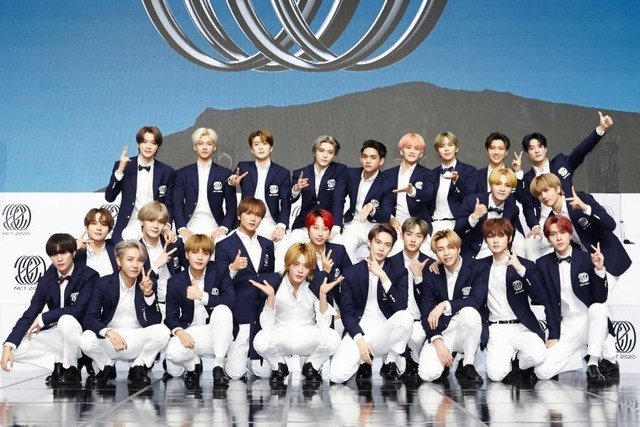
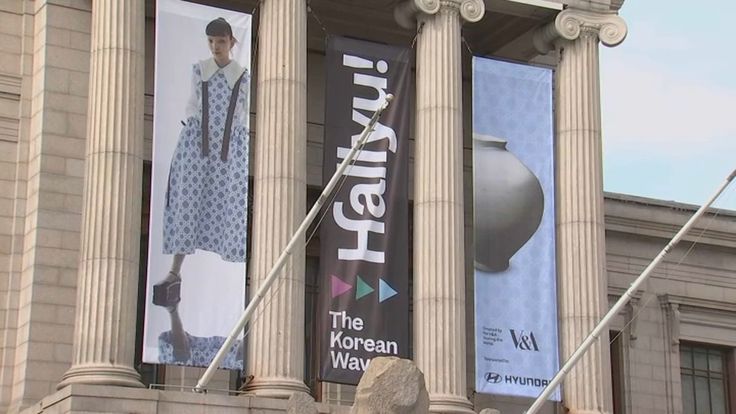
The term Hallyu refers to the expansion of Korean popular culture overseas, which began in the East Asian market in the late 1990s to early 2000s through television dramas such as Winter Sonata and music groups such as H.O.T. Research on South Korean public diplomacy in East Asia shows that television dramas were the main entry point, as the proximity of cultural values made it easily accepted in the region. Over time, the scope of Hallyu expanded to games, webtoons , culinary, fashion, and beauty.
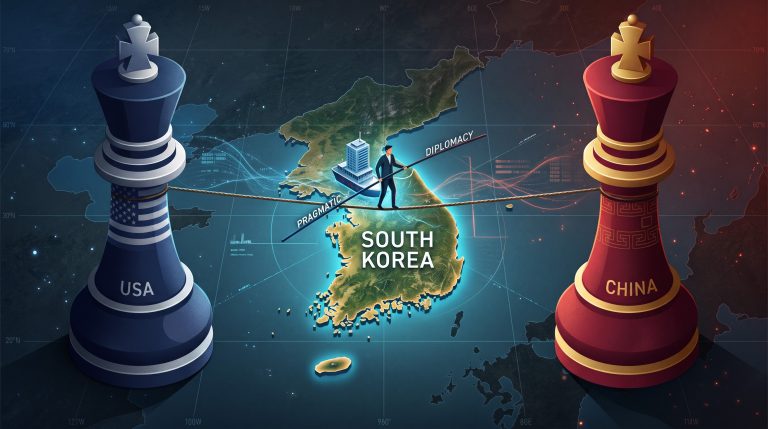
Hallyu , or the “Korean Wave,” has long transcended entertainment. South Korean dramas, music, cuisine, and even beauty products are now consumed in dozens of countries, and the South Korean government openly treats it as a national asset. The question is: does Hallyu truly exert political influence, or merely generate economic benefits and a positive image?
The South Korean government’s annual survey now covers 14 Hallyu -related sectors , from dramas, films, music, animation, webtoons , and games to fashion, beauty, food, Korean language, and characters and performances (South Korea’s Ministry of Culture, Sports and Tourism [MCST] & KOFICE, 2026). This means that Hallyu is no longer just K-drama and K-pop, but a mutually reinforcing ecosystem of cultural products and consumption.
Hallyu and Politics: Soft Power and Cultural Diplomacy
Soft framework power
Soft concept Power describes a country’s ability to achieve desired outcomes through attraction, not coercion or payment. Culture, political values, and foreign policy are its sources, and public diplomacy is the means to manage them. Within this framework, Hallyu is read as an instrument of public diplomacy: the South Korean government established institutions to support the spread of culture and improve the country’s image abroad (Yanti, 2010).
Studies in Indonesia generally reach similar conclusions. Fahrisa (2022) considers Hallyu as an example of soft power that is successful not only as a diplomatic tool, but also in the economic field. Amalia (2023) specifically examines Hallyu in managing bilateral relations between South Korea and Indonesia.
Evidence from public perception
The most direct evidence comes from an overseas Hallyu survey conducted by MCST and KOFICE. In a 2024 survey of 25,000 respondents in 26 countries, 66.1% reported a more positive perception of Korea after consuming Korean cultural content, 30.1% felt no change, and 3.8% became more negative. Countries with high content consumption tended to show more positive changes in perception (MCST & KOFICE, 2024).
There are two critical caveats. First, this survey only targeted people who had previously consumed Korean content, so it may not be representative of the general population. Second, the survey was conducted by a South Korean government agency. The results are still useful, but they should be read as indicators, not causal evidence that culture changes policy.
Hallyu Economic Dimensions
- Exports and creative industries: Their economic value is significant. The MCST and KOFICE report estimates Hallyu -related exports to reach approximately US$19 billion by 2025, with music exports increasing 84% from the previous year (The Star, 2026). Meanwhile, Korea Creative Content The Korea Office of the Korean Central Committee (KOCCA) recorded content exports of US$14.9 billion in the same year, making it South Korea’s 12th-largest export category (Asia Business Daily , 2026a). This discrepancy is understandable, as each agency uses different definitions of ” Hallyu ” and “content.”
The multiplier effect is also examined. According to KOCCA’s analysis of 2006–2024 data, a US$100 million increase in Hallyu content exports is followed by an approximately US$202 million increase in exports of related industries, such as cosmetics, food, and tourism, and creates a domestic production effect of 782.4 billion won and 3,389 jobs (Asia Business Daily , 2026a). Another study by a cultural and tourism research institute found that a 1% increase in the Hallyu index is associated with a 0.082% increase in exports of related consumer goods, and that approximately 13% of the average annual growth in exports of such goods over the past 15 years is attributed to Hallyu (Asia Business Daily , 2026b).
For comparison, Bank of Korea data shows that South Korea’s intellectual property exports will only account for about 1.4% of its total goods exports, valued at US$696.2 billion, in 2024 ( Statista , 2025). Hallyu is important, but South Korea’s economy remains primarily driven by manufacturing and technology.
- Tourism and product consumption: Hallyu also drives interest in visiting and purchasing Korean products. In a 2024 survey, 50.7% of respondents expressed interest in purchasing Korean products and services, with food (64.7%), visiting Korea (61.8%), and eating at Korean restaurants (61.4%) being the most popular, and 57.9% said Hallyu influenced their use of Korean products and services (Asia Business Daily , 2024). One review estimated the tourism impact of Korean content at 5–7 trillion won per year, approximately 10% of tourism revenue, although this figure is an estimate in an opinion piece and should be read with caution (Asia Business Daily , 2025).
- The Role of Social Media and Digital Platforms: A Survey Hallyu 2026 shows that Korean content is primarily accessed through OTT and video platforms, as well as social media and short-form video platforms (MCST & KOFICE, 2026). These platforms accelerate cross-border distribution without relying on traditional distributors, enabling fans to act as distributors through posts, covers , and hashtags. The same survey, for the first time, also measured perceptions of non-Korean content incorporating Korean cultural elements, such as the K-pop hit Demon Hunters , indicating that Hallyu is now also being shaped by people outside of Korea (MCST & KOFICE, 2026).
- Impact on National Image South Korea’s image in the eyes of the global public is closely linked to Hallyu . For eight consecutive years leading up to the 2025 survey, K-pop was the first thing that came to mind when respondents thought of Korea, chosen by 17.8% of respondents (The Korea Herald , 2025). The level of favorability for Korean content was around 70% (70.3% in the 2025 survey and 69.7% in the 2026 survey) ( Kyunhyang Shinmun , 2025; MCST & KOFICE, 2026).
However, this image has a downside. In a 2025 survey, 37.5% of respondents agreed with a negative perception of Hallyu , the highest in the past five years. The main reasons included being considered too commercial (15%), concerns about threats from North Korea (13.2%), and a desire to protect local content (11.8%) ( Kyunhyang Shinmun , 2025). In other words, the wider Hallyu spreads, the greater the resistance that arises, including concerns about cultural homogenization and competition with local industries.
Southeast Asia and Indonesia
Southeast Asia is one of the strongest Hallyu acceptance bases . In a 2024 survey, Indonesia had the highest level of liking for Korean content among 26 countries (86.3%), followed by India, Thailand, the United Arab Emirates, and Vietnam (MCST & KOFICE, 2024). In a 2026 survey, the Philippines (87.0%), India (83.8%), and Indonesia (82.7%) topped the list (MCST & KOFICE, 2026). Academic studies in Indonesia also discuss its impact on cultural hybridity and youth perceptions (Pramadya & Oktaviani, 2016). The South Korean government has responded institutionally to this market, for example by planning to hold a K- Expo in Jakarta to connect content with the consumption of related products (Asia Business Daily , 2024).
Conclusion
So, is Hallyu just about economics and image? The evidence suggests that:
The economy is the most measurable impact: Hallyu exports are expected to be around US$19 billion by 2025, with a multiplier effect on cosmetics, food, and tourism, although its share of South Korea’s total exports remains limited . Image is the most consistent impact: about seven in ten survey respondents like Korean content, and many report a more positive perception of Korea, even though the sample is people who already consume such content. Therefore, Hallyu is best understood as soft capital. power that supports economic and diplomatic policies, not as a stand-alone political tool. Further research needs to more rigorously test whether changes in public perception actually lead to changes in state attitudes or policies.
Writer: Zalzabillah Aulia – 202510360110033
BIBLIOGRAPHY
Amalia, N. (2023). Cultural diplomacy through Hallyu : Managing bilateral relations between South Korea and Indonesia. Scientific Journal of Unitary Management, 11 (3), 889–896. https://doi.org/10.37641/jimkes.v11i3.2167
Asia Business Daily . (2024, April 2). The image that comes to mind when thinking of ‘ Hanguk ‘… ‘K-pop’ for 7 consecutive years . https://www.asiae.co.kr/en/article/2024040201031205580
Asia Business Daily . (2025, November 24). [The View] How did K- culture become an economic powerhouse ? https://www.asiae.co.kr/en/article/2025112409095238605
Asia Business Daily . (2026a, July 9). A$100 million increase in Hallyu exports leads to $200 million growth in related industries . https://view.asiae.co.kr/en/article/2026070915260603848
Asia Business Daily . (2026b, May 20). A 1% rise in Korea Wave index boosts cosmetics exports by 0.08%… 13% cumulative growth over 15 years . https://www.asiae.co.kr/en/article/2026052008481584782
Fahrisa , TR (2022). Exports driven by Hallyu increasing South Korea’s economic growth : Cultural diplomacy approach . Journal of International Relations, 15 (1).
Ministry of Culture, Sports and Tourism of South Korea (MCST) & Korean Foundation for International Cultural Exchange (KOFICE). (2024, April 3). 2024 Overseas Hallyu Survey revealed 70% Korean Wave experiencers view K- content “ positively ” . https://www.mcst.go.kr/english/policy/pressView.jsp?pSeq=383
Ministry of Culture, Sports and Tourism of South Korea (MCST) & Korean Foundation for International Cultural Exchange (KOFICE). (2026). K- culture expands beyond food and beauty into characters , performances , and other convergence [Press release on the results of the 2026 Overseas Hallyu Survey]. https://www.mcst.go.kr/english/policy/pressView.jsp?pSeq=622
Kyunghyang Shinmun . (2025, April 8). Foreigners choose K-pop as 1st image that comes to mind when thinking of Korea for 8 straight years . https://www.khan.co.kr/en/article/202504081744207
Pramadya, TP, & Oktaviani, J. (2016). Hallyu ( Korean Wave ) as part of South Korea’s cultural diplomacy and its impact on cultural Hybridity in Indonesia. Global Dynamics: Journal of International Relations, 1 (1), 87–116.
Statista . (2025). South Korea’s exports of intellectual Property [Chart, based on Bank of Korea data]. https://www.statista.com/chart/35391/south-koreas-exports-of-intellectual-property/
The Korea Herald . (2025, April 7). Overseas, image most associated with South Korea is still K-pop: survey . https://asianews.network/?p=197120
The Star. (2025, October 6). “8 in 10 females trainees don’t menstruation ”: New book details dark side of K-pop stardom . https://www.thestar.com.my/lifestyle/entertainment/2025/10/06/0398-in-10-female-trainees-don039t-menstruate039-new-book-details-dark-side-of-k-pop-stardom
The Star. (2026, July 8). Hallyu generated US$19 billion in South Korean exports in 2025: Report . https://www.thestar.com.my/aseanplus/aseanplus-news/2026/07/08/hallyu-generated-us19bil-in-south-korean-exports-in-2025-report
Yanti, RP (2010). South Korea’s public diplomacy in the East Asia region: Utilizing Hallyu as a source of soft power power [Master’s thesis, Gadjah Mada University ]. https://etd.repository.ugm.ac.id/penelitian/detail/48678