
Image source: Google
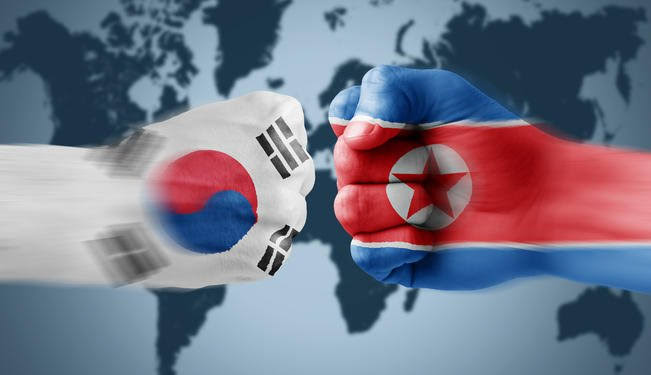
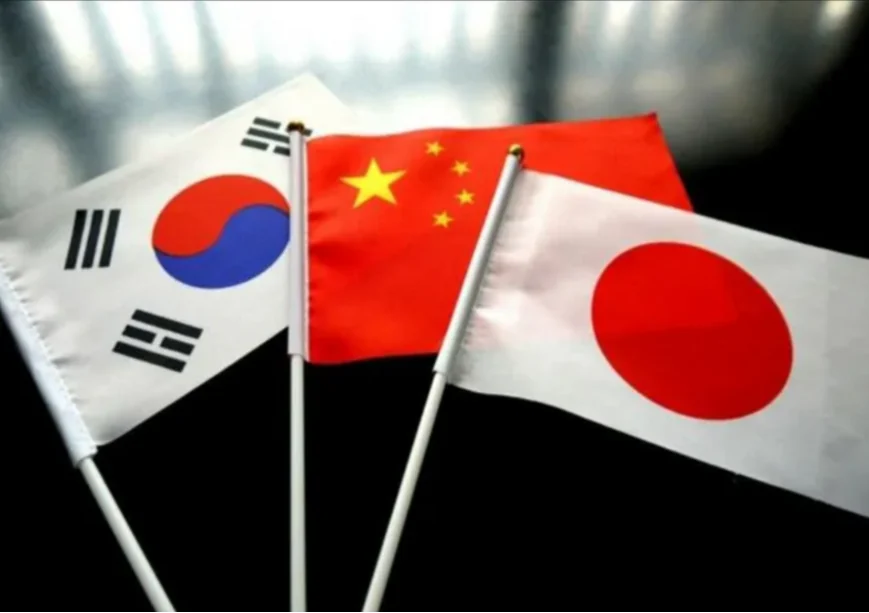
The geopolitical landscape of East Asia—dominated by South Korea, China, and Japan—has historically been complex and often unstable. Deep-seated, unresolved issues—such as the historical trauma experienced by South Korea under Japanese colonization and the military-defense rivalry between China and Japan—have created a situation where substantive regional integration remains difficult to achieve, especially when compared to Europe or Southeast Asia. Amidst these systemic geopolitical frictions, cultural exchange offers an alternative pathway for fostering enduring inter-state relations. At the heart of this “soft power” dynamic lies Korean Wave, or briefly Hallyu, a South Korean popular culture phenomenon that has gained global reach. Originating from public policy initiatives deliberately crafted by South Korea in the late 1990s, Hallyu has evolved from a mere exercise in national image-building into a significant instrument of public diplomacy.
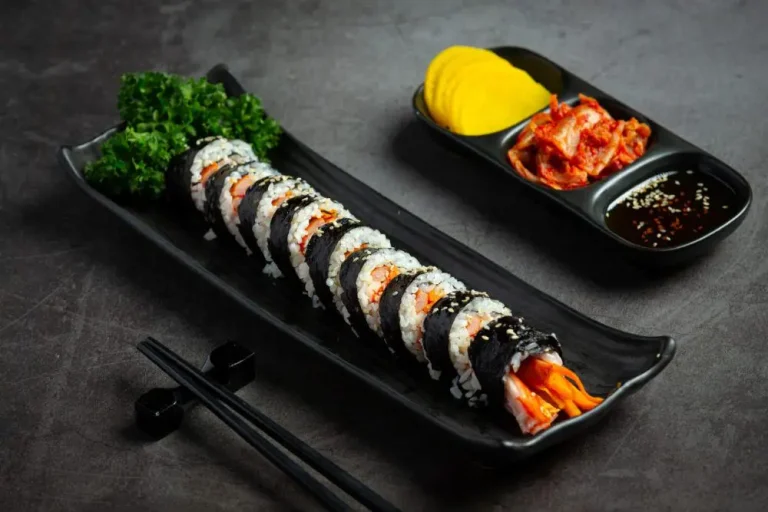
Soft power, as conceptualized by Joseph Nye (2008), describes a nation’s ability to shape international preferences through cultural appeal, political values, and foreign policy, rather than through coercion. Following the 1997–1998 Asian Financial Crisis, the South Korean government leveraged this paradigm by implementing strategic policies and funding mechanisms to institutionalize the export of its culture (Zahra Mesvari et al., 2026). Hallyu (the Korean Wave), while developing organically, was also systematically utilized by South Korea as a driver for economic growth and an instrument of foreign policy (Ameilia et al., 2025; Zahra Mesvari et al., 2026). Various elements of popular culture—ranging from K-pop, movies, television dramas (K-Drama), and films to cuisine (K-food) and fashion—transformed South Korea’s international image from that of a little-known nation into a modern cultural powerhouse (Ayuningtyas, 2024). Crucially, East Asia served as the primary proving ground for these initiatives, with China and Japan emerging as the earliest and largest importers of Korean media (Linbin, 2023; Yong Jin, 2021).
Hallyu in Japan
The bilateral relationship between South Korea and Japan illustrates both the capabilities and the limitations of cultural “soft power.” Following decades of post-colonial tension, the diplomatic normalization of 1965 was eventually complemented by a 1998 joint statement between South Korean President Kim Dae-jung and Japanese Prime Minister Keizo Obuchi. This marked a shift toward a “future-oriented relationship,” prompting South Korea to gradually lift restrictions on the importation of Japanese cultural products between 1998 and 2004 (Linbin, 2023).
This policy opening also catalyzed several waves of Hallyu in Japan trought three phases (Linbin, 2023):
- Hallyu 1.0 (Early 2000s): Driven by television dramas such as Winter Sonata (2003), establishing widespread media consumption across older Japanese demographics.
- Hallyu 2.0 (Mid-2000s to 2015): Dominated by pioneering K-pop acts like BoA, TVXQ, KARA, and Girls’ Generation.
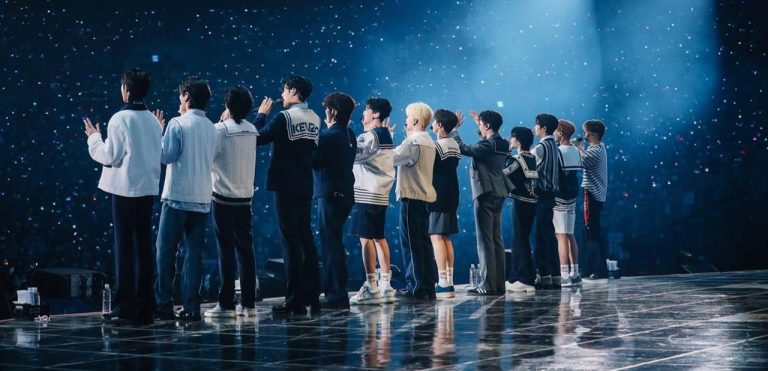
- Hallyu 3.0 (2015–Present): Led by global acts like BTS, TWICE, and Seventeen, characterized by hybrid internationalization and “de-Koreanization,” where Korean agencies routinely incorporate Japanese members and partner with local conglomerates (Chen et al., 2026; Linbin, 2023).
Hallyu has deeply permeated Japanese society—with South Korea ranking second as the most popular cultural influence in 2023 (following Western culture) and Korean cuisine (“K-food”) reaching an 83% engagement rate (Chen et al., 2026). Nevertheless, this phenomenon is not without diplomatic challenges; public opinion surveys indicate that overall bilateral perceptions remain poor, and official relations are frequently strained by historical grievances and territorial disputes. A 2021 poll conducted by Genron GPO revealed that 81% of South Koreans and 52.7% of Japanese hold a pessimistic view of bilateral relations; furthermore, 63.2% of South Koreans and 48.8% of Japanese harbor a negative image of the other country. Despite this, the same poll shows a more optimistic outlook among Japanese respondents under the age of 40; 64.6% of this demographic continue to enjoy South Korean popular culture, even as bilateral ties deteriorate. More than three-quarters—specifically 77.5%—of these young Japanese hold a positive impression of South Korea (Linbin, 2023a). By consuming Hallyu content primarily through social media—rather than through mainstream media channels, which often lean toward right-wing politics—the younger generation in Japan is able to decouple the political realm from the cultural sphere (Linbin, 2023). However, because Japan’s foreign policy remains shaped by conservative political elites, the *soft power* impact of Hallyu faces structural limitations in translating cultural interest among the youth into direct improvements in diplomatic relations (Linbin, 2023a).
Hallyu in China
In China, Hallyu initially received a rapid and widespread welcome. Following the establishment of formal diplomatic relations in 1992, Korean television dramas such as Jealousy (aired in 1993) and What is Love? (broadcast on China Central Television or CCTV in 1997) drew record-breaking viewership (Wang, 2023; Yong Jin, 2021). By 2001, China—including Hong Kong and Taiwan—accounted for 35.3% of South Korea’s total cultural exports (Yong Jin, 2021). Hallyu garnered support across various segments of Chinese society, reaching even the highest levels of leadership; prominent figures, including Hu Jintao, Wang Qishan, and First Lady Peng Liyuan, openly acknowledged having watched popular Korean dramas such as Dae Jang Geum and My Love from the Star (Linbin, 2023). Cross-border collaboration also flourished, as trainees from China joined well-known K-pop groups (Linbin, 2023).
The warm relation between China and South Korea, facilitated by Hallyu (the Korean Wave), was abruptly disrupted in 2016 following South Korea’s decision to deploy the United States’ Terminal High Altitude Area Defense (THAAD) missile system. In response, Beijing imposed unofficial yet stringent restrictions on Hallyu (Duyen, 2026; Linbin, 2023b). These measures prohibited K-pop performances at venues with a capacity exceeding 10,000 spectators, obstructed joint media productions, and limited the broadcasting of Korean media content (Linbin, 2023). Although Chinese authorities officially denied the existence of a formal ban, South Korea’s cultural sector suffered significant financial setbacks, compelling the Korean entertainment industry to diversify beyond the Chinese market and toward the global stage (Leba, 2026; Linbin, 2023).
Various diplomatic engagements since early 2026 point to a cautious and gradual shift. During a bilateral summit in early 2026 between South Korean President Lee Jae-myung and Chinese President Xi Jinping, the two nations signed an agreement to restore cultural exchanges (Leba, 2026; Park, 2026). Addressing the existing restrictions, President Xi employed a metaphor: “Ice three feet thick does not melt in an instant, and fruit will fall on its own when it is ripe.” This suggests that while the complete lifting of the ban on Hallyu (the Korean Wave) requires a step-by-step process, cultural engagement remains a necessary bridge toward long-term reconciliation (Park, 2026).
Lesson Learned
Hallyu illustrates both the vast potential and the realistic limitations of South Korea’s “soft power” within its trilateral relations with its East Asian neighbors. Through popular culture, South Korea has fostered meaningful cross-border social connections—cultivating an enduring cultural affinity among Japan’s younger generation and sustaining organic demand from Chinese consumers, even in the face of cultural pessimism and boycotts. However, the experiences in Japan and China demonstrate that soft power does not operate in a vacuum. Tangible security concerns, a traumatic historical legacy, and geopolitical conflicts between nations can temporarily constrain or suppress cultural diplomacy. While it cannot single-handedly resolve deeply rooted geopolitical disputes, Hallyu serves as a vital cultural foundation; it sustains dialogue, fosters goodwill at the public level, and ensures that channels for regional engagement remain open even when formal diplomatic paths reach an impasse. As a public sphere, Hallyu offers a glimmer of hope for South Korea’s trilateral relations with China and Japan amidst the tensions surrounding their respective foreign policies.
Writer: MUKTAM ROYA AZIDAN – 202510360110071
Bibliography
Ameilia, F., Rifai, M., & Marsingga, P. (2025). Influence of Korean Soft Power through Korean Wave Culture on the Existence of National Identity. Jurnal Ilmiah Wahana Pendidikan, 11(11.D), 41-51. Retrieved from https://jurnal.peneliti.net/index.php/JIWP/article/view/11999
Ayuningtyas, D. (2024). Peran Budaya Populer sebagai Soft Power Bagi Negara di Asia Timur. Mondial: Jurnal Hubungan Internasional, 1(1), 24. https://doi.org/10.36722/mondial.v1i1.2625
Chen, D. D., Yoo, J. W., & Roh, S. (2026). Hallyu marketing in Japan: a configuration approach to K-brand image. Asia Pacific Business Review, 32(3), 548–568. https://doi.org/10.1080/13602381.2025.2478144
Duyen, T. T. (2026). South Korea’s Foreign Policy Adjustments Toward China After the Thaad Crisis. International Journal of Research and Innovation in Social Science, 10(7), https://doi.org/10.47772/IJRISS.2026.100701079
Leba, E. E. (2026, April 13). Setelah Satu Dekade, Pembatasan K-pop di China Berlanjut. Kompas ID. https://www.kompas.id/artikel/setelah-satu-dekade-pembatasan-k-pop-di-china-berlanjut
Linbin, W. (2023a, January 6). How Has the ‘Korean Wave’ Impacted Japan-South Korea Relations?. The Diplomat. https://thediplomat.com/2023/01/how-has-the-korean-wave-impacted-japan-south-korea-relations/
Linbin, W. (2023b, January 28). The Korean Wave’s Rocky Road in China. The Diplomat. https://thediplomat.com/2023/01/the-korean-waves-rocky-road-in-china/
Nye, J. S. (2008). Public Diplomacy and Soft Power. The Annals of the American Academy of Political and Social Science, 616, 94-109. http://www.jstor.org/stable/25097996
Park, S. K. (2026, January 7). Chinese President Xi Hints at Gradual Lifting of Hallyu Ban. The Chosun Daily. https://www.chosun.com/english/national-en/2026/01/07/2PNEJQUC3NETDATMX2WXECKJ7Q/
Wang, B. (2023). The Dissemination Pathway and Influence of Hallyu Culture in China. Communications in Humanities Research, 14(1), 15-19. https://doi.org/10.54254/2753-7064/14/20230396
Yong Jin, D. (2021). Ten Myths About the Korean Wave in the Global Cultural Sphere. International Journal of Communication, 15, 4147-4164. https://ijoc.org/index.php/ijoc/article/view/17454?articlesBySameAuthorPage=1#articlesBySameAuthor
Zahra Mesvari, Agista Putri, A. I., & Meirinawati, M. (2026). Inovasi Kebijakan Publik dalam Mendorong Soft Power Nation Branding. Dinamika Publik: Jurnal Manajemen Dan Administrasi Bisnis, 4(2), 122-132. https://doi.org/10.59061/dinamikapublik.v4i2.1425