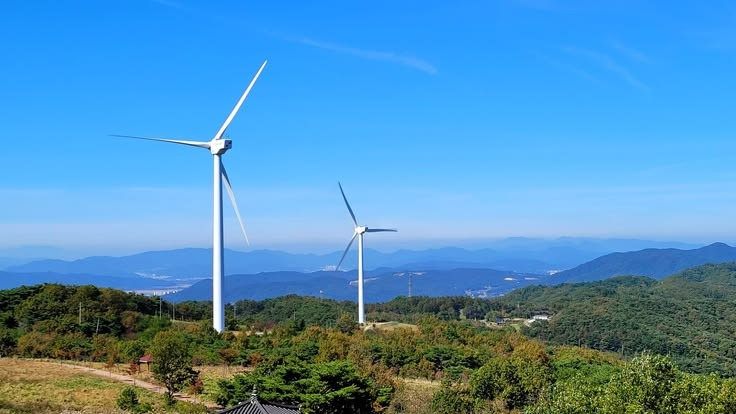

Image source: Pinterest
Climate change is one of the global issues currently drawing the attention of many countries. Rising global temperatures, erratic weather patterns, and increasing greenhouse gas emissions pose challenges that require international cooperation. These issues not only impact the environment but also affect the economy, energy security, and people’s lives. One country facing these challenges is South Korea.
South Korea is known as an industrially advanced country with rapid economic and technological growth. However, this industrial growth has also led to an increasing demand for energy in the country. For many years, the use of fossil fuels such as coal has played a vital role in meeting the country’s energy needs. This situation poses a challenge because industrial activities and energy use can generate greenhouse gas emissions that contribute to climate change. Therefore, the South Korean government has begun developing various environmental policies to reduce emissions and promote the use of cleaner energy.
In my opinion, South Korea’s environmental policy issues are worth discussing because the country must balance two competing priorities: maintaining economic growth and mitigating the impacts of climate change. It is not always easy to pursue both of these goals simultaneously.
South Korea’s Environmental Policies and Carbon Neutrality Goals
One of the key steps taken by South Korea is setting a carbon neutrality target for 2050 (UNFCCC, 2025) . Carbon neutrality is a state in which the amount of carbon emissions released into the atmosphere is balanced by the amount of carbon absorbed or removed. This commitment was subsequently reinforced through the Framework Act on Carbon Neutrality and Green Growth for Coping with the Climate Crisis, which serves as the legal basis for implementing carbon neutrality policies in South Korea.
In addition, South Korea has set a target to reduce greenhouse gas emissions by 40% by 2030 compared to 2018 levels. This target was outlined in its Nationally Determined Contribution (NDC), which is an emissions reduction commitment established by each country under the Paris Agreement (Office for Government Policy Coordination, n.d.).
As part of its implementation efforts, the South Korean government also developed the National Framework Plan for Carbon Neutrality and Green Growth in 2023. This policy covers several sectors, including energy, industry, transportation, buildings, and waste management. The government is working to reduce the use of fossil fuels and increase the use of renewable energy and nuclear power as part of its energy system transition (Office for Government Policy Coordination, n.d.).
These efforts demonstrate that South Korea is not only focused on reducing emissions but is also working to transform its energy system and economic activities to make them more environmentally friendly. This commitment was subsequently reaffirmed through the 2035 climate target submitted to the UNFCCC in December 2025.
Challenges in Implementing the Energy Transition
Although South Korea has fairly clear environmental goals, implementing the energy transition has not always been easy. One of the main challenges is the country’s reliance on fossil fuels, particularly coal. As a country with a thriving industrial sector, South Korea needs a stable energy supply to support production, technology, and daily life.
IEA (2025) explains that South Korea still faces challenges in decoupling economic growth from rising emissions. Dependence on coal and the need to expand the use of renewable energy are among the issues that need to be addressed. This means that reducing emissions requires more than just setting targets; it also requires tangible changes in energy production and consumption systems. In addition to energy-related issues, the transition to clean energy also requires adequate funding, technology, and infrastructure. The development of solar and wind power plants, for example, requires investment and supporting systems to ensure a stable electricity supply. On the other hand, changes in energy policy can also affect companies and workers who have long depended on the conventional energy sector.
Joo et al. (2023) explain that setting carbon neutrality targets in South Korea also faces political and institutional challenges. The transition to a low-carbon society cannot be achieved quickly because there are still economic interests and old development patterns that are difficult to change. This shows that the success of environmental policies is determined not only by technology but also by political and public support.
Analysis from an International Relations Perspective
South Korea’s environmental policies can be analyzed through the concept of global governance. This concept explains that global issues require cooperation, rules, and the involvement of various countries to achieve common goals. Climate change is an issue that knows no national borders. Emissions produced by one country can have an impact on the global environment. Therefore, addressing this issue requires international cooperation. South Korea’s participation in the Paris Agreement and the submission of its NDC targets demonstrate the country’s commitment to efforts to reduce greenhouse gas emissions.
In addition, South Korea’s policies can also be viewed through the lens of “Green Politics” a perspective that emphasizes the importance of striking a balance between economic development and environmental sustainability. Development should not only focus on economic and industrial growth but must also take into account its impact on the environment and people’s lives.
Conclusion
South Korea has demonstrated its commitment to addressing climate change through its 2050 carbon neutrality target, emissions reductions, and the development of clean energy. However, implementation still faces challenges, including dependence on fossil fuels, industrial needs, and the costs of the energy transition.
Through the concepts of global governance and the perspective of green politics, it becomes clear that addressing climate change requires international cooperation as well as a balance between economic and environmental interests. In my view, South Korea’s success depends not only on setting targets but also on consistent policy implementation, public support, and technological advancement.
Writer: Syalwa Mahira Putri – 202510360110060
REFERENCE
IEA. (2025). Korea 2025 – Energy Policy Review. www.iea.org
Joo, J., Paavola, J., & Van Alstine, J. (2023). Contested net-zero target setting in a transitioning country: The case of South Korea. Futures, 147. https://doi.org/10.1016/j.futures.2023.103114
Office for Government Policy Coordination. (n.d.). National framework plan. Republic of Korea. https://www.opm.go.kr/en/policies/national-framework-plan.do
UNFCCC. (2025). Submission under the Paris Agreement. https://unfccc.int/sites/default/files/2025-12/The%20Republic%20of%20Koreas%202035%20NDC.pdf