
Image source: www.idntimes.com
K-Dramas are Korean-style dramas with a South Korean feel, allowing viewers to experience the country’s atmosphere without having to travel there. These films come in many genres, such as Romance, Horror, Political, Family, etc. Specifically Romance and Horror films which is currently receiving a lot of attention among Indonesian youth. Through K-Drama, many cultures have been indirectly introduced into these films, one of which is food or culinary culture. Then, the question is “How does South Korea apply K-Drama as an instrument of Gastrodiplomacy to introduce its culinary culture?”
South Korea uses its soft power through the K-Drama film industry to expand its cultural identity, generating significant economic growth for both South Korea and Indonesia due to the growing fan base. Particularly in Indonesia, K-Drama fans have created communities that strengthen interpersonal relationships within the community. This phenomenon is undoubtedly quite successful, as its influence extends not only within Indonesia but also globally.
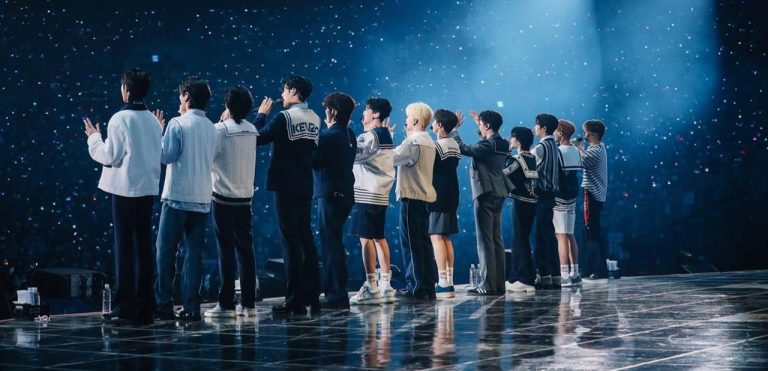
This development cannot be separated from the wider Korean Wave, or Hallyu, which has spread Korean music, films, and lifestyle across the world. Within this wave, food plays a quiet but important role, because it appears naturally in everyday scenes and does not feel like an official promotion. Therefore, K-Drama becomes an effective medium to introduce Korean culture in a way that feels close and familiar to the audience.
Particles of Gastrodiplomacy and Its Influence through K-Drama
It’s important to understand that gastrodiplomacy is a public diplomacy concept that uses a dialogical approach, where a country offers its culinary delights to the international community or other countries, familiarizing them with the flavors of that country’s food. Gastrodiplomacy also provides a way for those unable to visit a country to learn about other cultures through the taste of that food (Ramadhan, 2020).
In this case, South Korea uses its film industry to implement a gastrodiplomacy strategy by incorporating it into K-Drama films, indirectly influencing audiences, who ultimately become curious about the cuisine featured in the films. As K-Drama fans grow, interest in South Korean cuisine in Indonesia also grows. This, in turn, creates economic growth for the local community, as these films generate business ideas that were previously unthinkable.
Scenes in K-Drama often show characters eating together at a family table, sharing street food after school, or cooking instant noodles late at night. These moments make the food look warm, comforting, and attractive. Viewers do not only watch the story, but also observe how the food is prepared, served, and eaten, including the table manners behind it. This is why many fans want to try the same dishes after watching their favorite series.
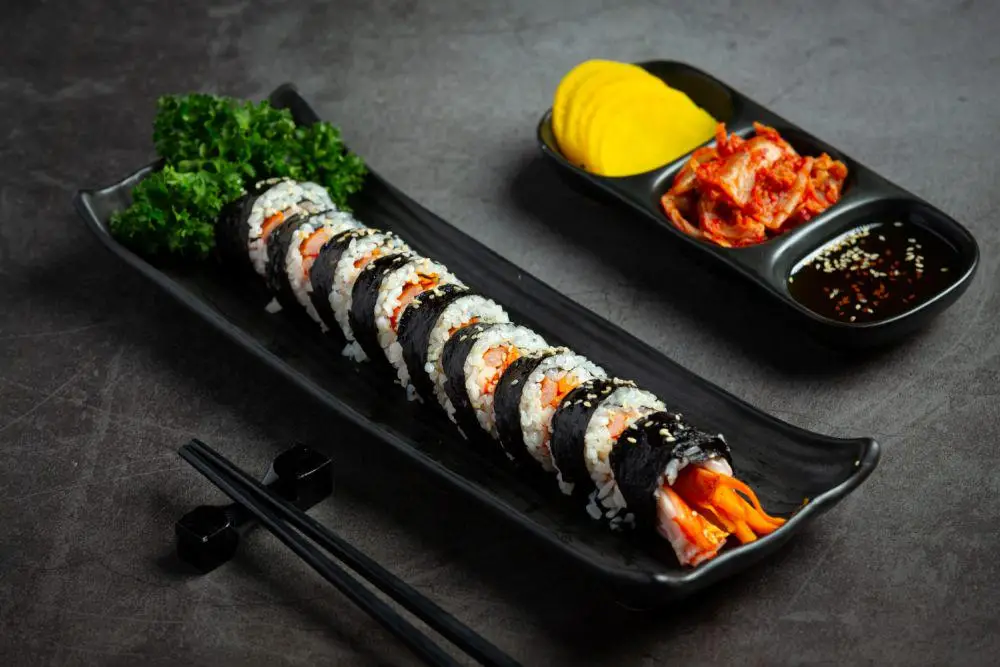
Gimbap, Tteokbokki, and various Korean snacks are now increasingly readily available in Indonesia, as many people are turning these foods into culinary business ideas. As a result, grassroots economic growth is also increasing.
Many Indonesian sellers also adjust Korean dishes to local preferences, for example by changing the level of spiciness or choosing ingredients that are easier to find. This adaptation shows that Korean cuisine is not simply copied, but negotiated with local tastes. In this process, small businesses, home cooks, and street vendors take part in spreading Korean food, even though they are not directly connected to the South Korean government.
K-Food Festa 2026 as part of South Korea’s Gastrodiplomacy in the Culinary Sector in Indonesia
K-Food Culinary Festival Party 2026, initiated by the Ministry of Agriculture, Food and Rural Affairs of the Republic of Korea together with the Korea Agro-Fisheries & Food Trade Corporation, was successfully held at KOREA 360, Lotte Mall, Kuningan Jakarta, which lasted for three months. The result, many enthusiastic visitors came to the event which had various interesting activities, such as special sales of Korean Food, Live Cooking show with celebrity chefs, making giant bibimbap, making tteok-kkochi, there was also a quiz to guess authentic Korean food products, performances by famous Korean and Indonesian artists, to cooking classes with Korean food ingredients in a special cooking studio.
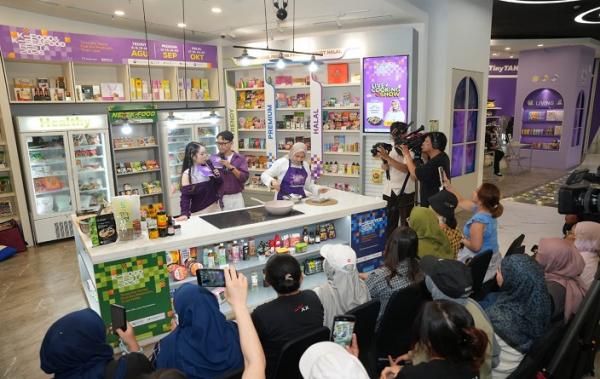
Image source: bekasi.inews.id
The event was part of South Korea’s Gastrodiplomacy strategy to expand its culinary influence, recognizing the significant fan base of K-Dramas and K-Pop in Indonesia. The event directly strengthened the relationship between the two countries, particularly within the community, and served as a platform to promote authentic Korean food through a quiz game. As a result, Indonesians became more familiar with South Korean food and culture.
Such an event also shows that gastrodiplomacy is not only carried out through screens. Direct experiences, such as tasting the food and learning how to cook it, make the cultural introduction feel more real and memorable for the participants.
From a multicultural perspective, the spread of Korean food in Indonesia is an example of cultural exchange between two societies. Indonesian young people are able to appreciate a foreign culture while still keeping their own identity, as Korean dishes are enjoyed alongside local food. This interaction can build mutual understanding and openness toward differences. However, it is also important for Indonesians to remain proud of their own culinary heritage, so that cultural exchange becomes a two-way relationship.
South Korea has successfully influenced Indonesian society, particularly among young people and adults, using its Gastrodiplomacy strategy, which is embedded through K-Drama films. Furthermore, the increasing interest in K-Drama is also followed by a growing interest in South Korean cuisine, thus becoming part of the business ideas of the Indonesian people, targeting Indonesians who have not had the opportunity to visit South Korea. As a result, job opportunities and business ideas in Indonesia are increasing due to the increasing interest in Korean food in Indonesia, thus gradually improving the community’s economy. Therefore, K-Drama proves that culture, entertainment, and food can work together as a diplomatic tool that connects South Korea and Indonesia beyond politics.
Writer:
Reference:
Ahmad, T. (2026, Oktober 30). K-Food Festa 2026 bikin Masyarakat Indonesia makin Kenal Makanan Halal Korea. INEWS.ID Bekasi. https://bekasi.inews.id/read/726742/k-food-festa-2026-bikin-masyarakat-indonesia-makin-kenal-makanan-halal-korea
Buchr, I. P. (2023, Juli 8). 15 Macam Isian Kimbap Paling Populer, Susun Sesuai Selera. IDN Times. https://www.idntimes.com/food/dining-guide/15-macam-isian-kimbap-paling-populer-susun-sesuai-selera-01-tdp64-4xvztf
Ramadhan, K. (2020). Gastrodiplomasi sebagai Sebuah Strategi Indonesia dalam Memperkenalkan Budaya Kuliner di Perancis. In Journal of International Relations (Vol. 8, Number 1). https://doi.org/https://doi.org/10.33005/jgp.v9i1.2345