
Image source: Pinterest
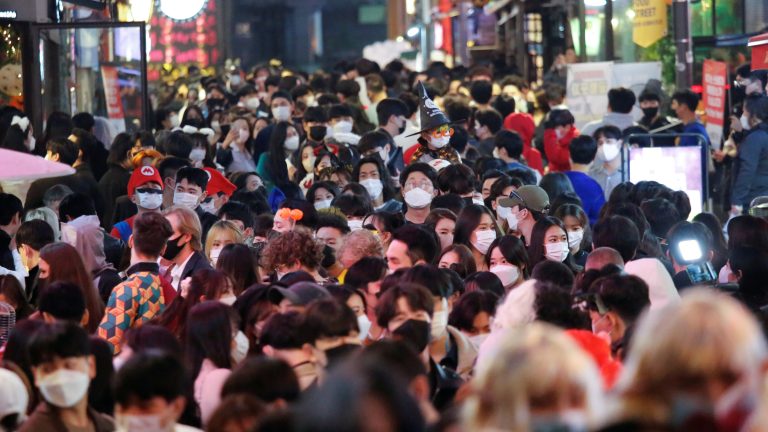
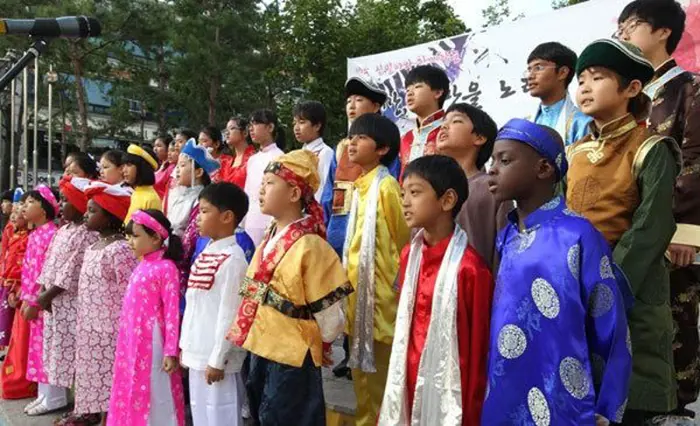
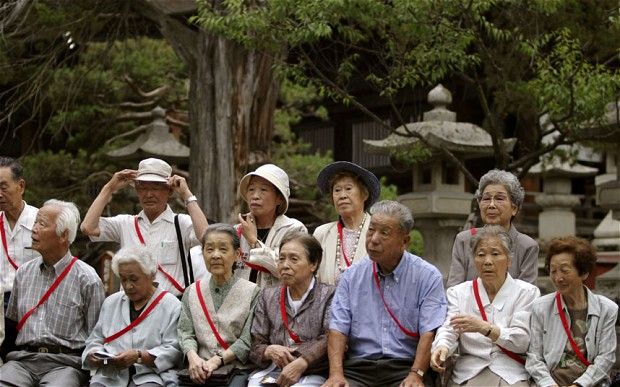
The birth rate crisis and the need for foreign labor in South Korea represent fundamental structural challenges, rooted in a decline in the Total Fertility Rate (TFR) to 0.72 in 2023 and 0.75 in 2024 (Draudt-Véjares, 2026; OECD, 2024). This drastic decline is driven by intense, costly competition in private education, alongside the high cost of living and housing for young families (Kim, 2026; OECD, 2024). A direct consequence is the accelerated transition toward a super-aged society, with the old-age dependency ratio projected to surge from its current 28% to 155% by the 2080s (Draudt-Véjares, 2026; OECD, 2024). Consequently, the working-age population (15–64 years old) is expected to shrink by 31% by 2050 (Draudt-Véjares, 2026), leading to a cumulative labor deficit of 6.18 million workers (Jang, 2026). This situation is further exacerbated by a labor mismatch: while approximately 69% of young South Koreans hold higher education degrees, fewer than 5% are willing to work in small and medium-sized enterprises (SMEs) or in roles characterized as 3D (dirty, dangerous, and difficult)—such as those in manufacturing and agriculture (Jones, 2023; The Guardian, 2025). This issue is of critical importance, as a shrinking working-age population poses a fundamental threat to national macroeconomic stability. It risks triggering “secular stagflation” and could cause real GDP growth per capita to stagnate at 0% or even turn negative (Clemens, 2026; Kang, 2022). Quantitative studies demonstrate that domestic solutions such as cash incentives for childbirth (baby bonuses), the adoption of artificial intelligence and automation, or efforts to increase labor force participation among the elderly are insufficient to resolve this crisis on their own (Clemens, 2026). Consequently, increasing the proportion of foreign workers to approximately 14% emerges as the most realistic measure to sustain national production capacity (Clemens, 2026). The vital role of immigrants was clearly evidenced during the COVID-19 pandemic, when the abrupt halt in the inflow of foreign workers under the Employment Permit System (EPS) increased the risk of closure for small and medium-sized manufacturing enterprises by over 12% and led to a decline in wages for local workers a result of the loss of the complementary functions that foreign workers provide along production lines (Lee et al., 2026). Beyond economic considerations, addressing this issue is urgent for fostering a shift in social paradigms as the foreign-born population surpasses 4.1% and South Korea transitions toward a multicultural society (Draudt-Véjares, 2026; The Guardian, 2025). South Korea must reform its visa schemes for instance, by facilitating the transition from the E-9 visa to the E-7-4 visa for skilled workers while also ensuring workplace safety and inclusive social integration, so that foreign workers are no longer viewed merely as temporary labor units (Jang, 2026; OECD, 2024; The Guardian, 2025).
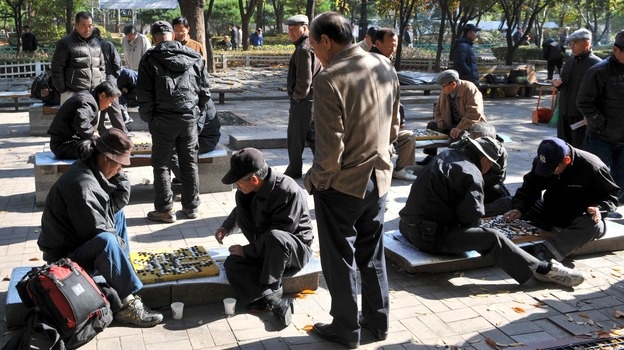
Image source: Pinterest
The discussion surrounding South Korea’s birth rate crisis and its need for foreign workers is critical, as it concerns the existential sustainability of the nation’s future economic and social landscape. This decline in birth rates is not merely a demographic trend; it is a reflection of immense social pressure. Extreme competition in education, the high cost of living and housing, and the struggle to balance a career with raising children have placed a heavy burden on the younger generation, making the decision to start a family feel like a high-risk endeavor. Meanwhile, reliance on domestic solutions such as cash incentives for childbirth, increasing the labor force participation of the elderly, or accelerating the adoption of artificial intelligence-driven automation has inherent limitations and is insufficient to offset the population contraction on its own. Within the labor market, the high level of education among the local youth has created a significant skills mismatch; jobs in manual labor, small-scale manufacturing, agriculture, and construction are increasingly shunned by the local population. The presence of foreign workers does not pose a threat to the job opportunities of locals; rather, they serve as a vital, complementary element necessary to keep the wheels of national production and industrial supply chains turning. Without the support of migrant workers, these essential sectors risk operational paralysis, which would ultimately undermine the stability of the entire economy. Therefore, the fundamental challenge currently facing South Korea is the need for a profound shift in its social paradigm. Foreign workers can no longer be viewed merely as temporary labor units, utilized when needed and then sent home. South Korea must take the bold step toward building an inclusive and equitable multicultural society. This requires comprehensive immigration policy reform, the provision of fair workplace safety guarantees, accessible opportunities for skills development, protection against discrimination, and an openness toward social and familial integration. Ultimately, resolving this demographic crisis demands the national courage to overhaul long-standing habits and shed cultural exclusivity, in order to ensure the sustainability of the nation’s future.
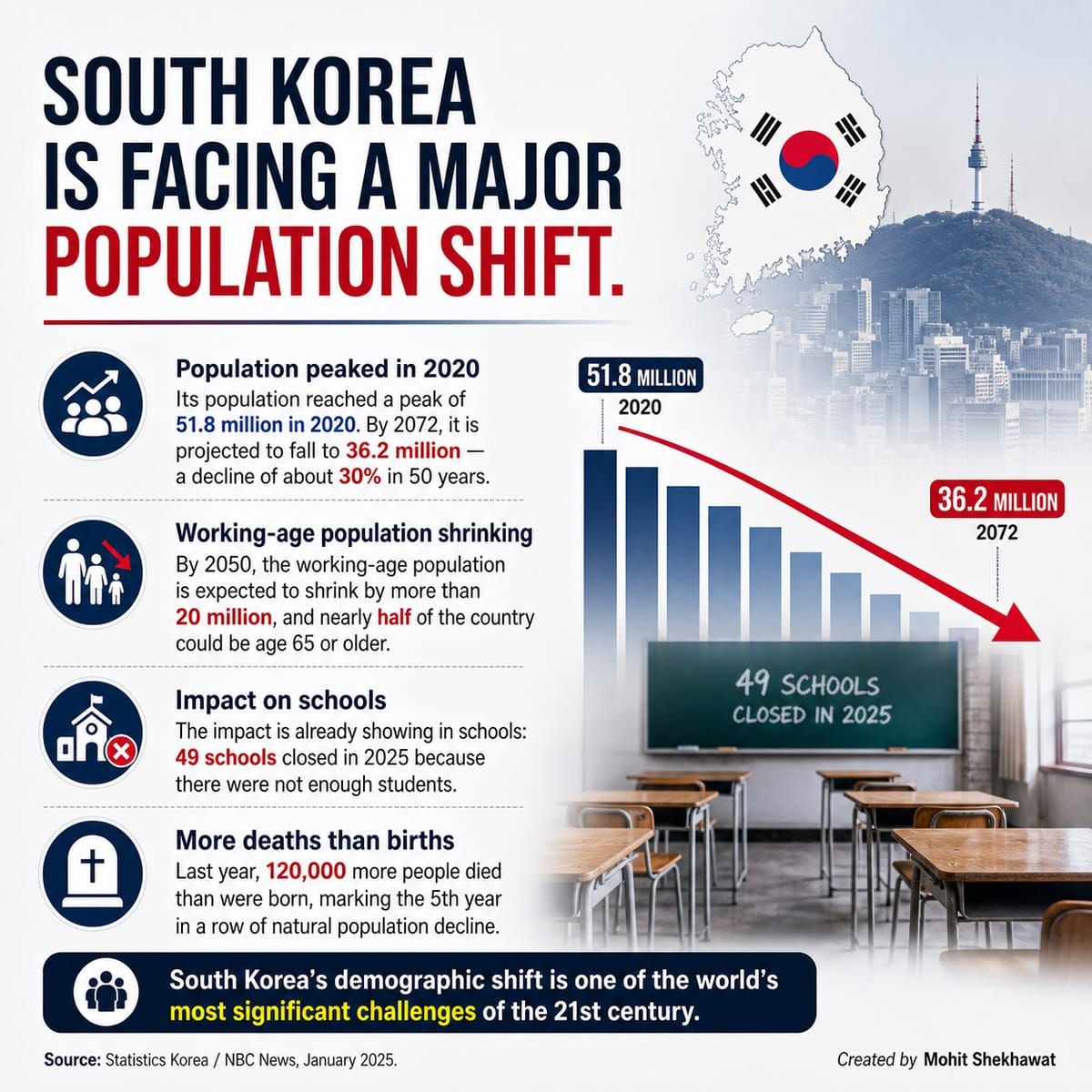
Image source: Pinterest
South Korea’s birth-rate crisis, characterized by a fertility rate that has fallen to 0.72–0.75 and a shrinking working-age population, has created a demographic chasm that threatens economic growth. Viewed through the lens of complex interdependence in international relations, this demographic crisis has fostered a profound cross-border reliance on the mobility of transnational labor. Bilateral cooperation, facilitated by the Employment Permit System (EPS), connects the labor needs of South Korea’s small and medium-sized manufacturing enterprises (SMEs) with a supply of workers from developing nations. When the influx of foreign labor was abruptly halted during the pandemic, the risk of SME closures surged by over 12%, while local workers saw their wages decline due to the loss of complementary roles along production lines. This underscores that the stability of South Korea’s domestic economy is now inextricably linked to the governance of global migration. Conversely, the human security framework highlights the critical need to ensure the safety, fundamental rights, and well-being of migrant workers, who frequently face significant risks in physically demanding and hazardous jobs. With the foreign-born population reaching 4.1% and nearing the 5% threshold that typically defines a multicultural society, South Korea can no longer afford to treat newcomers merely as economic commodities or labor units. Long-term solutions require inclusive immigration policy reforms, such as facilitating transitions to skilled-worker visas (E-7-4), providing protection against discrimination, and opening pathways for social and familial integration. Ultimately, South Korea’s demographic crisis is a transnational phenomenon that binds the nation’s socio-economic resilience to the principles of humanity within the global order.
Writer: Adzra Nailatul Izzah – 202510360110045
References:
Clemens, M. A. (2026). Migration or Stagnation: Aging and Economic Growth in the Republic of Korea Today, the World Tomorrow. World Scientific. https://www.worldscientific.com/doi/10.1142/S0116110526500113?srsltid=AYCX9vKQ85XrfPprmQ43KVMHATCUQskG95-HCNx-jHXvifO8dzr_eP43
Draudt-Véjares, D. (2025). Beyond the Demographic Cliff: Workforce Trends and Economic Adaptation in Hyper-Aged Korea. Korea Economic Insstute of America. https://keia.org/publication/perils-of-u-s-illiberal-retrenchment-south-koreas-perspective-on-indo-pacific-recalibration/
Jang, Y. (2026). Labor Market Imbalances and Immigration Policies. Korea Institute for International Economic Policy (KIEP) World Economy Brief. https://papers.ssrn.com/sol3/papers.cfm?abstract_id=7001139
Jones, R. S. (2023). Are foreign workers a solution to Korea’s demographic challenge? Korea Economic Institute of America (KEIA). https://keia.org/analysis/are-foreign-workers-a-solution-to-koreas-demographic-challenge/
Kang, H. (2022). The Impact of Demographic Changes on Long-term Macroeconomic Prospects. Korea Capital Market Institute (KCMI) Issue Papers, 22-26, 1–22. https://www.kcmi.re.kr/en/report/report_view?report_no=1509
Kim, D. (2026). The Race for Elite Destinations: Education Competition and Low Fertility in Korea. arXiv preprint arXiv:2608.27980. https://arxiv.org/abs/2608.27980
Lee, J., Peri, G., & Yang, H.-S. (2026). What Happens When the Flow of Immigrant Workers Suddenly Stops?. National Bureau of Economic Research (NBER) Working Paper No. 34927. https://www.nber.org/digest/202606/what-happens-when-flow-immigrant-workers-suddenly-stops?page=1&perPage=50
OECD. (2024). OECD Economic Surveys: Korea 2024. OECD Publishing. https://doi.org/10.1787/c243e16a-en
The Guardian. (2025). Integration classes and complaints offices: South Korea charts a path to a cohesive multicultural future. https://www.theguardian.com/world/2025/aug/07/south-korea-multicultural-country-future