
Image source: Pinterest
Introduction
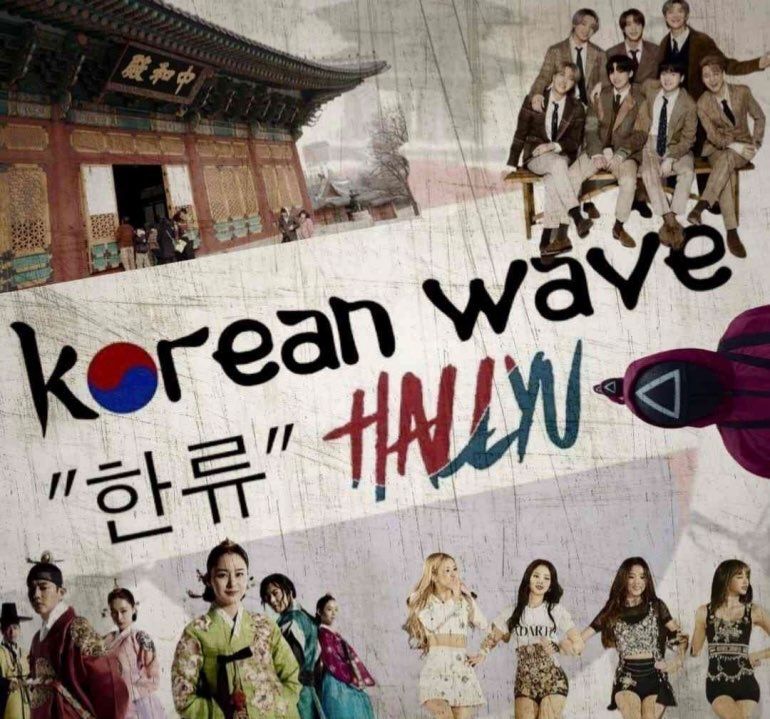
South Korea was once associated mainly with national division, war, and cheap manufactured goods. Today it is known for BTS, Parasite, and Squid Game. This change is commonly explained through Hallyu, or the Korean Wave, the global popularity of Korean pop culture. The issue discussed in this essay is whether Hallyu is a real source of soft power for South Korea and how far it can support the country’s foreign policy goals.
This issue is important because it tests a central question in international relations: can a state without superpower-level military and economic dominance still shape how others see it? South Korea, a middle power with turbulent relations with the North, offers a revealing case. In my opinion, Hallyu is a genuine but fragile soft power asset that works best when the state supports it without controlling it.
Soft Power and the Middle Power Strategy
Nye (2008) defines soft power as the ability to obtain preferred outcomes through attraction rather than coercion or payment. Hallyu fits this definition because foreign audiences voluntarily consume Korean music, dramas, food, and language. Matosian (2021) argues that soft power strategies are especially important for middle powers, which lack the material and force-based capabilities of great powers, and describes public diplomacy as one of the three pillars of South Korean foreign policy.
Hahm et al. (2023) go further by arguing that Korean soft power can exist without strong hard power. In their account, the Korean Wave replaced an older national image tied to division, the Korean War, and poverty, during a period in which foreign tourist arrivals rose from 3.68 million in 1996 to 17.5 million in 2019. Hahm and Song (2021) also show that the Korean Wave helped improve South Korea–Taiwan relations. From a constructivist perspective, these findings show that identity and image matter in world politics, because a more attractive Korea changes how other societies interpret its intentions. They also suggest that the digital era matters: Hahm et al. (2023) point to streaming platforms and social media as channels that made Korean content easily accessible to young audiences around the world.
Public Diplomacy Beyond the State
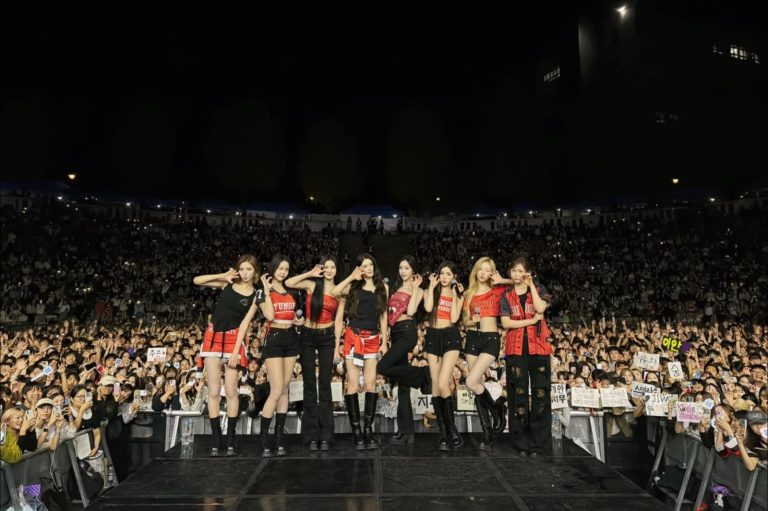
Hallyu also shows that public diplomacy now involves state and non-state actors together. Matosian (2021) notes that Hallyu developed from the 1990s through cooperation between public and private actors. Proctor (2021) examines how fan labour around BTS contributes to South Korean soft power, which means that attraction is produced partly by fans and companies, not only by governments. Belaia and Kashina (2022) conclude that the United States emphasizes ideology and democratic values, while South Korea relies on culture in a broad sense. A clear example is the White House invitation to BTS in May 2022 to speak about anti-Asian hate, discussed by Hahm et al. (2023).
However, Yoon (2023) warns that the idea that Hallyu equals national power is also a discourse, repeated by news media and government public relations, which may exaggerate what culture can achieve. For this reason, policymakers should treat popularity as a starting point for relationships, not as proof of influence.
The Limits of Cultural Attraction
The limits of Hallyu are equally important. Realist critics argue that soft power is merely an extension of hard power because countries become attractive after they become strong (Hahm et al., 2023). South Korea’s case partly challenges this view, but cultural popularity still cannot directly change security outcomes, such as relations with North Korea. A K-drama may soften public attitudes, yet it cannot replace negotiations, alliances, or deterrence.
Attraction can also produce backlash. Baudinette (2021) shows that the Korean Wave generates fan desire and nationalist fears at the same time in Japan–Korea relations. Jin (2021) cautions that popular accounts of the Korean Wave contain myths, and Park and Lee (2022) analyze it as an industrial and financial phenomenon, a reminder that market logic drives Hallyu as much as diplomacy does. Chang and Yun (2022) describe the continuing globalization of Hallyu, yet global popularity does not guarantee loyalty, because audiences can move to other cultures.
My Opinion
In my opinion, Hallyu is best understood as a soft power resource that must be converted into trust through consistent policy. Culture opens the door, but it cannot replace credible diplomacy. A country that is loved for its music but doubted for its promises will not gain lasting influence. The Korean government should keep funding creative industries, language education, and cultural exchange, but it should avoid heavy-handed control, because audiences quickly notice when culture becomes propaganda. Yoon’s (2023) analysis supports this caution, since overstating Hallyu’s power may create unrealistic expectations at home.
I also believe that soft power depends on how a society treats its own people. If the entertainment industry is seen as exploitative, the attraction abroad becomes harder to sustain. Therefore, South Korea should pair cultural promotion with domestic reform and with active diplomacy on security and trade.
Conclusion
Hallyu shows that a middle power can build influence through attraction, but it also shows that soft power is neither automatic nor sufficient. South Korea’s challenge is to turn cultural popularity into lasting credibility while keeping creativity independent from state control. If it succeeds, Hallyu can remain a model of peaceful influence for other middle powers, including those in Southeast Asia.
Writer: Ni’matun Hasanah MZ – 202510360110048
References
Baudinette, T. (2021). Reflecting on Japan–Korea relations through the Korean Wave: Fan desires, nationalist fears, and transcultural fandom. Transformative Works and Cultures, 36. https://doi.org/10.3983/twc.2021.2045
Belaia, E. K., & Kashina, M. A. (2022). Comparative analysis of South Korean and American soft power practices in world politics. Eurasian Integration: Economics, Law, Politics, 16(4), 106–120. https://www.eijournal.ru/jour/article/download/1080/467
Chang, W.-Y., & Yun, S. (2022). South Korea in 2021: A noisy and murky presidential race, unstoppable COVID-19, and the ongoing globalization of Hallyu. Asian Survey, 62(1), 43–52.
Hahm, S. D., Heo, U., & Song, S. (2023). Comparative analysis of soft power between South Korea and the United States: A theoretical mechanism approach. Journal of Asian and African Studies. https://doi.org/10.1177/00219096231168065
Hahm, S. D., & Song, S. (2021). The impact of the Korean Wave on South Korea–Taiwan relations: The importance of soft power. Asian Survey, 61(2), 217–240.
Jin, D. Y. (2021). Ten myths about the Korean Wave in the global cultural sphere. International Journal of Communication, 15, 4147–4164.
Matosian, A. E. (2021). The key components of South Korea’s soft power: Challenges and trends. RUDN Journal of Political Science, 23(2), 279–286. https://journals.rudn.ru/political-science/article/view/26546
Nye, J. S. (2008). Public diplomacy and soft power. The Annals of the American Academy of Political and Social Science, 616(1), 94–109. https://doi.org/10.1177/0002716207311699
Park, D. M., & Lee, G. T. (2022). Industrialization, financialization, and startupization of the Korean Wave: New big data analysis of Hallyu and K-pop for 21 years. Korean Journal of Communication and Information, 112, 7–66. https://doi.org/10.46407/kjci.2022.04.112.7
Proctor, J. (2021). Labour of love: Fan labour, BTS, and South Korean soft power. Asia Marketing Journal, 22(4), 79–101.
Yoon, K. (2023). De/Constructing the soft power discourse in Hallyu. Communication Research and Practice, 9(3), 341–357. https://doi.org/10.1080/22041451.2023.2237811