
Image source: Pinterest
Introduction
Globalization has encouraged the movement of people across national borders in search of employment, education, and better living conditions. This movement does not only affect the economy but also brings social and cultural changes to destination countries. South Korea is one example of a country experiencing this transformation. Known as a developed industrial country with global influence through technology and popular culture, South Korea also faces challenges in accommodating a society that is becoming increasingly diverse.
According to the Organisation for Economic Co-operation and Development (OECD, 2025), the foreign population in South Korea was estimated at around 2.2 million people in 2024, representing approximately 4.2% of the total population. This figure shows that migration has become an important part of South Korea’s social development. The foreign population consists of different groups, including migrant workers who contribute to economic sectors that require additional labour.
This issue is important because the success of migration should not only be measured by the economic benefits received by the destination country. Opportunities to receive legal protection, access social services, maintain cultural identities, and participate in society should also be considered. In this context, multiculturalism becomes a relevant concept for understanding the relationship between cultural diversity and social integration.
Discussion
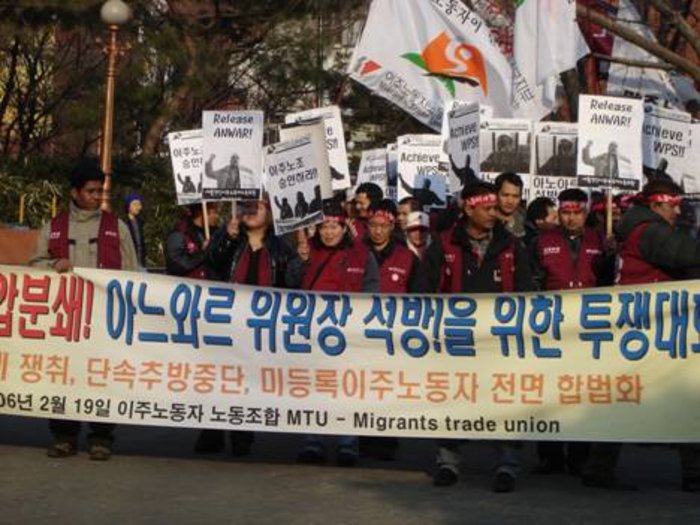
South Korea’s economic development has created a demand for workers in various sectors. Migrant workers have become part of the country’s response to this demand, especially when companies face difficulties finding local workers for certain jobs. In this situation, labour migration is not only related to individuals seeking better living conditions but also to the state’s strategy to meet labour market needs.
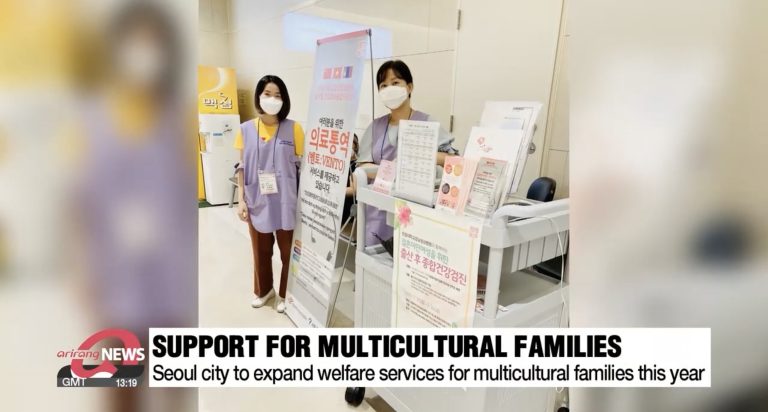
The South Korean government introduced the Employment Permit System (EPS) in August 2004. According to the official information provided by the Ministry of Employment and Labour (n.d.), this system was designed to help companies that have difficulties finding local workers. It also regulates the recruitment of foreign workers and aims to improve the protection of their rights and interests. In addition, the government provides educational services and counselling to help foreign workers adapt to South Korean society.
This policy shows that the government recognizes the contribution of foreign workers to the national economy. However, having a recruitment system does not automatically guarantee equal social integration. Migrant workers may contribute to productivity and economic activities, but they can still face challenges when interacting with local communities outside their workplaces.
Chang Kyoo (2014) explains that South Korea’s multicultural policies have developed alongside increasing migration. However, their implementation still faces challenges because different approaches are used to accommodate different migrant groups. Policies designed separately for certain groups may result in inconsistent protection. Therefore, multiculturalism should not only be understood as accepting the presence of foreigners but also as an effort to build an inclusive approach to social integration.
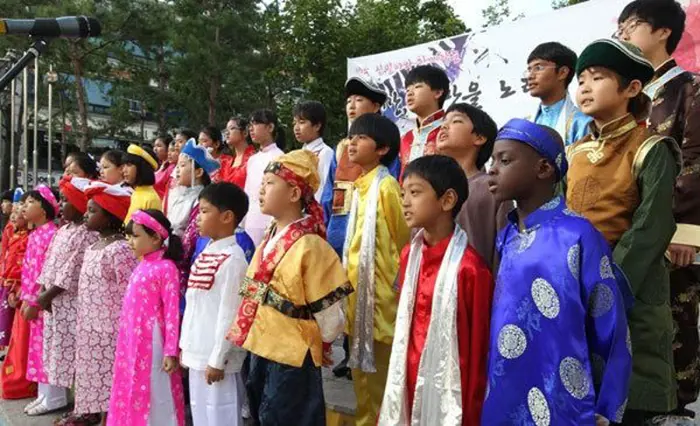
Multiculturalism refers to the recognition of different cultural groups within a society and considers how these groups can live together equally. This concept is different from assimilation, which emphasizes the adjustment of migrant groups to the dominant culture. Under a multicultural approach, social integration does not always require individuals to abandon their original languages, traditions, or cultural identities.
South Korea faces its own challenges because national and ethnic identities have an important position in shaping its society. Increasing diversity due to migration raises questions about how national identity can be maintained without limiting the acceptance of people from different cultural backgrounds. Chang Kyoo (2014) highlights the importance of finding a balance between cultural diversity and national unity in the development of South Korea’s multicultural society. This issue can be further analyzed through the concept of national identity in International Relations.
National identity is not only formed through territory and citizenship but also through shared values, history, and common understandings of who belongs to a national community. As society becomes more diverse, the meaning of social belonging may also change.
If integration is understood as an obligation for migrants to completely adjust to the majority culture, diversity may be seen as an obstacle. On the other hand, if national identity is understood as something that can develop through social interaction, society can maintain a shared identity while still providing space for cultural differences.
Yoon (2021) research provides an example of these challenges. Through a survey of 100 migrant workers and 100 marriage migrant women in the Seoul metropolitan area in 2020, the study found that both groups faced economic and educational challenges. It also found relatively low levels of belonging and trust toward Korean society among the respondents. However, these findings should be understood within the scope of the study and should not be directly generalized to the entire foreign population in South Korea.
From an International Relations perspective, the issue of migrant workers can be analyzed through the concept of interdependence. Interdependence explains how different actors are connected, meaning that the decisions and conditions of one actor can affect others. In labour migration, this relationship can be seen between destination countries, countries of origin, companies, and workers.
South Korea needs workers to meet the demands of certain economic sectors, while migrant workers seek employment opportunities and income. Countries of origin may also benefit from migration through remittances, which refer to money sent by workers to their families back home. Therefore, migration creates cross-border relationships that involve not only governments but also individuals and economic actors.
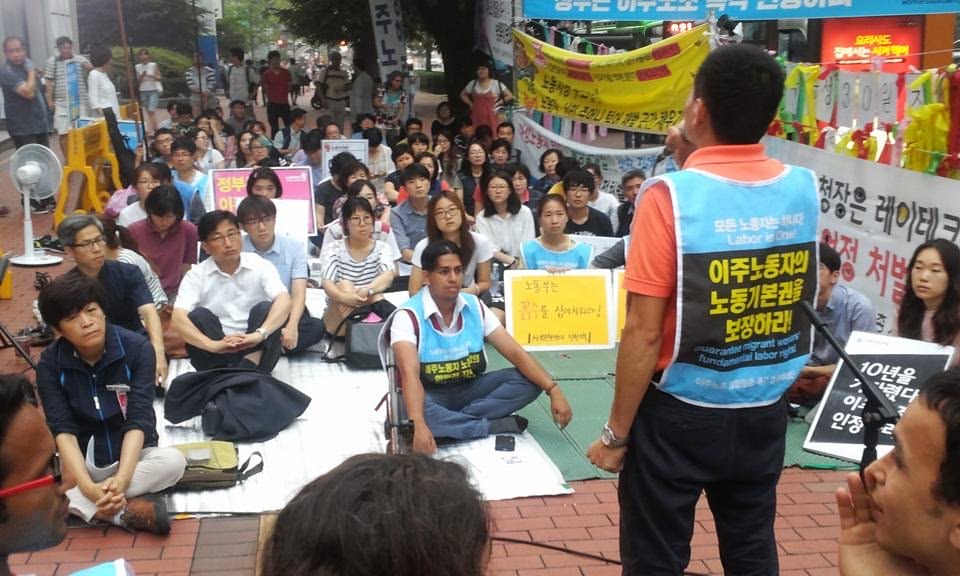
However, interdependence does not always mean that all parties have equal bargaining power. Migrant workers may face limited information, language barriers, dependence on their employment, or difficulties understanding complaint procedures. These conditions can affect their ability to receive protection when facing problems in the workplace. Therefore, recruitment policies should also be supported by access to information, accessible complaint mechanisms, and the proper enforcement of labour regulations.
The second perspective is the concept of human rights. From this perspective, the protection of migrant workers should not depend only on the economic benefits they provide. The right to fair treatment, workplace safety, and protection from discrimination are important aspects of building a fair working environment. A state has the authority to regulate immigration, but the use of this authority should also consider applicable legal obligations and the protection of individual rights.
Conclusion
Multiculturalism and migrant workers are important issues for understanding social changes in South Korea during globalization. The increasing foreign population and the implementation of the Employment Permit System show that migration has become part of the country’s labour management. However, recruiting foreign workers does not automatically create social integration, a sense of belonging, or acceptance of cultural diversity.
Through the concept of interdependence, migration can be understood as a relationship connecting the interests of destination countries, countries of origin, companies, and workers. Meanwhile, the human rights perspective highlights the importance of protecting individuals within these relationships. The concepts of national identity and multiculturalism also show that maintaining social unity does not have to mean eliminating cultural differences.
In conclusion, South Korea’s success in responding to demographic changes should not only be measured by the economic contributions of migrant workers but also by the ability of the government and society to create a fair and inclusive environment. Effective multiculturalism requires consistent policies, human rights protection, and shared participation. This approach can allow South Korea to maintain its national identity while responding to the reality of an increasingly diverse society.
Writer: Muhammad Fahruzi Ridwan – 202510360110002
REFERENCE
Chang Kyoo, P. (2014). Revisiting Multiculturalism and Multicultural Policies in South Korea. International Journal of East Asian Studies, 3(2). https://doi.org/10.22452/ijeas.vol3no2.6
Ministry of Employment and Labour. (n.d.). Introduction of foreign workers to Korea. Republic of Korea. https://www.moel.go.kr/english/policy/international.do
OECD. (2025). International Migration Outlook 2025 (49th ed.). OECD Publishing. https://doi.org/10.1787/ae26c893-en
Yoon, I. J. (2021). Social Integration of Migrant Workers and Marriage Migrant Women in Korea. Journal of Asian Sociology, 50(4). https://doi.org/10.21588/dns.2021.50.4.002