
Image source: Pinterest
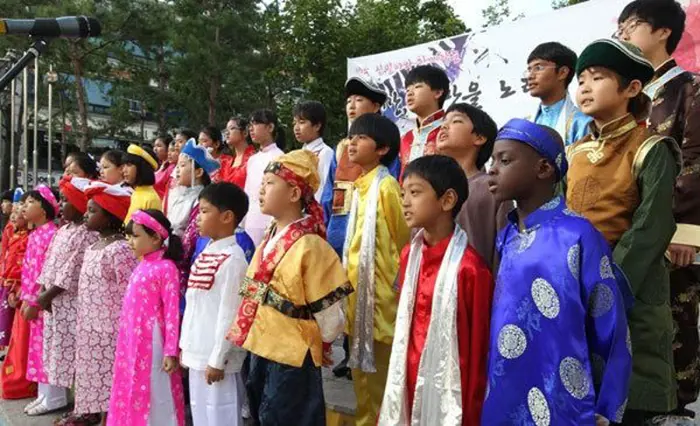
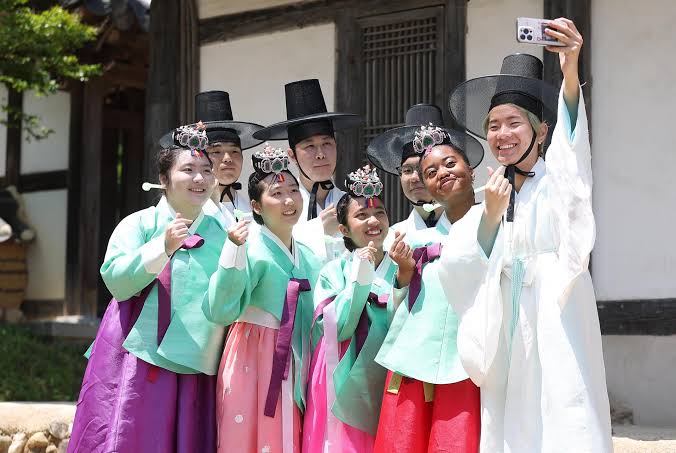
South Korea is often associated with a strong sense of shared language, history, and national identity. However, migration and globalization are changing the country’s social landscape. Foreign workers, international students, marriage migrants, and children from multicultural families are becoming more visible in Korean society. This development raises an important question: how can South Korea preserve its cultural identity while becoming more inclusive of people from different backgrounds? This essay argues that multiculturalism offers South Korea economic and social opportunities, but its success depends on reducing discrimination and ensuring equal participation. From the perspectives of globalization and human security, multiculturalism should be understood not simply as the presence of foreigners, but as the protection of their dignity and rights as members of society.
The growth of cultural diversity in South Korea is connected to demographic and economic changes. An ageing population and a low birth rate have increased pressure on the labour market, while universities and businesses have attracted people from abroad. According to the Ministry of Justice, 2,783,247 foreign nationals were staying in South Korea at the end of 2025, representing approximately 5.44 percent of the total population (Ministry of Justice, Republic of Korea, 2026). The Organisation for Economic Co-operation and Development (OECD, 2025) also reports that Korea’s foreign population has grown substantially over the past decade. These figures show that migration is no longer a temporary or marginal phenomenon. It is becoming an important part of South Korea’s demographic and economic reality.
Narrative: BeGlobali (n.d.) explains that multiculturalism matters because it can contribute to economic development, cultural exchange, and international connections. Migrant workers help address labour shortages in sectors where employers struggle to recruit local workers. International students contribute to universities and may build long-term links between South Korea and their home countries. Marriage migrants and multicultural families also contribute to the country’s changing social and cultural life. The South Korean government’s 2024 National Survey on Multicultural Acceptance found that around seven in ten respondents agreed that an increase in immigrants could help alleviate labour shortages. The survey also indicated that contact and interaction between groups can improve multicultural acceptance (Ministry of Gender Equality and Family, 2025). Therefore, diversity can benefit society when people have opportunities to participate and interact as equals.
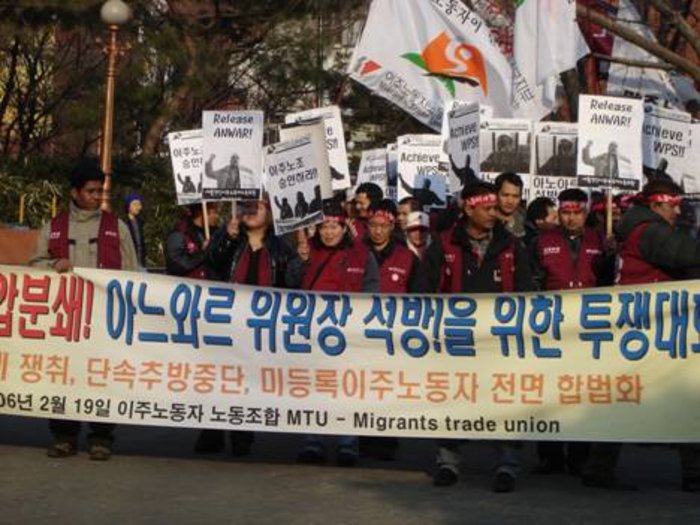
Nevertheless, the transition to a multicultural society also creates challenges. One major issue is discrimination based on nationality, ethnicity, language, or appearance. Lee et al. (2024), in a systematic review of 43 studies, found significant associations between discrimination and poorer health outcomes among several minority groups in South Korea. Their review included migrant workers, marriage migrants, international students, and refugees. This evidence is important because discrimination is not only an issue of social discomfort; it can affect mental health, well-being, and people’s ability to participate fully in society. Language barriers and limited social networks can make it harder for newcomers to access public services, education, and stable employment. Children from multicultural families may also face difficulties when their cultural backgrounds are not understood or respected at school.
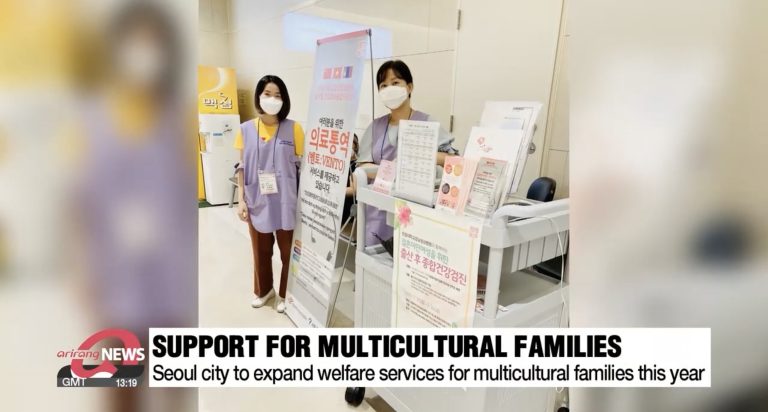
The government has taken steps to respond to these changes. The Ministry of Gender Equality and Family conducts national surveys on multicultural families and promotes policies intended to support family life, education, and social integration. Its 2024 survey of multicultural families reported that discrimination experiences had declined to 13 percent, compared with 16.3 percent in 2021. However, among respondents who experienced discrimination, 80.7 percent said they endured it rather than taking action (Ministry of Gender Equality and Family, 2025). This suggests that improvement in reported experiences does not necessarily mean that barriers have disappeared. Policies must therefore be evaluated not only by the services they provide, but also by whether migrants and multicultural families feel safe, respected, and able to report unfair treatment.
Globalization provides one useful International Relations perspective for understanding this issue. Globalization increases cross-border movement of people, ideas, labour, and culture. South Korea’s growing diversity is therefore connected to wider international processes rather than being only a domestic social matter. Migration links South Korea to the economies and communities of other countries. These connections can strengthen diplomacy, trade, education, and cultural understanding. However, globalization also creates policy challenges because governments must manage mobility while protecting the rights of people who live and work within their borders.
Human security offers a second perspective. Kim (2023) argues, instead of focusing only on the security of the state, human security emphasizes the safety, dignity, and well-being of individuals. From this viewpoint, migrant workers and multicultural families should not be treated only as sources of labour or as groups that need to adapt to the majority culture. They are people whose rights, health, education, and fair treatment must be protected. A society cannot be considered truly inclusive if people contribute to its economy but experience unequal treatment in workplaces, schools, or public spaces.
In my opinion, South Korea should adopt a more inclusive approach to multiculturalism. Learning the Korean language and understanding local customs are important for newcomers, but integration must be a two-way process. Korean institutions and communities should also become more open to cultural differences. The government should strengthen accessible language education, provide clear information about labour and legal rights, improve anti-discrimination procedures, and support schools with multicultural students. Public campaigns should encourage meaningful interaction rather than relying only on lectures about tolerance. These measures would help build trust and reduce the social distance between migrant and local communities.
In conclusion, multiculturalism is an increasingly important issue for South Korea because migration is reshaping its population and its relationship with the wider world. Cultural diversity can help address labour shortages, enrich society, and strengthen international connections. However, discrimination and unequal access to opportunities remain serious obstacles. Globalization explains why diversity is increasing, while human security shows why inclusion and equal treatment matter. South Korea’s next challenge is not simply to accommodate a larger foreign population, but to build a society in which people from different backgrounds can participate with dignity and equal rights.
Writer: Choirun Nisa – 202510360110046
References
BeGlobali. (n.d.). Culture & diversity travel guide to South Korea. https://beglobali.com/articles/diversity-travel-guide-south-korea
Kim, Bo-eun. (2023, November 29). [Special report] Korea should embrace cultural diversity in integrating immigrants. The Korea Times. https://www.koreatimes.co.kr/southkorea/globalcommunity/20231129/special-report-korea-should-embrace-cultural-diversity-in-integrating-immigrants
Lee, H., Paeng, E.-J., Devakumar, D., Huq, M., Lee, G., & Kim, S.-S. (2024). Racism and health in South Korea: History, concept, and systematic review. The Lancet Regional Health – Western Pacific, 52, 101228. https://doi.org/10.1016/j.lanwpc.2024.101228
Ministry of Gender Equality and Family. (2025, June 10). Announcement of the results of the 2024 National Survey on Multicultural Acceptance. https://www.mogef.go.kr/eng/pr/eng_pr_s101d.do?bbtSn=710541&mid=eng001
Ministry of Gender Equality and Family. (2025, October 31). 2024 National Survey on Multicultural Families. https://www.mogef.go.kr/nw/rpd/nw_rpd_s001d.do?bbtSn=710581&mid=news405
Ministry of Justice, Republic of Korea. (2026). Foreign residents in Korea: Population statistics by year. https://immigration.go.kr/moj/2412/subview.do
Organisation for Economic Co-operation and Development. (2025). International Migration Outlook 2025: Korea. https://www.oecd.org/en/publications/international-migration-outlook-2025_ae26c893-en/full-report/korea_f794c508.html