
Image source: Pinterest
On the global stage, South Korea is widely celebrated for its immense cultural capital, projected globally through the Hallyu (Korean Wave) phenomenon. From chart topping music and gripping television dramas to its culinary exports, these cultural elements have cultivated the image of a modern, cosmopolitan, and progressive society. However, beneath this polished facade lies a deeply entrenched struggle with systemic racism. This sociopolitical paradox is rooted not only in historical legacies of colonialism but, more significantly, in the enduring doctrine of Danil Minjok (a “one-blooded nation”), an ideology that positions ethnic homogeneity as the absolute foundation of Korean identity. This essay examines how this narrative manifests as structural racism in contemporary South Korea, analyzing the issue through the lenses of discriminatory legal frameworks, rigid racial hierarchies, and the pervasive integration barriers faced by non-ethnic Korean communities.
Sociological Roots: A Nation of the Same Blood
To understand modern racism in South Korea, one must examine its powerful narrative of ethnic nationalism. Sociologists note that this “single-blooded” narrative was originally a survival tool; it was used to unite the population during the trauma of Japanese colonial rule and to rebuild national identity after the Korean War (Watson, 2010).
In today’s globalized world, however, this unifying myth has become a double-edged sword. Because the doctrine of Danil Minjok teaches that being truly Korean is a matter of biology and genetic lineage, it creates a rigid insider, versus, outsider dynamic. As a result, foreign residents face deep social exclusion. Even those who live in the country long-term and speak fluent Korean are often viewed through a lens of suspicion, transforming cultural diversity into a perceived threat to national identity rather than a social asset.
Discrimination against foreign workers
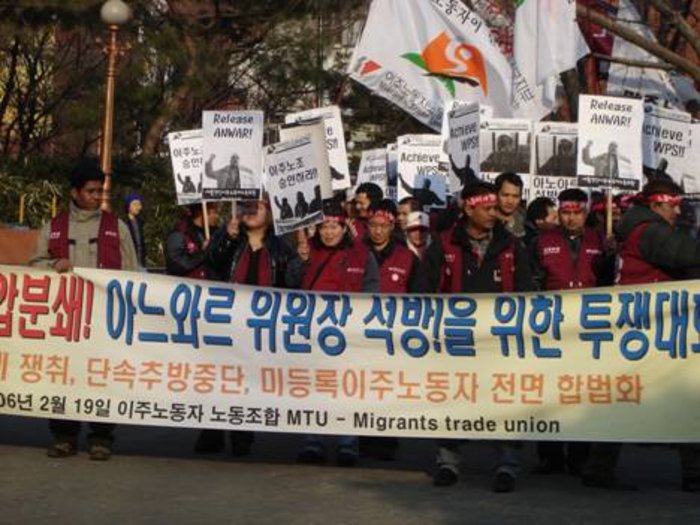
Systemic racism in South Korea is highly visible within its labor market. The nation relies heavily on foreign laborers to fill jobs in the “3D” sectors Dirty, Dangerous, and Difficult yet the legal protections for these individuals remain remarkably weak. A primary driver of this vulnerability is the state-managed Employment Permit System (EPS), which gives South Korean employers a disproportionate amount of power over their workers.
As documented by Amnesty International (2020), the EPS creates highly exploitative conditions by legally prohibiting foreign workers from changing employers without their boss’s explicit permission. This structural imbalance traps workers in abusive environments and leaves them vulnerable to severe exploitation. Ultimately, this legal failure is not just an administrative issue; it functions as a form of structural racism that devalues human rights based entirely on a worker’s country of origin.
Racial Hierarchy and the “Kosian” Phenomenon
In addition to discrimination against foreign workers, there is a striking difference in treatment between Western whites and people from Southeast and South Asia. This difference reflects economic racism, in which a person’s worth depends on the economic strength of their country of origin.
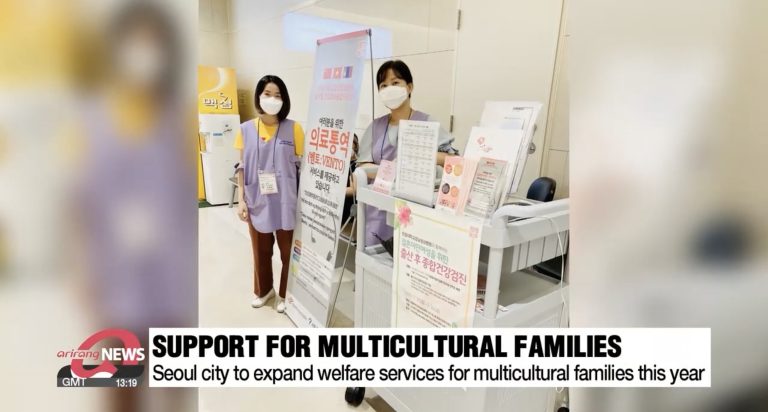
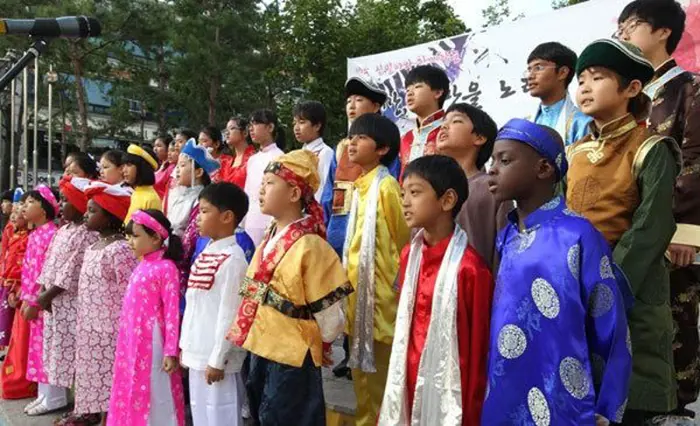
The impact of this hierarchy is acutely felt by mixed-race families, commonly referred to as “Kosian” (Korean-Asian), who face discrimination. In school settings, they are often bullied because their physical appearance is considered not Korean enough (Moon, 2015). Although the government frequently implements multiculturalism programs, these programs merely focus on forcing foreign residents to become like Koreans rather than fostering an appreciation for each other’s cultural differences.
Lack of legislation: Anti-discrimination laws
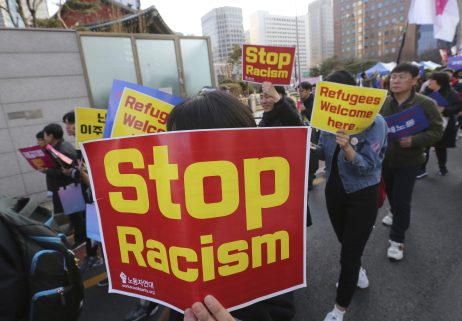
One of South Korea’s greatest failures is the lack of anti-discrimination laws to address the issue of racism. For over a decade, draft legislation has been repeatedly proposed but rejected by the National Assembly. This rejection typically comes from conservative groups and radical religious organizations (Human Rights Watch, 2023). Without this law, victims of racism lack strong legal protection to seek justice when facing discrimination in legal settings. This legal vacuum indirectly allows racism to thrive in public spaces.
Conclusion
The presence of systemic racism in South Korea reveals a profound paradox within its modern identity. While the global phenomenon of Hallyu successfully presents the nation as an open, modern, and cosmopolitan society, domestic realities tell a different story. South Korean society continues to be heavily constrained by the historical myth of Danil Minjok, which treats cultural diversity as an existential threat rather than a social strength. This exclusionary mindset is structurally reinforced by exploitative labor frameworks like the Employment Permit System, rigid economic-based racial hierarchies, and an ongoing legislative failure to pass comprehensive anti-discrimination laws.
As globalization continues to bring the international community to its shores, South Korea can no longer rely on an outdated framework of ethnic purity. Moving forward, bridging this gap requires meaningful legal reforms and a fundamental shift toward an empathetic, human rights-centered approach to multicultural education. If South Korea wishes to truly secure its position as a progressive global leader, it must dismantle these structural biases and embrace a more inclusive definition of national identity that champions social justice for all.
Writer: Muhammad Nazhif Wiradafa – 202410360110106
References
Amnesty International. (2020). South Korea: Migrant workers exploited under unfair employment system. https://www.amnesty.org/en/latest/news/2020/10/south-korea-migrant-workers-exploited/
Human Rights Watch. (2023). World report 2023: Events of 2022. Seven Stories Press.
Kim, N. K. (2016). Multiculturalism and the politics of appearance in South Korea. Routledge.
Moon, K. J. (2015). International marriage, multi-ethnic families, and the role of the state in South Korea. Citizenship Studies, 19(3-4), 320–334. https://doi.org/10.1080/13621025.2015.1006176
National Human Rights Commission of Korea. (2020). Survey on racial discrimination in South Korea. NHRCK Publishing.
Watson, I. (2010). Paradoxical multiculturalism in South Korea. Asian Politics & Policy, 2(2), 233–258. https://doi.org/10.1111/j.1943-3476.2010.00014.x