
Picture source: Pinterest
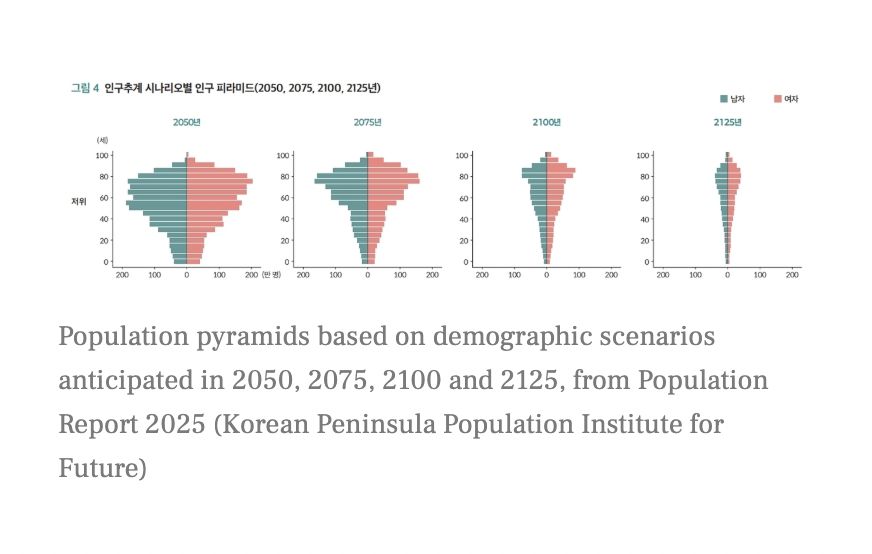
Recently, South Korea has been facing serious demographic challenges, including one of the world’s lowest fertility rates and a rapidly aging population. These demographic changes have created labour shortages that may affect the country’s future economic growth and competitiveness. In response, the South Korean government has expanded programs such as the Global Korea Scholarship (GKS) and introduced policies to attract skilled foreign professionals. These initiatives show South Korea’s increasing reliance on international talent as part of its response to demographic decline. However, attracting foreign talent does not automatically lead to successful integration. Many international students and skilled migrants still experience difficulties in building long-term careers in the country. This essay argues that although South Korea has actively promoted global talent recruitment through education and immigration policies, these efforts have been mainly shaped by demographic and economic needs, while institutional and social integration remain ongoing challenges.
South Korea’s demand for foreign talent is closely connected to its demographic situation. The country has experienced a continuous decline in its working-age population due to low fertility rates and rapid aging. As a result, foreign workers have become increasingly important in supporting sectors facing labour shortages. Research on migration in South Korea suggests that immigration has become an important policy option for addressing workforce challenges caused by demographic change (Kim, 2023). However, the role of foreign talent is not limited to filling labour gaps. Highly educated international graduates are also expected to contribute to innovation, knowledge exchange, and economic development. Therefore, South Korea has gradually shifted its approach from attracting temporary workers toward developing policies aimed at recruiting more skilled migrants.
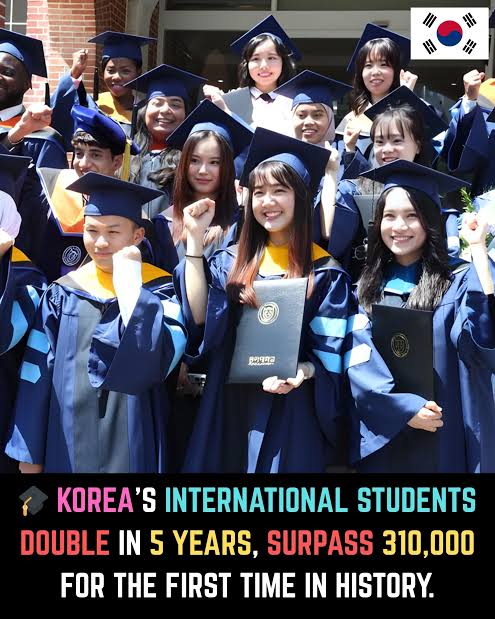
One of the main examples of this shift is the Global Korea Scholarship (GKS), administered by the National Institute for International Education (NIIED). The program provides international students with financial support, including tuition coverage, living expenses, health insurance, and Korean language training. In 2026, the government expanded the number of graduate scholarships to 2,000, demonstrating its continued effort to attract talented students from around the world (Korea JoongAng Daily, 2026). In addition, South Korea has introduced skilled migration pathways, including the E-7 visa, to encourage foreign professionals to work in specialized sectors. These policies reflect the government’s recognition that international students and skilled workers can contribute to South Korea’s future economic development.
Nevertheless, the success of global talent policies should not only be measured by the number of international students or foreign workers entering the country. The more important question is whether these individuals can successfully remain and participate in Korean society after arrival. Studies on international graduate integration show that employment outcomes depend not only on individual qualifications but also on institutional support, employer practices, language ability, and immigration policies (Han et al., 2022). In the South Korean context, many international graduates continue to face barriers related to employment opportunities, workplace adaptation, and visa regulations. Although universities provide education and cultural programs, career support specifically designed for foreign students remains limited. As a result, many graduates struggle to transfer their academic experience into long-term professional opportunities.
Another challenge concerns social integration. While South Korea has introduced more open immigration policies, social acceptance of immigrants remains an important factor in determining the success of these initiatives. Choi et al. (2024) show that demographic decline has influenced public discussions about multicultural immigration policies in South Korea, suggesting that attitudes toward immigrants are closely connected to broader social and demographic changes. This reflects the importance of social norms and public perceptions in shaping migration outcomes. From a constructivist perspective, migration policies are influenced not only by economic interests but also by ideas about belonging and who is considered part of society.
The tension between attracting global talent and creating conditions for long-term integration can be further understood through liberalism and constructivism. From a liberal perspective, international education and migration can create mutual benefits between states and individuals. Migration allows countries to exchange knowledge, skills, and economic resources, while individuals gain access to educational and professional opportunities. In the case of South Korea, programs such as GKS can be understood as a form of international cooperation that strengthens diplomatic relations while supporting the country’s economic needs. The OECD (2025) also highlights South Korea’s efforts to expand migration pathways and attract skilled workers as part of its response to demographic challenges. Therefore, liberalism explains why South Korea increasingly views global talent as a valuable resource for national development.
However, liberalism alone cannot fully explain why many international graduates still face difficulties in establishing long-term careers in South Korea. Constructivism provides a broader explanation by emphasizing the role of identity, social norms, and shared values in shaping migration policies and social attitudes. Although South Korea has become more open to international students and skilled migrants, ideas of cultural and ethnic homogeneity continue to influence perceptions of foreigners. As a result, institutional reforms have developed faster than social acceptance. International graduates may receive opportunities to study and work in Korea, but they can still experience challenges in building professional networks and gaining a sense of belonging within Korean society. This suggests that successful talent integration requires not only economic policies but also changes in social attitudes and institutional practices.
In conclusion, South Korea has made significant efforts to attract global talent through scholarship programs and skilled migration policies. These initiatives demonstrate the country’s recognition that international students and foreign professionals can contribute to addressing demographic and economic challenges. However, recruitment alone is not enough to ensure long-term benefits. The gap between attracting global talent and retaining it shows that employment barriers, limited institutional support, and social perceptions remain important challenges. To maximize the contribution of international talent, South Korea needs to strengthen career support systems, create more accessible employment pathways, and promote a more inclusive social environment. Addressing demographic decline is therefore not only about bringing talented individuals into the country but also about creating conditions that encourage them to build their futures in South Korea.
Writer: Isti Mahardhika Ardhani – 202410360110160
References
Choi, S., Song, J., Kwon, D., & Kim, B. H. S. (2024). Population decline and public attitudes toward multicultural immigration policies in South Korea. Population, Space and Place, 30(7), https://doi.org/10.1002/psp.2788
Han, Y., Gulanowski, D., & Sears, G. J. (2022). International student graduates’ workforce integration: A systematic review. International Journal of Intercultural Relations, 86, 163–189. https://doi.org/10.1016/j.ijintrel.2021.11.003
Kim, H. (2023). Wage and employment effects of immigration: Evidence from South Korea. Journal of Demographic Economics, 89(1), 63-83. https://doi.org/10.1017/dem.2021.16
Korea JoongAng Daily. (2026, February 2). Graduate Global Korea Scholarship quota to increase in 2026, with more emphasis on R&D. Korea JoongAngDaily. https://koreajoongangdaily.joins.com/news/2026-02-02/national/kcampus/Graduate-Global-Korea-Scholarship-quota-to-increase-in-2026-with-more-emphasis-on-RD/2514319
Organisation for Economic Co-operation and Development. (2025). International Migration Outlook 2025. OECD Publishing. https://doi.org/10.1787/ae26c893-en