
Image source: the Jakarta Post
In the last few decades, South Korea has succeeded in attracting the world’s attention through the Korean wave (hallyu) phenomenon which we are already very familiar with, namely music, drama, film, fashion, and culinary. The popularity of Korean culture not only benefits the entertainment industry but also enhances the country’s image internationally.One of the main actors behind this success is BTS, a K-Pop music group that has succeeded in gaining fans from various countries and becoming an icon of South Korean culture.The BTS phenomenon is interesting to study from an international relations perspective because it proves that a country can expand its influence without using military or economic power. According to Joseph s. Nye Jr. (2024), the concept of soft power is the ability of a country to influence other parties through cultural appeal, values, and policies, not through coercion. In this context, BTS not only plays a role as a music group but also as a representation of South Korean culture that contributes to strengthening the positive image of the country in the eyes of the world. So this is an analysis of how BTS plays a role in increasing South Korea’s soft power by using soft power theory as the basis for this analysis.
Soft power is a concept introduced by Josep S. Nye Jr. to explain that a country’s influence does not always depend on military strength (hard power) or economic pressure. On the other hand, a country can achieve its interests through the attractiveness of its culture, the values it adheres to, and also policies that are considered positive by the international community. So, if another country is voluntarily interested in a country’s culture or values, then that country has succeeded in using soft power. In recent years, South Korea has become an example of a country that has successfully utilized soft power through popular culture.The South Korean government also actively supports the development of the entertainment industry as part of its cultural diplomacy. Among the various K-Pop artists, BTS is the most prominent example because their influence transcends the boundaries of the music world. BTS not only introduced Korean songs to the world community, but also encouraged increased interest in the Korean language, Korean food, beauty products, to tourist destinations in South Korea. So this shows that BTS is an important instrument in strengthening South Korea’s soft power.
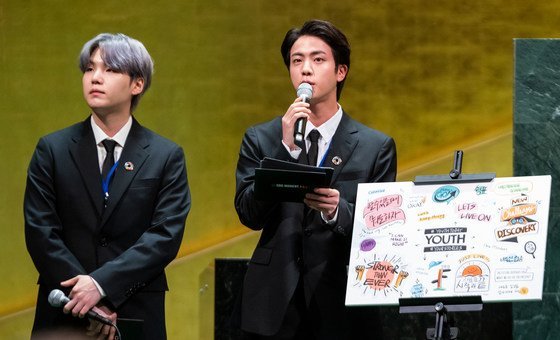
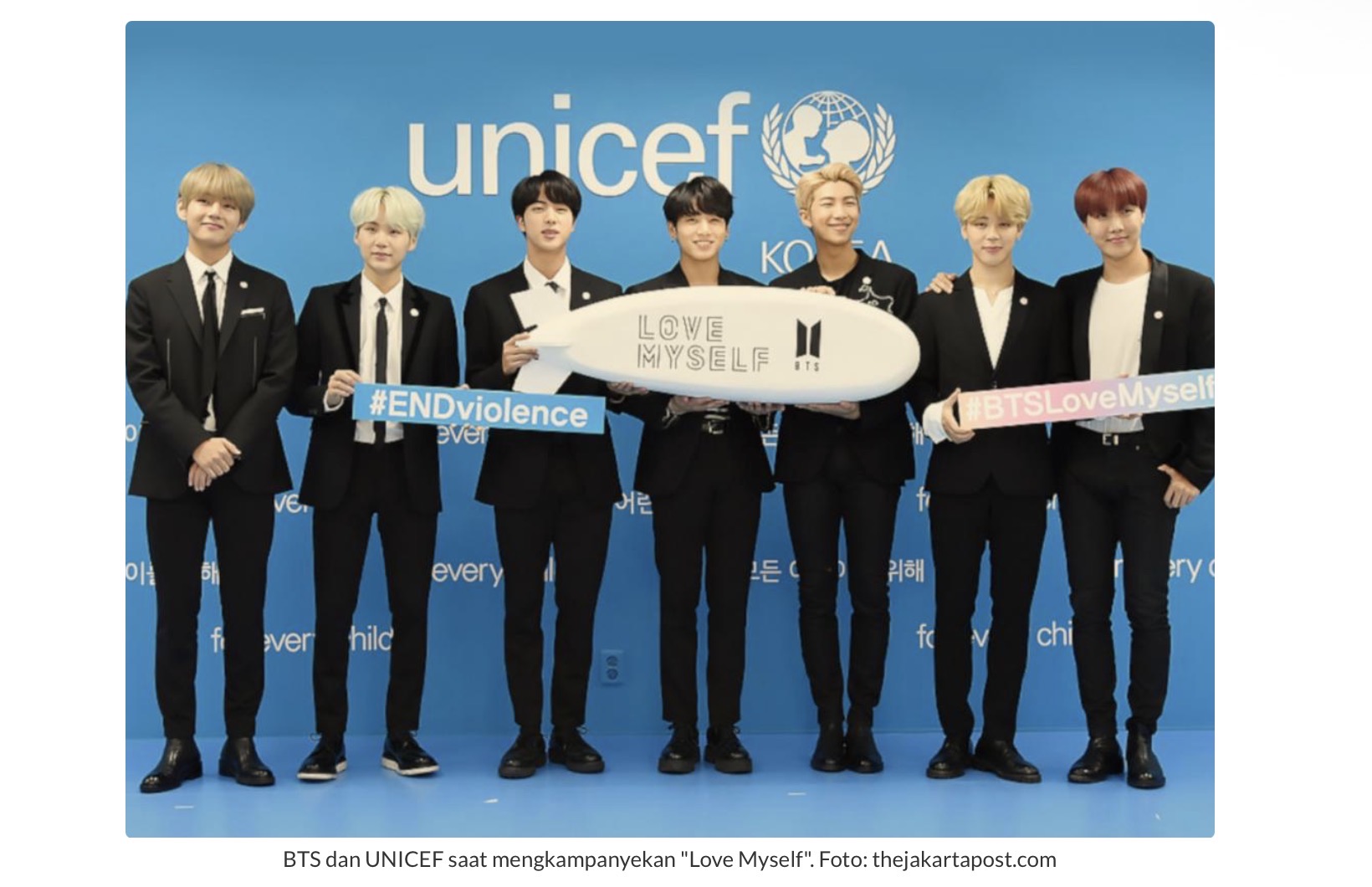
BTS’s role as an instrument of soft power is an important issue because it demonstrates how popular culture can have a real impact on international relations. BTS’s popularity not only enhances South Korea’s image but also strengthens cultural ties between South Korea and various countries. Through music, social media, international concerts, and various global campaigns, BTS has successfully introduced Korean culture to millions of people worldwide. Furthermore, BTS has also made a significant contribution to the South Korean economy. Various studies have shown that BTS’s popularity has driven an increase in foreign tourists visiting South Korea, boosted album and merchandise sales, and strengthened exports of Korean products such as cosmetics, food, and fashion. In other words, BTS’s influence extends beyond the entertainment industry to the country’s economy and trade. Furthermore, BTS is also active in various international activities, such as the Love Myself campaign with UNICEF and their speech at the United Nations (UN). These activities demonstrate that BTS is not only spreading Korean culture but also conveying positive values such as caring for the younger generation, mental health, and the importance of self-love. This further strengthens South Korea’s image as an open, modern nation with a positive global influence.
According to Joseph S. Nye Jr. (2004), soft power is a country’s ability to achieve desired outcomes through attraction, rather than coercion. This attraction can stem from culture, political values, or foreign policy. In South Korea, BTS is a clear example of how popular culture can be an effective source of soft power. BTS’s success in capturing international attention has led many people to learn more about South Korea. Many BTS fans are interested in learning Korean, trying Korean cuisine, watching Korean dramas, and even visiting various tourist destinations in South Korea. This phenomenon demonstrates that cultural appeal can influence the global public’s perception of a country without pressure or coercion. From an international relations perspective, BTS can also be viewed as a non-state actor, meaning a non-state actor capable of exerting influence in international relations. Although BTS is not part of the South Korean government, their activities and influence indirectly support South Korea’s national interests, particularly in enhancing the country’s image and expanding the influence of Korean culture globally. BTS’s participation in the Love Myself campaign with UNICEF and their speech at the UN General Assembly exemplify how their influence extends beyond the entertainment industry. BTS leverages its popularity to convey social messages to the global community, thus reinforcing South Korea’s positive image as a country that excels not only in popular culture but also actively supports humanitarian issues. Thus, Nye’s soft power theory can explain how South Korea has successfully increased its international influence through the cultural appeal embodied by BTS.
In my opinion, South Korea’s strategy of leveraging BTS as a soft power instrument is one of the most successful examples of modern international relations. In the era of globalization, a country’s influence is no longer solely determined by military or economic strength, but also by its ability to build a positive image through culture. BTS has successfully demonstrated that music can be an effective diplomatic medium for introducing South Korea’s identity and values to the international community.
BTS has proven that popular culture can be an effective instrument in enhancing a country’s soft power. Through music, social campaigns, and involvement in various international forums, BTS has successfully introduced South Korean culture while building a positive image of the country in the eyes of the world. Based on Joseph S. Nye Jr. soft power theory, BTS’s success demonstrates that cultural appeal can influence the international community without the use of coercion. In addition to impacting the country’s image, BTS has also contributed to South Korea’s economic, tourism, and cultural diplomacy sectors. Therefore, BTS can be seen as a non-state actor supporting South Korea’s national interests at the global level. This phenomenon proves that popular culture is now a crucial instrument in international relations and will continue to play a strategic role in building a country’s influence in the future.
Writer: Meylani Ahmad – 202410360110156
Reference
Cristo, D. A. (2005). Soft Power: The Means to Success in World Politics (Book Review).
Proctor, J. (2021). Labour of love: Fan labour, BTS, and South Korean soft power. Asia Marketing Journal, 22(4), 5.
Lyu, P. (2024). The multifaceted impact of BTS: Driving South Korea’s economy, soft power, and cultural exchange. Transactions on Social Science, Education and Humanities Research, 11, 1-6.