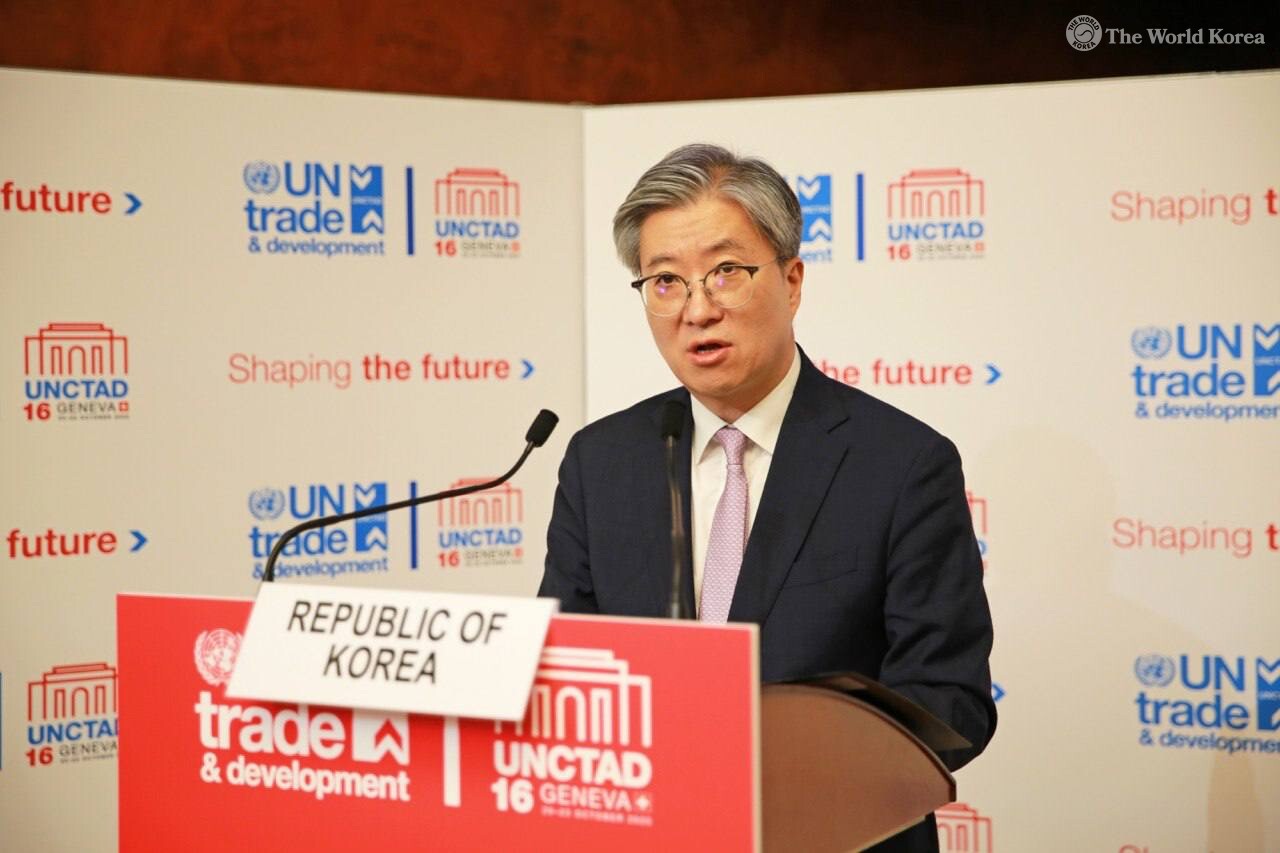

Image source: The World Korea
Introduction
South Korea’s emergence as a globally influential state is one of the most compelling stories in modern international relations. In six decades, a nation ravaged by colonialism and war built the world’s tenth-largest economy, developed a dominant semiconductor industry, and secured a credible role within the liberal international order. The central issue of this essay is how South Korea achieved this transformation, and why it matters for understanding the link between domestic development and international influence. I argue that South Korea’s global standing results from a deliberate synergy between state-led industrialization, democratic transition, and middle power diplomacy and that IR theory helps explain why this combination proved so powerful.
Discussion
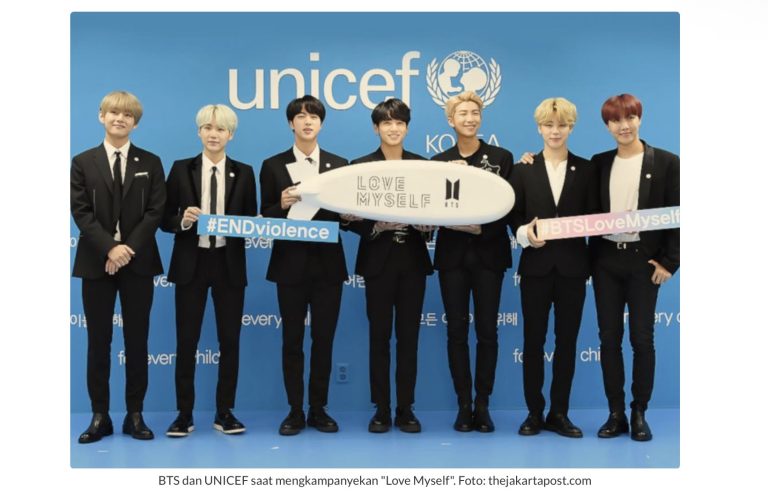
South Korea’s economic ascent began with the developmental state model, in which strategic state intervention directs market investments to stimulate growth (Bresser-Pereira, 2019). Starting in the 1960s, GDP grew from just 3.97 billion USD to around 1.70 trillion USD today the famous “Miracle on the Han River” (The World Bank, n.d.). Under President Park Chung-Hee, the state channeled resources through Chaebols, shifting the economy from light manufacturing to heavy and high-tech industry. This vision matured in the 1990s HAN Project, which funded semiconductor research that would eventually give Samsung and SK Hynix control over 73% of the global DRAM market and 53% of NAND flash memory (International Trade Administration, 2024). This was more than economic policy it embedded South Korea into global supply chains, making it strategically indispensable. After the 1997 financial crisis, South Korea diversified further through the Korean Wave (Hallyu), attracting over 225 million cultural enthusiasts worldwide and integrating soft power into its national development strategy (Korea, Rep. | Data, n.d.).
Yet economic strength alone could not secure South Korea’s legitimacy within the liberal international order. From the 1960s through the 1980s, the country operated under authoritarian rule, which constrained its moral standing globally. The June Democratic Uprising of 1987 marked a turning point. From a liberal internationalist perspective, this democratic transition aligned South Korea’s identity with the norms and institutions of the international community (Prasetyo, 2021). In liberal IR theory, democratic states are considered more credible partners because they are bound by rule of law and accountable governance. Democratization was, in effect, South Korea’s passport into the global institutional network a process that culminated on July 2, 2021, when UNCTAD officially reclassified South Korea as a developed economy, the first country in the organization’s history to do so (Lee, 2021).
Building on these foundations, South Korea has pursued a sophisticated middle power foreign policy. Middle powers are states that exercise influence not through dominance, but through multilateral engagement, norm-building, and bridge-building (Abbondanza, 2022). South Korea fits this profile: it has joined more than 91 international organizations since 2018 (대한민국 국가지도집, n.d.), actively mediates regional tensions as a member of the China-Japan-South Korea Trilateral Summit, and has offered to facilitate dialogue between the U.S. and North Korea on denuclearization. As Professor Cho Jae-woo of Kyung Hee University noted, peace-brokering in tense regional situations has been a longstanding tradition of South Korean foreign policy (South Korea’s Lee Steps up as Asia Peacemaker, n.d.). The ASEAN-ROK Summit exemplifies the economic dimension of this strategy combining Hallyu’s cultural appeal with trade partnerships generating over one trillion USD in combined GDP for member states.
Conclusion
South Korea’s case carries lessons that extend beyond its borders. Its trajectory shows that international influence is not determined by military might alone, but is built through economic credibility, political legitimacy, and consistent multilateral engagement. Developmental state theory explains the material ascent; liberal internationalism explains why democratization unlocked global recognition; and middle power theory explains how South Korea translated domestic achievements into durable diplomatic influence. The UNCTAD recognition of 2021 was not a sudden reward it was the convergence of decades of deliberate strategy. For states on similar developmental paths, South Korea’s experience is more than instructive: it demonstrates that the journey from development to diplomacy is a coherent, achievable goal when economic ambition and political maturity are pursued together.
Writer: Andoro Arya Seno – 202410360110119
Bibliography
Abbondanza, G. (2022). Whither the Indo-Pacific? Middle power strategies from Australia, South Korea and Indonesia. International Affairs, 98(2), 403–421. https://doi.org/10.1093/ia/iiab231
Bresser-Pereira, L. C. (2019). Models of the developmental state. CEPAL Review, 128, 35–47. https://doi.org/10.18356/876f838e-en
Britannica, T. Editors of Encyclopaedia. (n.d.). The Yushin order (Fourth Republic). Encyclopedia Britannica. Retrieved March 17, 2026, from https://www.britannica.com/place/South-Korea/The-Yushin-order-Fourth-Republic
International Trade Administration. (2024, January 11). South Korea semiconductors. International Trade Administration, U.S. Department of Commerce. https://www.trade.gov/market-intelligence/south-korea-semiconductors
Korea, Rep. | Data. (n.d.). Retrieved March 15, 2026, from https://data.worldbank.org/indicator/NY.GDP.MKTP.CD?locations=KR&most_recent_value_desc=true
Lee, J. (2021, July 5). UNCTAD officially upgrades South Korea’s status to developed economy. The Hankyoreh. https://english.hani.co.kr/arti/english_edition/e_international/1002230.html
Lembaga Bahasa Internasional FIB UI. (2023, September 27). Chaebol: Konglomerat besar di balik majunya ekonomi Korea Selatan. https://lbifib.ui.ac.id/id/blog/artikel/chaebol-konglomerat-besar-di-balik-majunya-ekonomi-korea-selatan
Prasetyo, U. D. (2021, May 30). Prespektif liberalisme dalam hubungan internasional. Kompasiana. https://www.kompasiana.com/unggundwiprasetyo/60b2feb08ede483eeb164852/prespektif-liberalisme-dalam-hubungan-internasional
South Korea’s Lee steps up as Asia peacemaker. (n.d.). Retrieved March 16, 2026, from https://www.dw.com/en/south-koreas-lee-steps-up-as-asia-peacemaker/a-75113360
The World Bank. (n.d.). GDP (current US$) – Korea, Rep. World Bank Open Data. Retrieved March 17, 2026, from https://data.worldbank.org/indicator/NY.GDP.MKTP.CD?locations=KR
대한민국 국가지도집. (n.d.). Retrieved March 16, 2026, from http://nationalatlas.ngii.go.kr/pages/page_2023.php