

Image source: FInfolk Money in Instagram
In this article, we will discuss how South Korea changed from being a poor country after the Korean war to be one of the developed countries in the world. This change was caused by two factors, those are the industrialization which had been going on since the 1960s and the democratization process which has developed in the late 1980s. Due to the government’s substantial support for the industrial sector, along with its economic development policies, South Korea has been able to achieve rapid growth especially in its economy. Beside that, the democracy movement that has developed since 1980s has also played an important role in directing the political system to be more democratic. Based on several studies that discuss about the economic development and also the democratization in South Korea, this article will show us that the relationship between industrialization and democratization has helped South Korea to strengthen its position in the global economy and also its international relations.
Introduction
South Korea faced an economic crisis after the end of the Korean War. This situation was caused by extensive damage to infrastructure and low levels of industrialization, which placed South Korea among the low-income countries in the mid 20th century. However, several decades later, South Korea was able to make significant changes to its economy, making it one of the world’s leading examples of successful economic development.
These changes didn’t occur suddenly, but rather resulted from the implementation of well-planned economic development policies and active government support for the industrial sector. According to Jungho Yoo (2019), South Korea’s rapid economic growth is inseparable from the government’s systematically designed development strategy. Along with its rapid economic growth, South Korea also experienced a shift to a more democratic political system in the late 1980s. The combination of these two processes subsequently elevated South Korea’s standing on the international stage.
Early Industrialization in South Korea
Since the 1960s, South Korea’s industrialization has grown rapidly as the local government implemented economic development and increased exports. In the process, the government has actively supported domestic companies and made significant investments in infrastructure and manufacturing.
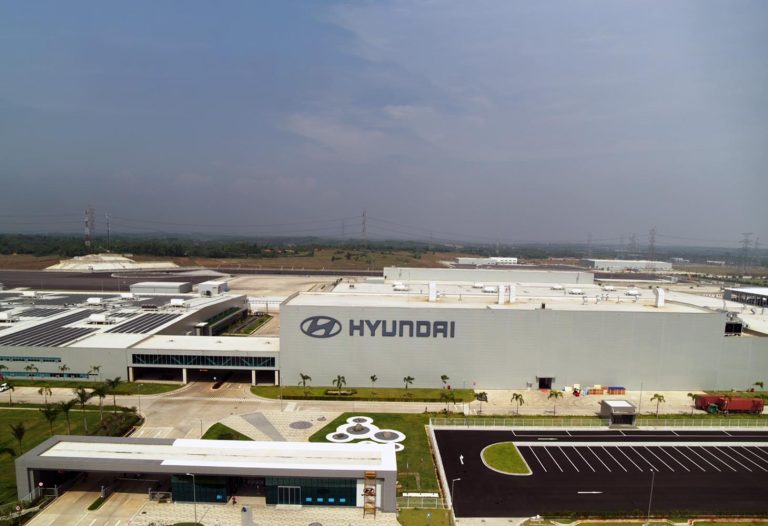
This development process gave birth to various large companies that have grown into global conglomerates, such as Samsung, Hyundai, and LG. These companies play a vital role in contributing to economic growth and increasing South Korea’s economic competitiveness in the global market.
South Korea’s rapid industrial growth during this period is often referred to the Korean Miracle, Kim explained that, “South Korea’s rapid industrialization during the 1960s and 1970s has often been described as the Korean Miracle” (Kim, 1991).
Selain factor ekonmi, keberhasilan Korea Selatan dalam pembangunan industri juga tak lepas dari kepemimpinan politik yang memiliki pengaruh besae dakam mengarahkan kebijakan pembangunan nasional. Menurut Putri (2015), peran kepemimpinan politik sangatlah krusial dalam membentuk developmental state di Korea Selatan. Oleh karena itu, industrialisasi di negara ini merupakan hasil dari kombinasi kebijakan pemerintah yang kuat, dukungan terhadap industri domestic, dan juga strategi pembangunan ekonomi yang terstruktur.
Beyond the economic factors, South Korea’s success in industrial development is also inseparable from political leadership, which has had a significant influence in directing national development policies. According to Putri (2015), the role of political leadership is crucial in shaping South Korea’s developmental state. Therefore, industrialization in this country is the result of a combination of strong government policies, support for domestic industry, and a structured economic developmental strategy.
Democratization Process
Despite South Korea’s rapid economic development, it remained under the authoritarian rule for decades. In the 1980s, various social movements emerged demanding political reform and a more democratic system of government.
One of the key events in South Korea’s democratization process was the June Democratic Uprising, which occurred in 1987. This large-scale demonstration, involving students, workers, and civil society groups, demanded changes to the political system and the implementation of direct presidential elections. According to Nak-Chung Paik (2007), this movement was a crucial moment in South Korea’s democratization process.
Proses demokratisasi tersebut juga tidak dapat dipisahkan dari keterlibatan aktif masyarakat sipil dalam memperjuangkan perubahan politik (Kim, 2005). Penelitian yang dilakukan Hagen Koo dan Mi Park juga menunjukkan bahwa gerakan mahasiswa serta organisasi sipil pada tahun 1980-an berperan penting dalam mendorong perubahan dari rezim otoriter menuju sistem pemerintahan yang lebih demokratis.
The democratization process is also inseparable from the active involvement of civil society in championing political change (Kim, 2005). Research by Hagen Koo and Mi Park also shows that student movements and civil society organizations in the 1980s played a significant role in driving change from an authoritarian regime to a more democratic system of government,
Impact on Global Influence
South Korea’s success in developing its economy while simultaneously transforming its political system to be more democratic has significantly impacted its standing on the international stage. Its strong economy and political stability have enabled South Korea to increase its involvement in the international trade and global cooperation.
At this moment, South Korea has developed into one of the world’s largest economic powers and has a considerable influence in various international forums. Its success in economic development has also made South Korea as a development model for a number of developing countries. Warsito (2012) states that, “The democratic consolidation after the 1997 crisis strengthened South Korea’s political stability and global credibility”.
Conclusion
South Korea’s transformation from a developing to a developed country is the result of a combination between the strong industrialization and successful democratization. Since the 1960s, various economic development policies have driven the rapid industrial growth and enhanced South Korea’s position in the global economy.
Selain perkembangan ekonomi, gerakan demokrasi yang berkembang pada tahun 1980-an berperan penting dalam mendorong terbentuknya sistem politik yang lebih demokratis dan stabil di Korea Selatan. Kombinasi antara pertumbuhan ekonomi yang kuat dan sistem politik yang demokratis kemudian berkontribusi dalam meningkatkan pengaruh Korea Selatan dalam sistem internasional sekaligus memperkuat posisinya dalam perekonomian global.
In addition to economic development, the democracy movement that developed in the 1980s played a significant role in fostering a more democratic and stable political system in South Korea. The combination of strong economic growth and a democratic political system subsequently contributed to South Korea’s increasing influence in the international system and strengthening its position in the global economy.
Writer: Aisyah Salsabila Khoirunnisa’ – 202410360110048
Referensi
Kim, B.-K. (2011). The post-1997 crisis democratization in Korea: Toward a new developmental state? World Bank.
Kim, K. S. (1991). The Korean miracle (1962–1980) revisited: Myths and realities in strategy and development. University of Notre Dame Press.
Kim, S. (2022). Civil society and democratization in South Korea. In S. Lim & N. J. Alsford (Eds.), Routledge handbook of contemporary South Korea (pp. 53–71). Routledge.
Koo, H. (2002). Civil society and democracy in South Korea. The Good Society, 11(2), 40–45.
Paik, N. (2007). Democracy and peace in Korea twenty years after June 1987: Where are we now, and where do we go from here? The Asia-Pacific Journal: Japan Focus, 5(6), Article 2440.
Park, M. (2022). Organizing dissent against authoritarianism: The South Korean student movement. In S. Lim & N. J. Alsford (Eds.), Routledge handbook of contemporary South Korea (pp. 72–87). Routledge.
Putri, R. A. A. K. (2018). Political leadership in South Korea’s developmental state: A historical revisit. Journal of ASEAN Studies, 6(1), 64–81.
Yoo, J. (2018). What made Korea’s rapid growth possible? The Korean Economic Forum, 33(2), 5–23.