
Image source: studiumgenerale-eindhoven.nl
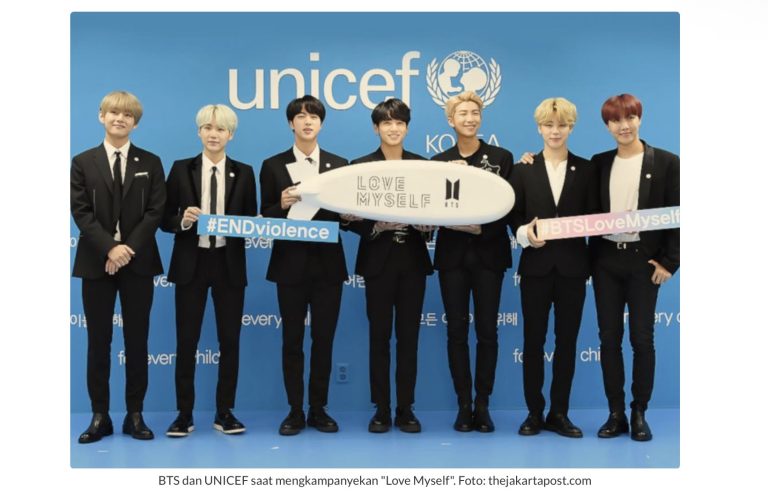
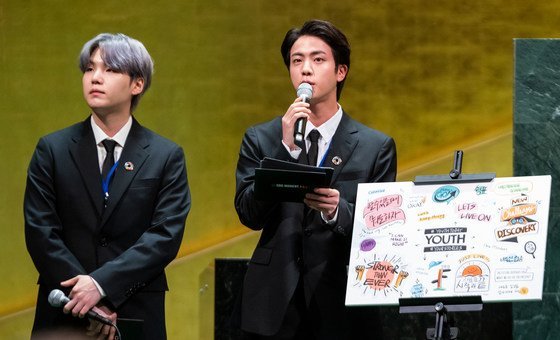
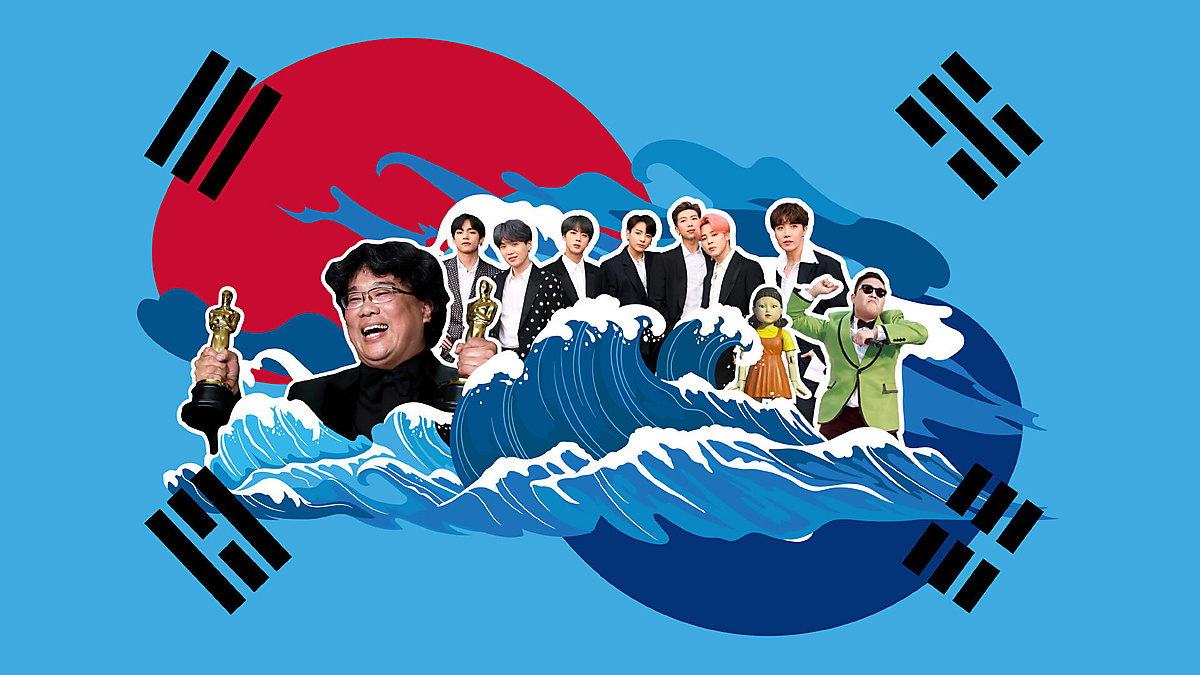
In this era of globalization, cultural diplomacy is an important aspect of soft diplomacy. The Korean Wave or as known as Hallyu, is a successful example of implementing cultural diplomacy strategies, South Korea actively utilizes elements of its culture, such as K-pop music, television dramas, film, fashion and traditions, as the main instruments to build a positive image in the eyes of the international community. Through the Hallyu, South Korea succeeded in breaking through cultural and linguistic boundaries, creating a universal appeal (Kunkurat, 2024). So, is the Korean Wave phenomenon merely influenced by non-state actors such as the entertainment industry, idol, and fans, or is it actually part of a governmental agenda with a larger purpose?
The non-state actors have absolutely a big role and influence, but the current success of the Korean Wave cannot be separated from the active role of the South Korean government which provides full support for the increase and spread of this phenomenon at the international level. The South Korean government has strategically taken steps to strengthen the Korean Wave as part of its cultural diplomacy efforts.
Another form of support from the South Korean government is the establishment of the Pop Culture Department, part of the South Korean Ministry of Culture, Sports, and Tourism. This department focuses on the development of K-Pop, K-Drama, K-Fashion, and other Korean Wave products. This department is also the only one in the world specifically established to develop matters related to the country’s pop culture. The South Korean government is also developing Changdong, an area in Seoul, as a center for the spread of K-Pop. It has built buildings for K-Pop idol concerts, recording studios, art galleries, restaurants, and retail stores in the area to support the growth of K-Pop in the country. There are also government agencies directly responsible for the spread of the Korean Wave, namely the South Korean Ministry of Culture, Sports, and Tourism. The Institutions under these ministries such as, Korean Tourist Organization (KTO), Korean Culture and Information Service (KOCIS), Korean Film Council (KOFIC), Korea Creative Content Agency (KOCCA), and Korean Foundation for International Cultural Exchange (KOFICE) (Suryani, 2023).
So, does the South Korean government have another strategic goal in fully supporting Korean waves more than as a cultural diplomacy instrument?. The answer is obviously clear that Korean Waves is more than just cultural diplomacy but has a deeper role in political purposes.
For political purposes, the South Korean government is using Hallyu as a public diplomacy strategy, a political instrument that is oriented towards coexistence, not coercion (Gunawan, 2024). Joseph S. Nye argued in his book that soft power is a co-optive power or the ability to shape what others want can rest on the attractiveness of one’s culture and values or the ability to manipulate the agenda of political choices in a manner that makes others fail to express some preferences because they seem to be unrealistic. This argument aligns with the Korean Wave purposes, the Korean Wave has been an influence and attractiveness to the global societies, gaining international intentions and support. Millions of people in the world are starting to learn Korean, buying Korean beauty products and consuming Korean food and fashion which also brings huge benefits to the Korean economic sector.
Besides, through the Hallyu, since 2017, President Moon Jae-in’s initiatives have played a significant role in shaping South Korea’s attitude towards North Korea. His speech in Berlin reflected a desire to build better relations between the two countries, and media encouragement in the era of globalization has been key in spreading this message. Through effective news management and strategic communications, South Korea seeks to motivate North Korea to participate in dialogue and embrace more positive assumptions. Public diplomacy under Moon Jae-in’s leadership not only created momentum for inter-Korean talks but also shaped the global outlook on the dynamics of relations on the Korean Peninsula (Gunawan, 2024).
Through the discussion we can see that behind the Hallyu with its K-pop and Fashion trend, there is a subtle geopolitical agenda at work. Therefore, it’s time for us as International Students and Korean Waves enthusiasts to not just get caught up in the euphoria but also understand the direction of this cultural wave.
Writer: Muhammad Aufa Rafiqi – 202410360110020
References
Nye, J. S., Jr. (1990). Soft power. Foreign Policy, (80), 153–171. https://www.almendron.com/tribuna/wp-content/uploads/2020/02/joseph-s-nye-jr-soft-power.pdf
Pardo, Ramon Pacheco (2021). From Shrimp to Middle Power to Something More? South Korea as a Global Pivotal State. Korea Economic Institute of America, 32(3), 167-186.
Purbasari, A., & Setyowati, D. (2024). Analysis of the influence of the Korean wave (Hallyu) on the lifestyle and consumption patterns of students. Info Sains: Informatik dan Sains, 14(01), 746–755. https://ejournal.seaninstitute.or.id/index.php/InfoSains/article/view/4262/3414
Putra, A. P., & Setiawan, R. (2023). Korean Cultural Diplomacy: Uniting Society Through Soft Power, Belantara Journal of Anthropology (Bejam), 1(2), 115–125. https://internationalpublisher.id/journal/index.php/Bejam/article/view/155/184
Pratama, G. (2024, May 15). Korean wave: Saat K-Pop menjadi senjata geopolitik Korea Selatan [Korean wave: When K-Pop becomes South Korea’s geopolitical weapon]. Universitas Negeri Yogyakarta. https://www.uny.ac.id/id/berita/korean-wave-saat-k-pop-menjadi-senjata-geopolitik-korea-selatan