
Image source: Arirang News
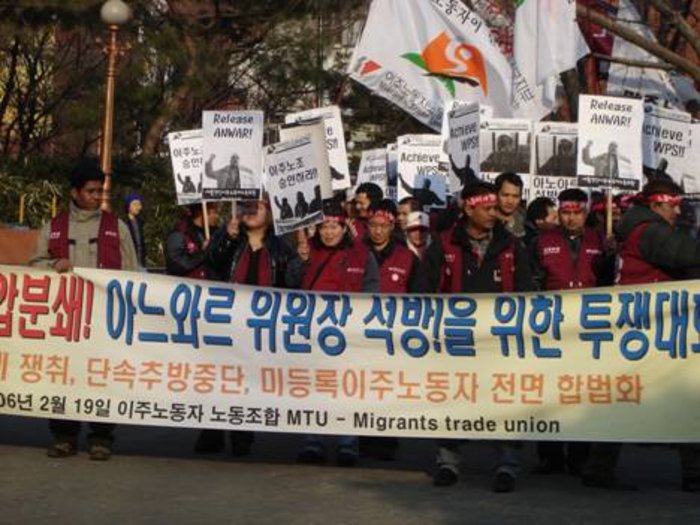
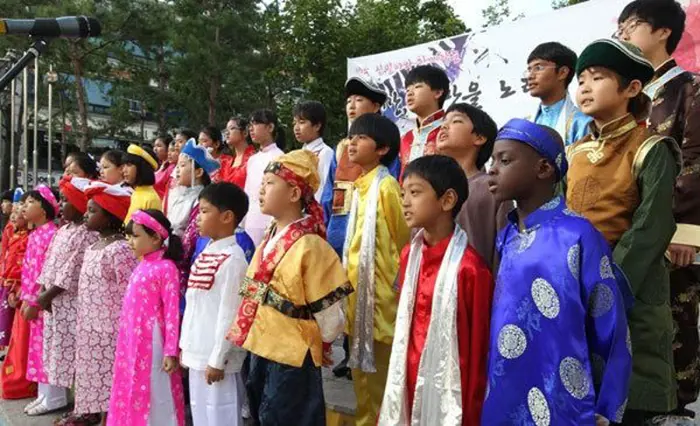
For decades, South Korea defined its national identity through danil minjok, the belief that Koreans form a single, ethnically homogeneous people. Very low fertility, an aging population, and labor shortages have made Korea increasingly dependent on foreign workers and marriage migrants (Song, 2026), and the state has responded with multicultural, or Damunhwa, policies. These policies are often presented as a step toward cosmopolitanism. This essay argues, however, that Damunhwa functions less as a celebration of pluralism than as a mechanism of selective assimilation: by expecting migrants to adapt to Korean norms while asking little of the receiving society, it preserves the monocultural bias it claims to overcome. The argument draws on constructivism and Gramsci’s concept of cultural hegemony.
The issue matters because it determines whether migrants and their children can belong to Korean society on fair terms. Marriage migration is not marginal: international marriages account for up to 35% of marriages in rural areas (Song, 2026). In an ethnography of Filipina marriage immigrants in rural Korea, Kim (2018) critiques the assimilation built into Korea’s version of multiculturalism and shows that these women’s citizenship remains fragmented and their sense of belonging elusive. Asahina and Higuchi (2020) similarly observe that strong ethnic nationalism has changed little in East Asia, which limits what multiculturalism can achieve. If this pattern persists, Korea risks creating a permanent group of residents who are needed economically but never fully accepted socially.
Constructivism helps explain why. In International Relations, constructivists hold that identities and interests are not fixed by nature but socially constructed through shared ideas and practices (Wendt, 1992). The idea of a homogeneous Korean nation fits this view. Han (2007) argues that ethnic homogeneity in Korean nationalism is a relatively recent phenomenon and that traditional Korea did not consider itself ethnically homogeneous. Cawley (2016) adds that the Tan’gun myth was recalibrated in the twentieth century, in the face of Japanese cultural imperialism, to promote a homogeneous national identity. An identity built as a response to colonial threat is likely to treat unassimilated difference as a danger to cohesion, which helps explain why inclusion is so often conditional. Han (2007) goes further, suggesting that discrimination rests on a sense of cultural superiority, which is why multiculturalism is easily embraced by nationalists.
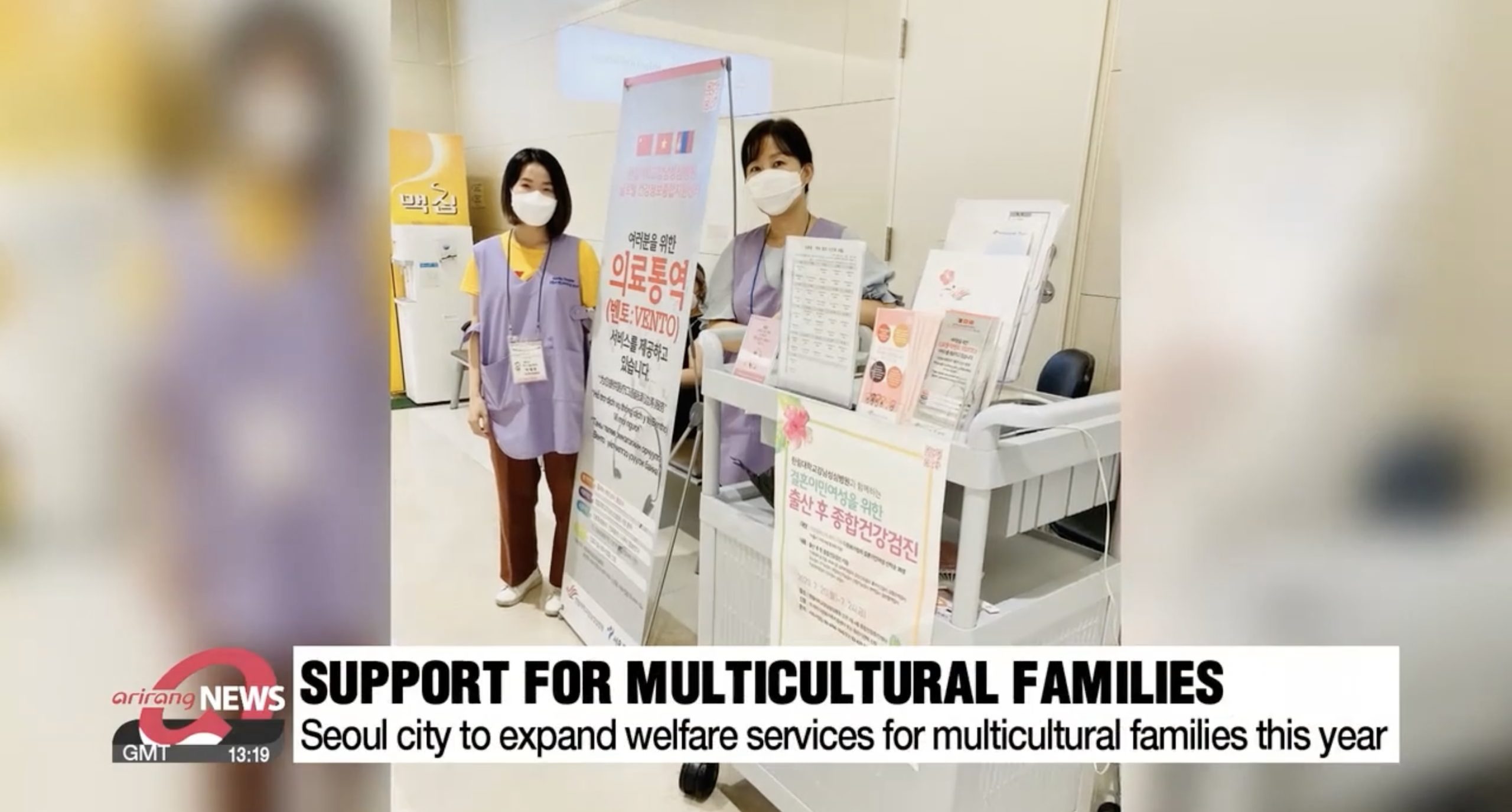
Gramsci’s (1971) concept of cultural hegemony complements this account. For Gramsci, dominant groups secure consent not only through coercion but by presenting their values as common sense, largely through institutions. Applied to Korea, state-run multicultural programs can be read as a way of defining who counts as an acceptable member of society. Language and cultural education for marriage migrants is necessary for daily life, and this essay does not dispute that. The problem is reciprocity. Integration is framed as a one-way task for the migrant, while the wider public is asked to change very little. This is consistent with Kim’s (2018) finding that the tensions migrant women face are not generated within the family alone but also reflect rural socioeconomic conditions and the state’s unbalanced approach to multiculturalism.
Inclusion is also hierarchical. Seol and Skrentny (2009) show that even co-ethnic Korean Chinese (Joseonjok) are treated legally as foreigners, admitted mainly for low-wage work and denied most social benefits, although they are still preferred over other foreign workers. The authors call this ranking of people who share ancestry “hierarchical nationhood” and argue that economic and geopolitical goals shape it. Song (2026) adds that South Koreans have often contrasted wealthy, developed Koreans with poor, traditional Joseonjok, and idealized women from China and the former Soviet Union as pure and submissive, which reinforces both gender and ethnic hierarchies.
Damunhwa also appears to be driven more by state needs than by a commitment to diversity. Lan (2023) proposes the concept of “geopolitical multiculturalism,” in which receiving states promote multicultural programs to strengthen their global standing, economic development, and security, with East Asian cases as illustrations. Asahina and Higuchi (2020) likewise note that features of the developmental state persist in the region. In Korea, rural bride and labor shortages made migrants useful, and reforms such as the 2010 dual nationality provision for migrant wives show that change is possible (Song, 2026). Yet inclusion remains selective and gendered, and not all migrants benefit equally (Song, 2026).
In my opinion, Korea’s approach is unsustainable and counterproductive to its own long-term interests. Expecting migrants to adapt without asking the host society to change does not create social harmony; it risks alienation and strained families, and it may burden multiethnic children who grow up between two sets of expectations. Cohesion in a globalized era cannot rest on a constructed myth of ethnic purity, and the historical findings of Han (2007) and Cawley (2016) suggest that this myth is neither ancient nor necessary. Korea should therefore shift from selective assimilation toward genuine pluralism. Policy should place more emphasis on educating the wider public in cultural competence and anti-racism, not only on teaching migrants to adjust. Funding should support two-way cultural exchange, bilingual education for multiethnic children, and stronger legal protection against discrimination. Only by confronting the homogeneity myth that underlies Damunhwa can South Korea turn demographic necessity into an equitable and resilient multicultural society.
Writer: Isti Mahardhika A – 202410360110160
References
Asahina, Y., & Higuchi, N. (2020). Guest editorial: The third round of migrant incorporation in East Asia: An introduction to the special issue on friends and foes of multicultural East Asia. Journal of Contemporary Eastern Asia, 19(2), 1–19. https://doi.org/10.17477/jcea.2020.19.2.001
Cawley, K. N. (2016). Back to the future: Recalibrating the myth of Korea’s homogenous ethnicity. Asian Ethnicity, 17(1), 150–160. https://doi.org/10.1080/14631369.2015.1051510
Gramsci, A. (1971). Selections from the prison notebooks (Q. Hoare & G. Nowell Smith, Eds. & Trans.). International Publishers.
Han, K.-K. (2007). The archaeology of the ethnically homogeneous nation-state and multiculturalism in Korea. Korea Journal, 47(4), 8–32. https://doi.org/10.25024/kj.2007.47.4.8
Kim, M. (2018). Elusive belonging: Marriage immigrants and “multiculturalism” in rural South Korea. University of Hawai’i Press.
Lan, P.-C. (2023). Geopolitical multiculturalism in East Asia. Asia Pacific Viewpoint, 64(3), 425–431. https://doi.org/10.1111/apv.12396
Seol, D.-H., & Skrentny, J. D. (2009). Ethnic return migration and hierarchical nationhood: Korean Chinese foreign workers in South Korea. Ethnicities, 9(2), 147–174. https://doi.org/10.1177/1468796808099901
Song, C. (2026, September 30). Multiculturalism: Challenges and opportunities in Korea and Japan [Lecture slides]. Eurasia Foundation Lecture Series, Universitas Muhammadiyah Malang.
Wendt, A. (1992). Anarchy is what states make of it: The social construction of power politics. International Organization, 46(2), 391–425. https://doi.org/10.1017/S0020818300027764