
Image source: Pinterest
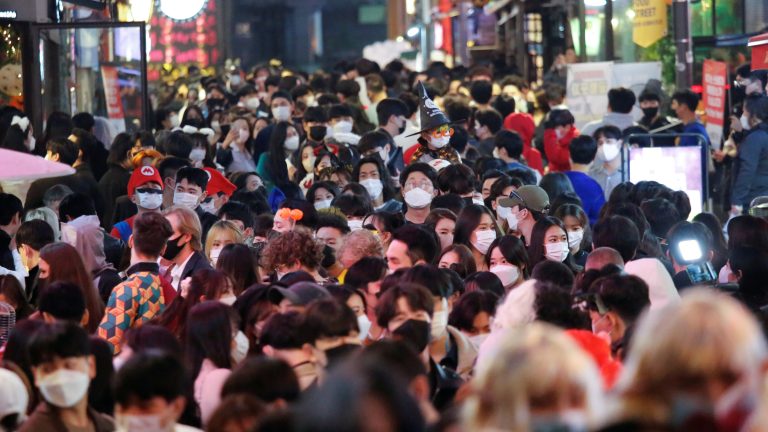
For decades, South Korea has proudly projected an image of a homogeneous nation state bound by a singular ethnic identity and shared blood (danil minjok). For a long time, the legal framework of jus sanguinis (right of blood) dictated not only citizenship status but also societal belonging and national identity. However, this traditional worldview has been severely tested in the early 21st century. The rapid influx of foreign labor and international marriages has forced the South Korean state to confront an inevitable reality, racial and cultural diversity. While critics often dismiss South Korea’s recent embrace of multiculturalism as a mere political facade or a superficial policy tool, a closer examination reveals a far more complex structural transition. South Korea’s shift toward multiculturalism is not driven by sudden altruism, but rather by an urgent dual necessity namely, a severe domestic demographic crisis and the strategic management of its international reputation.
To understand why multiculturalism became an inescapable political agenda for Seoul, one must first examine the profound demographic pressures gripping the country. And following decades of rapid industrialization and urban modernization, South Korea’s fertility rates plummeted to historic lows, resulting in an rapidly aging population and a shrinking domestic workforce. As Timothy Lim (2017) points out in the Georgetown Journal of International Affairs, and the state was forced to rely increasingly on foreign immigrant labor to sustain critical sectors of its economy, particularly manufacturing, agriculture, and construction. Simultaneously, a persistent gender imbalance driven by rural men struggling to find marriage partners as local women migrated to urban centers triggered a sharp rise in international marriages. By 2016, the foreign resident population surged to roughly 3.6 percent, a stark contrast to the near zero diversity of the late 20th century. This demographic reality made the old monocultural state model economically unsustainable.
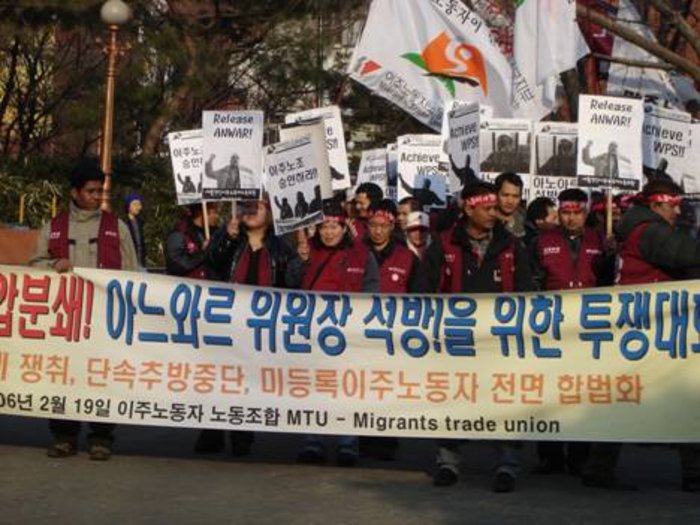
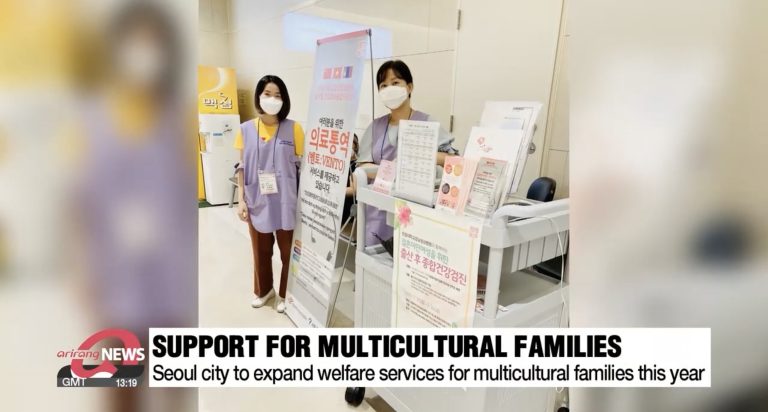
Faced with this rising tide of plurality, the South Korean government adopted a distinctly state directed, top down strategy to manage diversity. In evaluating this approach, the theoretical framework provided by political theorist Bhikhu Parekh regarding cultural diversity and state recognition becomes highly relevant. Parekh argues that true multiculturalism requires structural support, institutional rights, and deep societal respect for differences rather than forced cultural assimilation. Yet, South Korea’s policy framework has historically leaned toward control and assimilation. Through mechanisms like the Employment Permit System (EPS) introduced in 2005, the state carved out a guest worker program designed explicitly to prevent permanent settlement and long term integration. Meanwhile, policies aimed at marriage migrants predominantly women from Southeast Asian nations such as Vietnam, the Philippines, and Indonesia focused heavily on cultural assimilation. These immigrant brides were expected to learn the Korean language and traditional customs swiftly, functioning essentially as instruments to stabilize rural households rather than recognized bearers of distinct cultural identities.
Consequently, many Western observers and domestic critics argue that Korean multiculturalism remains shallow, operating primarily as a state managed mechanism to control social order and fulfill international obligations. And however this critique overlooks the gradual, multi faceted, and intensely contested nature of societal transformation. Applying Stuart Hall’s perspective on identity and representation, cultural shifts are deeply tied to power dynamics where dominant groups slowly negotiate spaces for marginalized voices within public discourse. A pivotal turning point in South Korea’s discursive shift occurred in 2012 with the historic appointment of Jasmine Lee a naturalized citizen originally from the Philippines to the National Assembly. While her appointment drew severe racist vitriol from conservative segments of society, it symbolized an unprecedented crack in the absolute wall of blood based nationalism. For a country previously fixated on racial purity, having a naturalized minority lawmaker in parliament shattered the rigid boundary of who could be considered “Korean” and redefined the parameters of civic participation
Ultimately, South Korea is undeniably on a rocky and contested road toward multiculturalism. The journey is far from complete, and systemic challenges such as workplace discrimination, social prejudice, and legal barriers remain prevalent. Nevertheless, dismissing South Korea’s multicultural policies as a mere facade ignores the profound structural and discursive changes already underway. Driven by acute demographic imperatives and international pressure to shed its xenophobic reputation, Seoul has initiated a multi layered societal transformation that cannot easily be reversed. As global integration deepens, South Korea is learning albeit imperfectly that national identity is not a static artifact of blood, but a dynamic construct capable of evolving to embrace diverse cultures.
Writer: Baginda Allansyah Febriangga – 202310360311089
References:
Lim, T. (2017). The road to multiculturalism in South Korea. Georgetown Journal of International Affairs, 18(3), 45–52. https://gjia.georgetown.edu/society-culture/road-to-multiculturalism-in-south-korea-2/
Parekh, B. (2000). Rethinking multiculturalism: Cultural diversity and political theory. Macmillan.
Hall, S. (1997). Representation: Cultural representations and signifying practices. Open University Press.