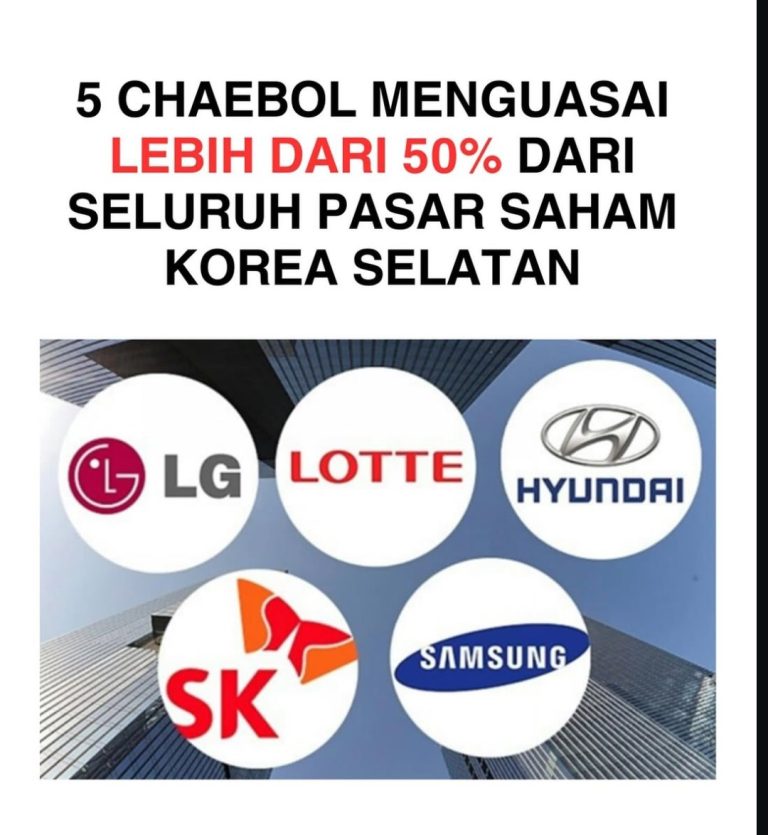

Image source: Pinterest
South Korea’s automotive sector did not emerge from free market competition, it was built, deliberately and over decades, by a state that picked winners and protected them until they could compete abroad. Indonesia has now positioned itself as a student of that model, most visibly through its automotive partnerships with Hyundai and Kia under the Indonesia-Korea Comprehensive Economic Partnership Agreement (IK-CEPA), which took effect on January 1, 2023. But Indonesia has tried this before. In 1996, it partnered with the same country’s auto industry through Kia Motors and the ill-fated “Timor” national car project, and the result was a trade dispute that the World Trade Organization ruled against within two years (Hale, 2001). The issue this essay examines is whether Indonesia’s renewed strategy of “learning from RoK” is a genuinely different industrial policy or a repeat of the same structural mistake in new packaging.
This issue matters because it concerns more than one failed car brand from the 1990s. Korea’s own automotive rise was the product of what Chalmers Johnson (1982) called the “developmental state”, a government bureaucracy that used credit allocation, tariff protection, and export targets to nurture chosen industries until they reached international competitiveness. Amsden (1989) showed that this pattern was not unique to Japan. Korea, through firms like Hyundai, followed a similar path of “late industrialization”, in which the state substituted its own coordination for the missing market institutions that earlier industrializers had taken for granted. Indonesia, in the 1990s, tried to compress this same process into a single company. In February 1996, President Suharto’s government designated PT Timor Putra Nasional (TPN), owned by his son Tommy Suharto, as the country’s sole “pioneer” national car producer, granting it exemptions from import duties and luxury taxes to sell a rebadged Kia Sephia under the “Timor” brand (Hale, 2001). Japan, the United States, and the European Communities filed WTO complaints, and in July 1998 the Dispute Settlement Body ruled that Indonesia’s National Car Programme violated GATT’s most-favored-nation and national treatment obligations, forcing its termination (Hale, 2001; World Trade Organization, 1998). Because Indonesia is now repeating the underlying gamble of partnering with Korean automakers to build domestic industrial capacity, understanding why the first attempt collapsed is directly relevant to judging whether the current one will succeed.
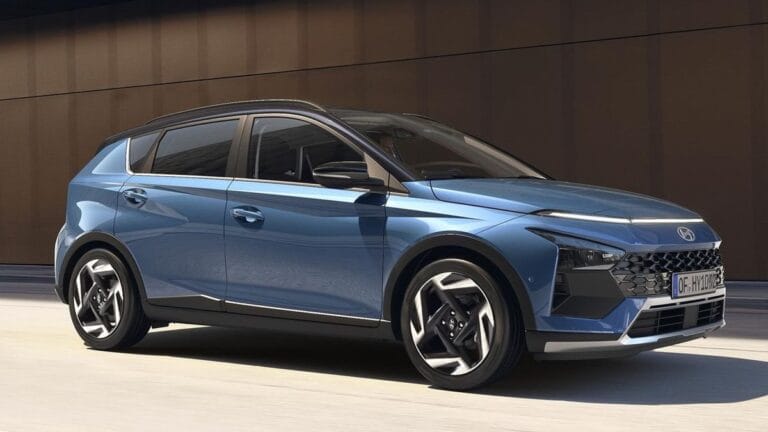
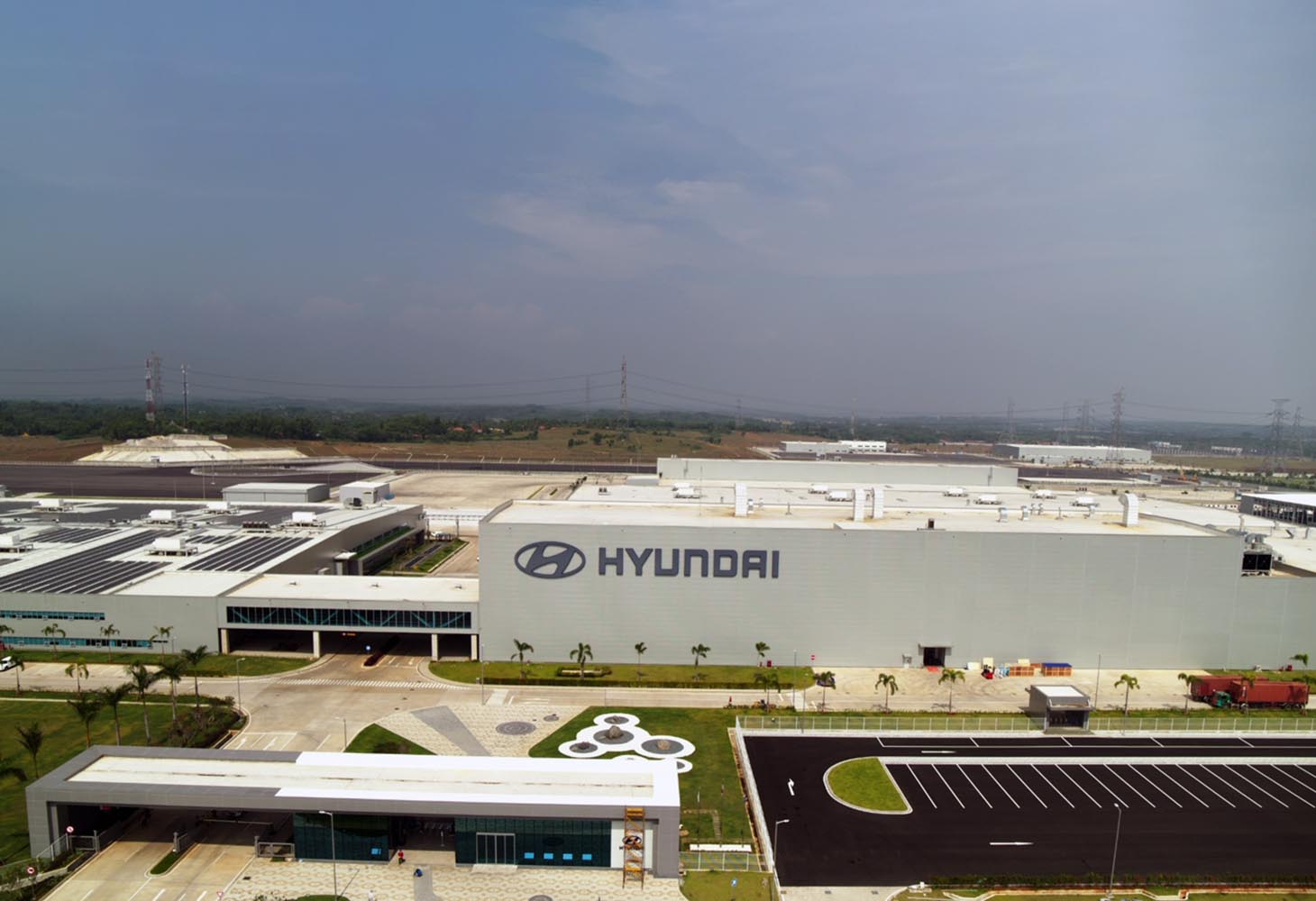
My own view is that Indonesia’s current approach is a more credible version of the same strategy, precisely because it corrects the specific flaw that doomed Timor. That flaw was the concentration of state privilege in a single, politically connected firm rather than a transparent, generally applicable policy. Hyundai now operates a 77-hectare manufacturing facility in Cikarang with current production capacity of 150,000 units, expanding toward a targeted 250,000 (Kompas.com, 2025), while KIA recorded 1,416 unit sales domestically in 2022 and 1,377 in 2023 (Pradana, 2026). Hyundai’s largest domestic contributor is the Creta, assembled locally with 9,228 units sold, while models like the Santa Fe and Staria are still imported directly from Korea, indicating a gradual, negotiated localization process rather than the instant, subsidy driven national car shortcut Indonesia attempted in 1996. This incremental model mirrors the trajectory Jo (2010) traces within Hyundai itself, where production capability was built up in stages, through absorbed technology and localized supply chains, rather than achieved instantly by decree. This approach reflects an industrial policy built through joint ventures and local content requirements that other WTO members can scrutinize and accept, instead of one built through decree for a single beneficiary.
Developmental state theory helps explain both the appeal and the danger of Indonesia’s strategy, and this is where the two episodes most clearly diverge. Its central claim is that industrial capacity in late-developing economies rarely emerges through comparative advantage alone, it requires a state willing to distort market signals temporarily to build capabilities that do not yet exist. Korea itself pursued this from 1963 onward, using directed credit and export quotas to grow firms like Hyundai from construction contractors into automakers (Hale, 2001). Indonesia’s IK-CEPA materials explicitly frame this as the model to emulate, contrasting Korea’s continuous industrial policy from 1963 to 2009 and beyond against Indonesia’s much shorter and interrupted attempt from 1996 to 1998/1999. In short, developmental state industrial policy works only when it is sustained over decades and insulated from both political capture and international legal exposure. The Timor project failed on both counts. It collapsed into a vehicle for one family’s commercial interests, and it structured its incentives in a way that was legally indefensible under Indonesia’s own WTO commitments, which had only recently come into force (Hale, 2001). The current Hyundai partnership avoids this specific trap by working through joint ventures and gradual local content requirements rather than exclusive tariff exemptions for a single national champion, which is consistent with what developmental state theorists would recommend: industrial policy pursued through negotiated foreign direct investment and technology transfer, rather than through protectionist decrees that other states can challenge as discriminatory subsidies.
Even so, developmental states succeed not because their initial policies are well designed, but because governments sustain them across multiple administrations despite short-term costs, something Suharto’s New Order could not do once the 1997 to 1998 Asian financial crisis and his own political collapse intervened. Indonesia’s Hyundai and KIA partnerships have so far avoided the legal traps of 1996, but thirty years of consistent policy, the kind Korea itself required, has not yet been tested against a genuine economic or political shock of comparable scale. Whether Indonesia’s automotive ambitions under IK-CEPA ultimately succeed will therefore depend less on which Korean company it partners with and more on whether the Indonesian state can maintain policy continuity long after the current political moment has passed.
Writer: Devina Luthfiyana Izzah – 202410360110080
References:
Amsden, A. H. (1989). Asia’s next giant: South Korea and late industrialization. Oxford University Press.
Pradana, H. A. (2026). Indonesia–Republic of Korea in economic cooperations: The economic sustainable interdependence [PowerPoint slides]. Mata Kuliah Kajian Kawasan Hubungan Internasional (KKHI), Universitas Muhammadiyah Malang.
Hale, C. D. (2001). Indonesia’s national car project revisited: The history of Kia-Timor motors and its aftermath. Asian Survey, 41(4), 629–644. https://doi.org/10.1525/as.2001.41.4.629
Jo, H. J. (2010). The Hyundai way: The evolution of a production model. Global Asia, 5(2), 102–107. https://www.globalasia.org/v5no2/feature/the-hyundai-way-the-evolution-of-a-production-model_hyung-je-jo
Johnson, C. (1982). MITI and the Japanese miracle: The growth of industrial policy, 1925–1975. Stanford University Press.
Kompas.com. (2025, January 17). Kapasitas produksi pabrik mobil Hyundai capai 250.000 unit setahun. https://otomotif.kompas.com/read/2025/01/17/150100515/kapasitas-produksi-pabrik-mobil-hyundai-capai-250.000-unit-setahun
World Trade Organization. (1998, July 23). Indonesia — Certain measures affecting the automobile industry (WT/DS54/R, WT/DS55/R, WT/DS59/R, WT/DS64/R). https://www.wto.org/english/tratop_e/dispu_e/cases_e/ds54_e.htm